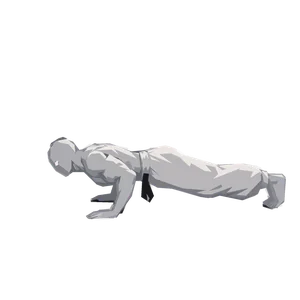
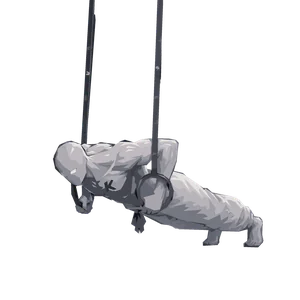
Element preview
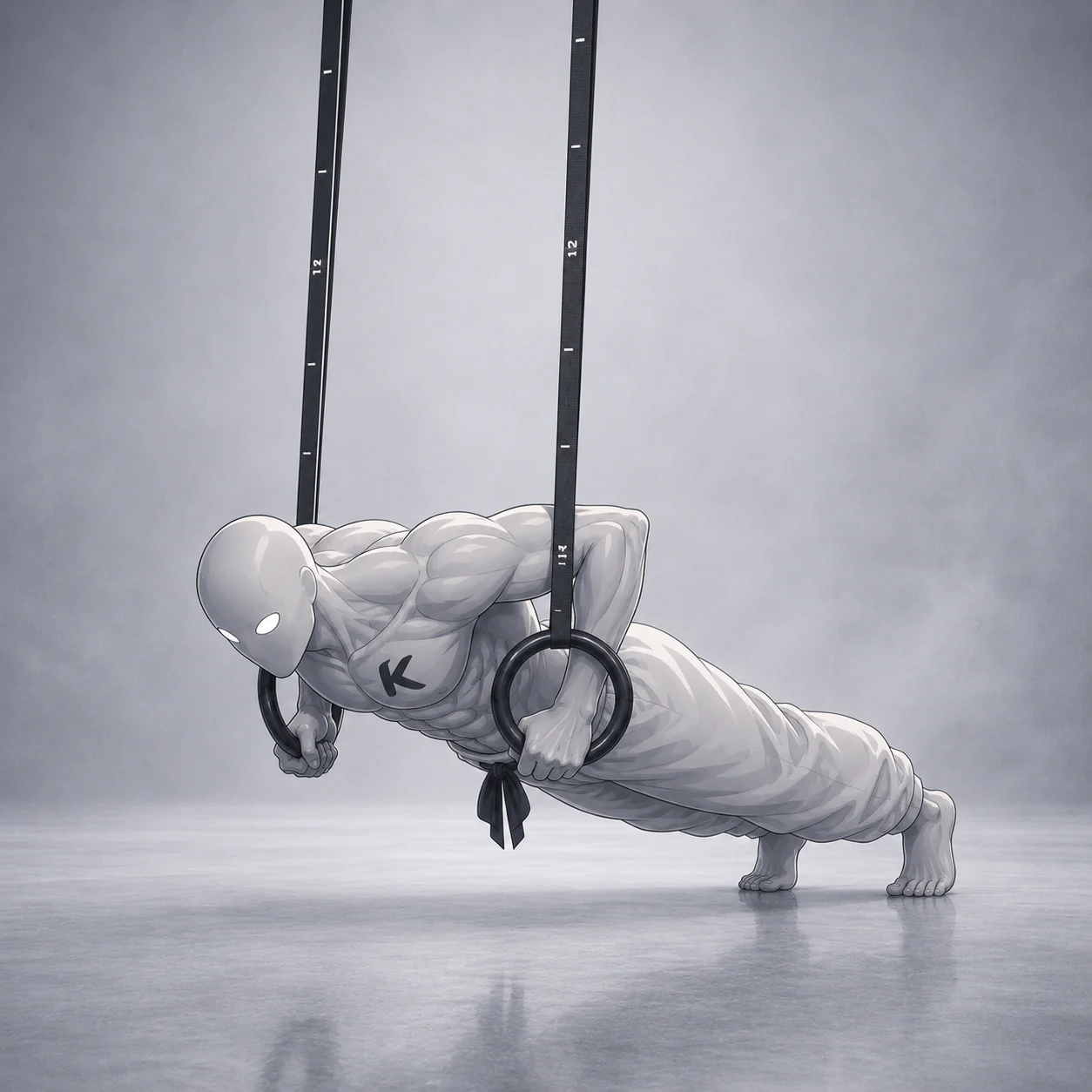
Preview · 0:06
A short look at the whole element in motion.
This is an overview clip, not a technique reference — the form in it may be imperfect. Follow the steps in Technique.
The ring push up transfers the familiar horizontal push from the floor to two independently moving handles. The pushing pattern remains recognizable, but the hands must keep the rings from separating or swinging while the trunk holds a rigid plank. That added stabilization makes the exercise a useful bridge from the standard push-up to more demanding ring variations.
This article covers the neutral-ring version: the palms face each other through the repetition. Turning the rings outward is a distinct, harder progression rather than a requirement here.
Technique
- Hang both rings from a secure anchor at equal height. For the full version, set them a few inches above the floor and level with your feet; raise the rings for an easier incline.
- Grip one ring in each hand with the palms facing each other. Extend the arms and establish a strong plank from shoulders through hips to heels, with the abdomen and glutes braced.
- Keep the rings beneath the shoulders and begin with the shoulder blades active. Let them retract naturally as you descend rather than pinning them in one position.
- Bend the elbows and lower under control. Keep the elbows close to the torso—about 30 degrees from the body—and prevent the rings from drifting apart.
- Descend until the hands reach the sides of the torso while the body remains rigid. Use only a range in which the shoulders feel comfortable and the rings stay controlled.
- Press the rings down and inward, extending the elbows until the arms are straight. Finish with the rings steady and the shoulder blades protracted, then begin the next repetition without losing the plank.
Preparation and scaling
Equipment and conditions
- A matched pair of gymnastics rings suspended from a secure anchor, with both straps set to equal length.
- A clear, nonslip area beneath the rings and enough room for a full plank.
- A ring height or body angle that permits full-range repetitions without pain or loss of ring control.
The locked prerequisite is the push-up. Start ring work only when you can repeat a floor push-up through a full range without the hips sagging or the elbows flaring. Set the rings higher than the feet and walk forward to reduce the body angle if the low-ring version is not yet controlled. Lower the rings gradually as strength and stability improve.
Before each set, confirm that the straps are equal and the anchor is secure. Choose a height that lets you lower the hands to the torso and return to straight arms without shortening the range. A wider foot stance can make the base more stable while you learn to quiet the rings; bring the feet closer as control improves.
The most useful quality checks are simple: the straps remain nearly vertical, the rings do not shoot outward, and the shoulders, hips, and heels rise together. If any of these landmarks disappear, reduce the inclination or end the set before adding repetitions.
Muscles
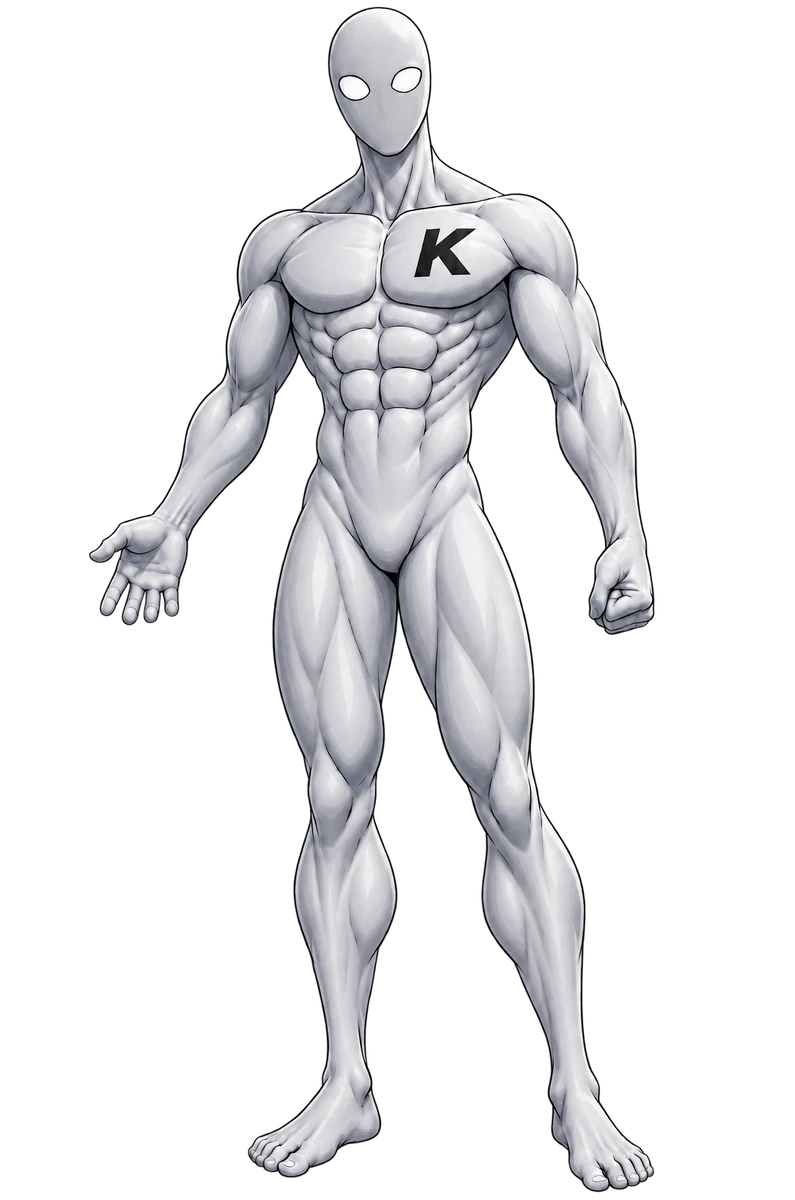
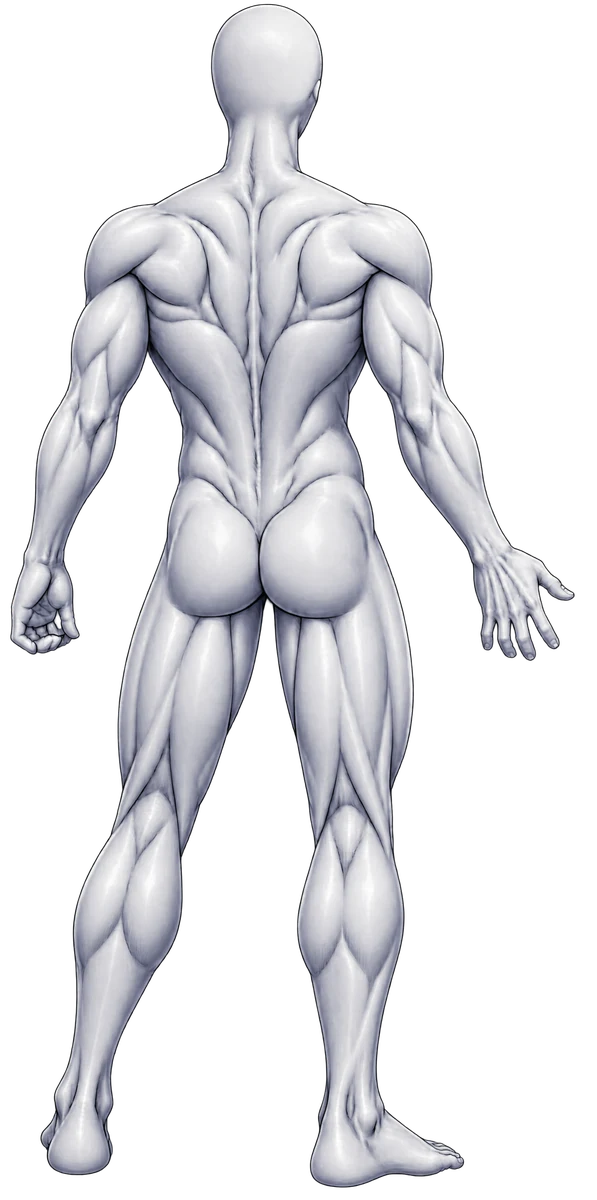
The chest, triceps, and anterior shoulder produce the press, as they do in a standard push-up. Suspension-push-up research also shows substantial trunk recruitment: the abdominal wall resists spinal extension and rotation while the rings move independently. The trapezius and other scapular muscles organize the shoulder blades, while the forearms and hands maintain the grips. The displayed intensities are product estimates; studies support the relative roles, not these exact percentages.
Stats
- Strength
- 0.00
- Control
- 0.00
- Endurance
- 0.00
- Balance
- 0.00
- Mobility
- 0.00
- Power
- 0.00
Strength is primary because each repetition must move body weight through a full horizontal press. Control is secondary: both hands have to guide separate supports while the trunk stays rigid. Endurance matters across repeated efforts, and balance contributes modestly through small corrections at the rings. Power and mobility are supporting qualities rather than the purpose of this strict variation.
Completion criteria
Perform 8 controlled repetitions with the rings level with the feet. On every repetition, keep a continuous shoulder-to-heel line, bring the hands to the torso at the bottom, reach straight arms at the top, and prevent the rings from swinging or drifting wide.
Progression thresholds
- Lower threshold
- 5 reps
- Upper threshold
- 12 reps
Use 12 clean repetitions as a product checkpoint for beginning the rings turned out push up, first turning the rings only at the top if necessary. If you cannot complete about 5 repetitions with the hands reaching the torso, straight arms at the top, and quiet rings, raise the handles or return to floor push-ups until the pattern is consistent. These numbers are calibration guides, not universal physiological cutoffs.