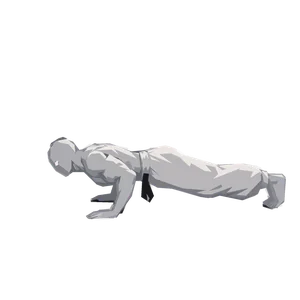
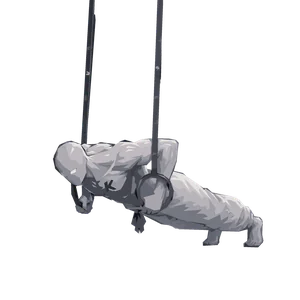
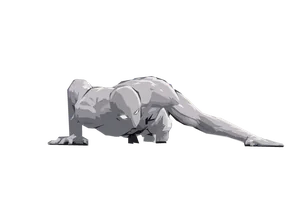
Element preview
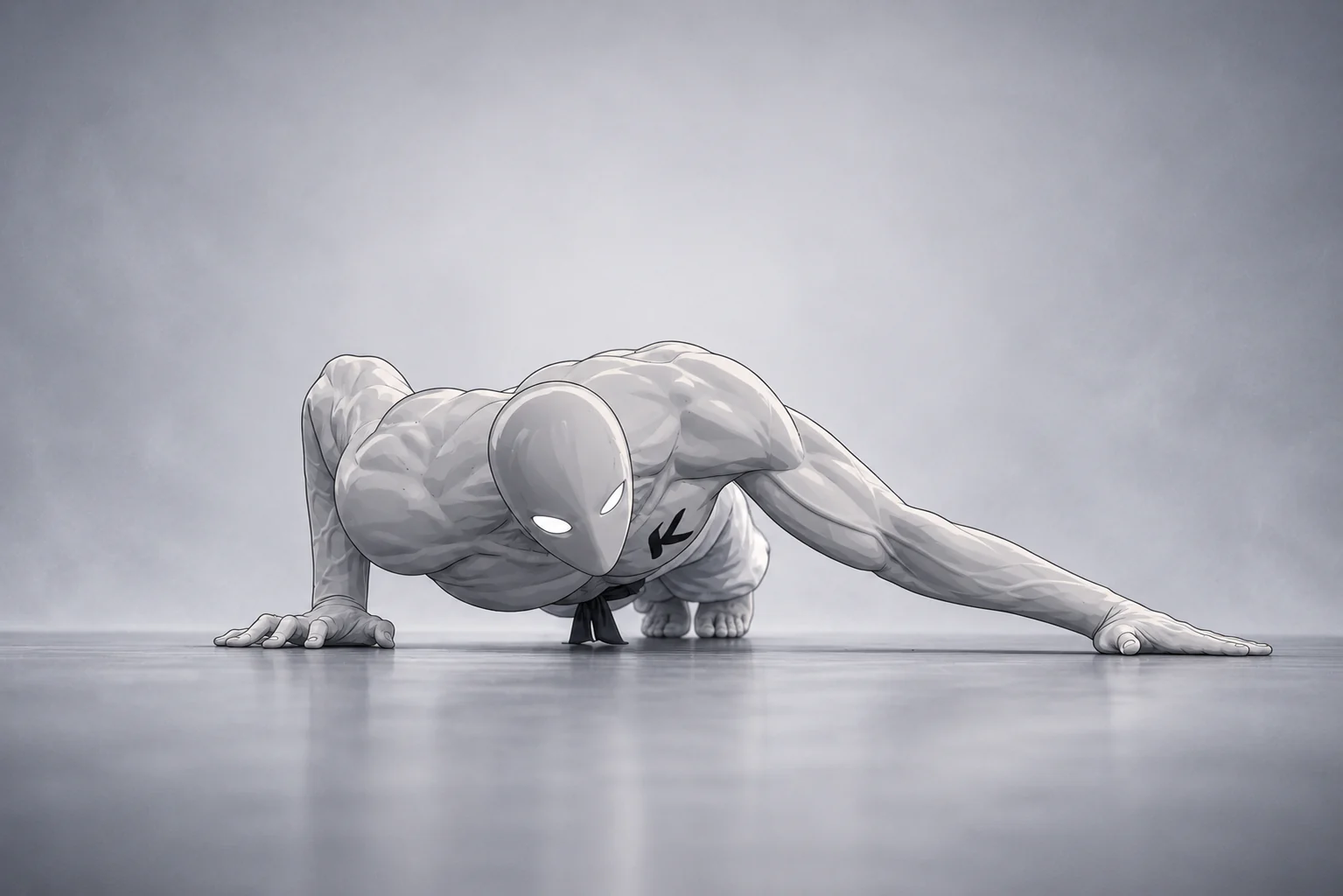
Preview · 0:06
A short look at the whole element in motion.
This is an overview clip, not a technique reference — the form in it may be imperfect. Follow the steps in Technique.
The archer push-up is an asymmetric floor push-up: the body travels toward one hand while that elbow bends and the opposite arm stays straight. The straight arm still assists, but shifting more body weight toward the bent side increases the unilateral pressing demand. This makes the movement a practical bridge between two-arm push-ups and the one-arm push-up.
This article covers alternating floor repetitions. The goal is not to slide as far sideways as possible; it is to keep a rigid plank, use a repeatable range, and make the bent arm do progressively more of the press without losing control.
Technique
- Begin in a high plank on a firm floor. Place the hands wider than shoulder width, straighten the legs, and brace the abdomen and glutes so the head, trunk, hips, and heels form one line.
- Shift the chest toward the right hand. Bend the right elbow while keeping the left elbow straight and the left palm planted; let the shoulder blades retract naturally as you descend.
- Lower under control until the chest approaches the working hand. Keep the pelvis facing the floor and use only a depth at which the straight arm, working shoulder, and wrist remain comfortable.
- Press mainly through the bent arm while the straight arm supplies only the assistance needed. Return to two straight arms without letting the hips rise, sag, or twist.
- Repeat toward the left hand. Match the range, tempo, and assistance on both sides, and stop the set when the straight arm begins to bend or the trunk can no longer stay aligned.
Preparation and scaling
Equipment and conditions
- A firm, flat, non-slip floor with enough lateral space for a wide hand position.
- No equipment is required.
- Begin only after standard push-ups can be repeated through a controlled range without pain or loss of trunk alignment.
First establish a standard push-up with a stable trunk, a controlled descent, and straight elbows at the top. Then build the asymmetric pattern in small steps:
- Start with the hands only moderately wider than shoulder width.
- Shift toward one hand while keeping both elbows straight, then return to center.
- Add a shallow bend on the loaded side while the other elbow remains locked.
- Increase depth or hand width only when both sides remain equally controlled.
An incline is the simplest regression: place both hands on a secure raised surface and perform the same side-to-side pattern. It reduces the upper-body load while preserving the defining relationship between the bent working arm and the straight assisting arm.
Risks
The wide, asymmetric support places each arm in a different position and concentrates more of the press on the bent side. Progress from a well-controlled standard push-up, widen the hands gradually, and do not force the straight arm or working shoulder into a painful range.
Keep both palms fully supported and the trunk braced. Reduce the range or return to a standard or inclined push-up if the hips twist, the working elbow abruptly flares, or the straight-arm elbow cannot remain comfortably extended. Stop for sharp or increasing pain in the wrist, elbow, or shoulder.
Muscles
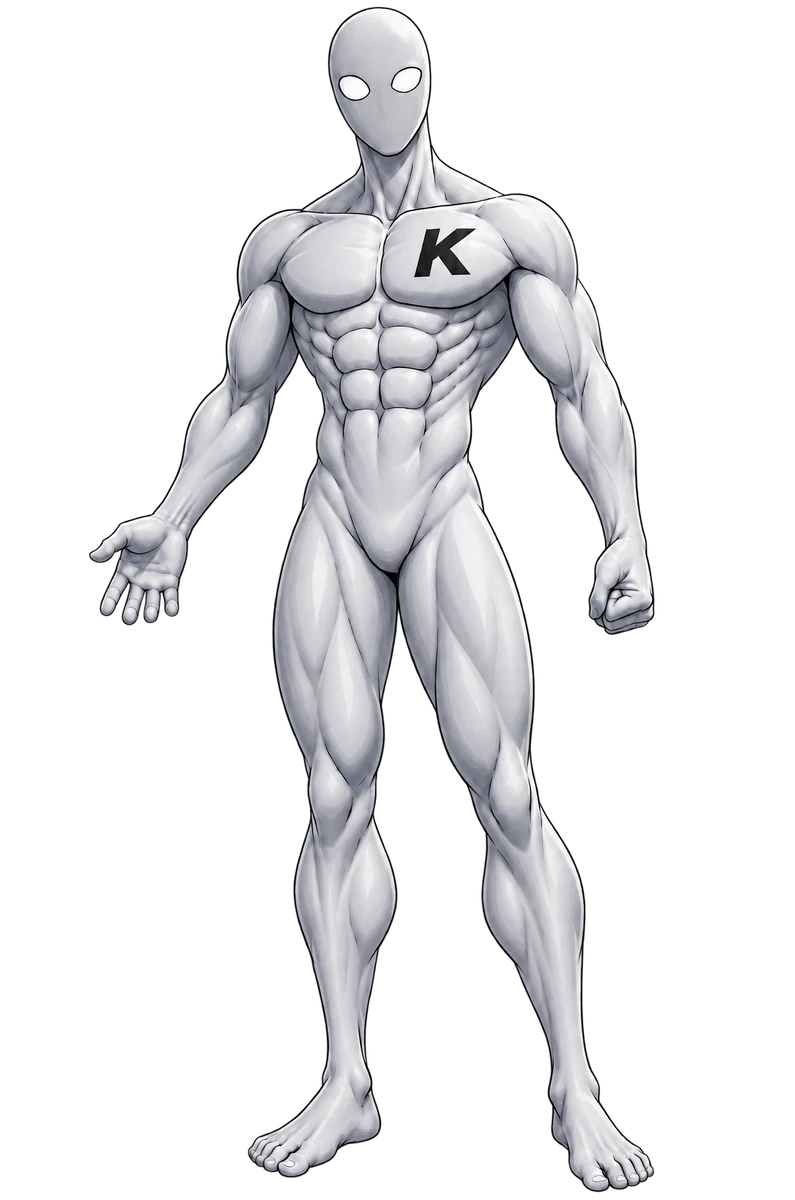
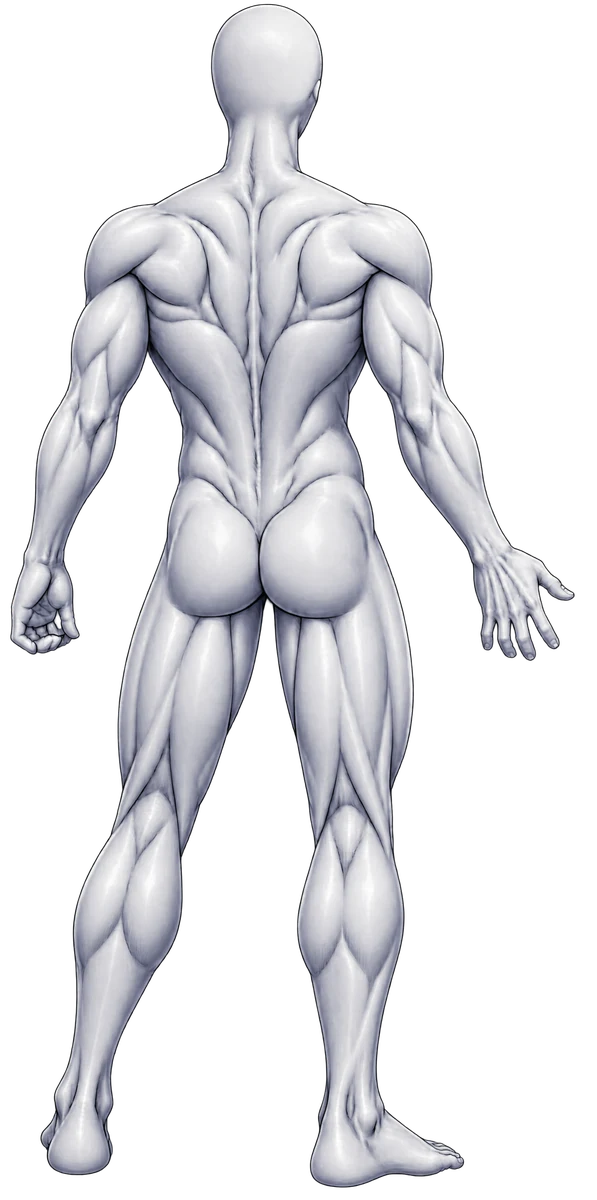
The chest, triceps, and anterior shoulder of the bent side produce most of the press. The straight arm continues to contribute through the floor, so the exact load split changes with hand width and how far the torso shifts. The abdominal wall, glutes, and lower-back muscles keep the trunk and pelvis connected while the support becomes asymmetric; the hands, forearms, and scapular muscles stabilize the two different arm positions. The displayed intensities are product estimates, not direct archer-push-up measurements.
Stats
- Strength
- 0.00
- Control
- 0.00
- Endurance
- 0.00
- Balance
- 0.00
- Mobility
- 0.00
- Power
- 0.00
Strength is primary because each repetition deliberately biases body weight toward one pressing arm. Control is secondary: the athlete must coordinate a lateral weight shift while preserving the plank and keeping the assisting elbow straight. Endurance supports repeated efforts per side, while mobility and balance contribute modestly. Power is not a goal of this controlled variation.
Completion criteria
Perform 5 controlled repetitions per side. On every repetition, keep the assisting elbow straight, bring the chest toward the bent arm through the same comfortable depth on both sides, maintain a continuous head-to-heel line, and return to two straight arms without a hip shift or bounce.
Progression thresholds
- Lower threshold
- 3 reps
- Upper threshold
- 8 reps
Use 8 clean repetitions per side as a product checkpoint for beginning more demanding one-arm push-up preparation, such as a high incline one-arm push-up. If 3 repetitions per side cannot be completed without bending the assisting elbow, shortening the stronger side, or rotating the pelvis, return to a smaller lateral shift, a narrower setup, or an incline. These thresholds are calibration guides rather than universal physiological cutoffs.