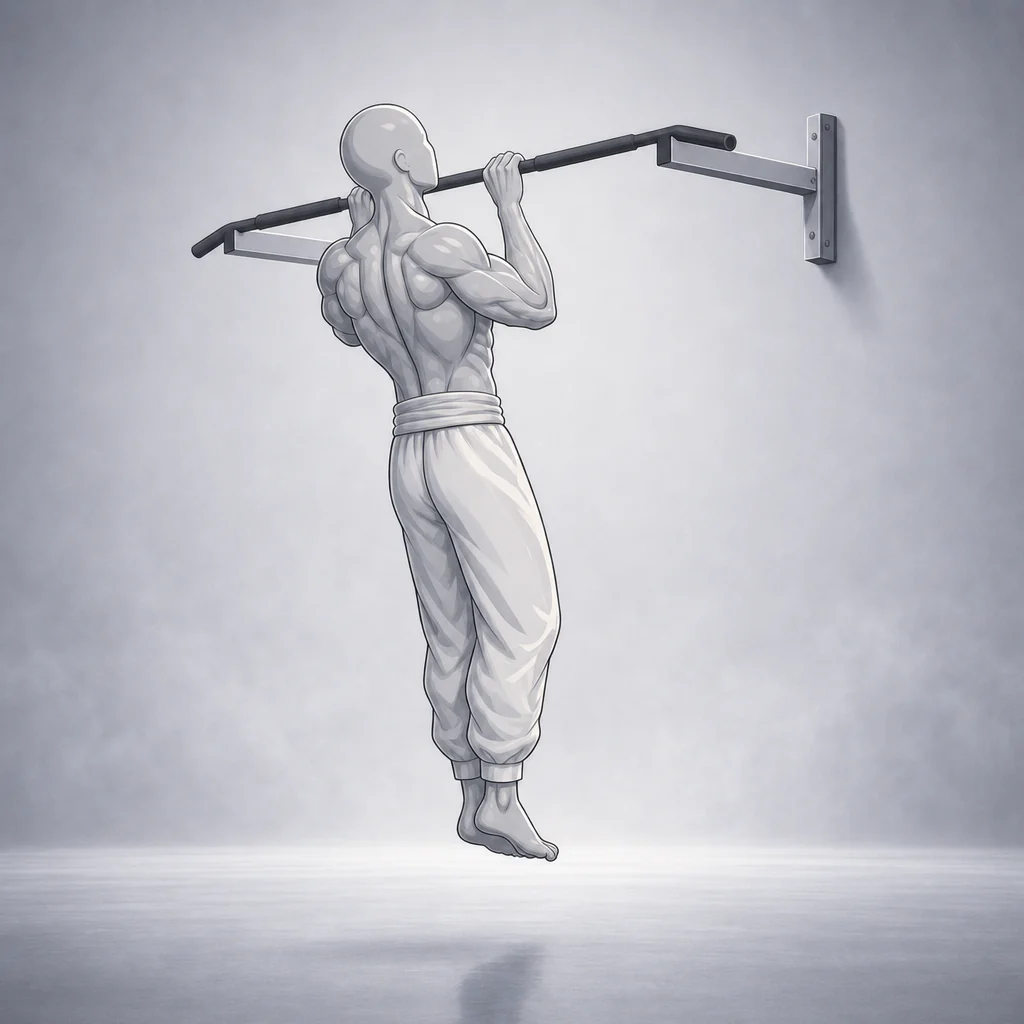
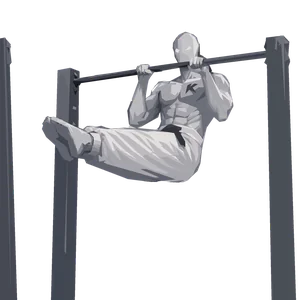
The pull-up is the foundational vertical pulling movement in calisthenics: hanging from a bar and pulling the body upward until the chin clears it. It is usually the first serious test of upper-body pulling strength, and it underpins nearly everything else in the vertical-pull family, from the L-sit pull-up to muscle-up and front-lever work.
Technique
- Hang from a secure bar with a pronated (overhand) grip slightly wider than shoulder width, arms fully straight and shoulder blades relaxed and elevated.
- Initiate each repetition by depressing the shoulder blades before the elbows bend, so the pull begins from the back rather than the arms alone.
- Drive the elbows down and back, keeping them tracking close to the torso instead of flaring out to the sides.
- Continue pulling until the chin clears the bar, aiming to bring the chest or clavicles toward the bar rather than craning the neck upward.
- Lower back to a full, straight-arm hang under control, letting the shoulder blades return to a relaxed position before starting the next repetition.
- Keep the core and shoulder girdle braced throughout the set to limit swinging and keep the pulling line vertical.
Preparation
Equipment and conditions
Use a securely mounted pull-up bar set high enough to allow a full straight-arm hang with the feet clear of the ground. Keep the space below and in front of the bar clear for a controlled dead hang and descent.
Because the pull-up sits at the base of this skill tree, there is no listed prerequisite — it is trained directly. If a full dead-hang repetition is not yet possible, useful regressions include slow negatives (lowering from the top position for several seconds under control) and assisted repetitions using a resistance band or an assisted-pull-up machine to reduce the load on the ascending portion. Both approaches build the same scapular depression and pulling pattern used in the full movement, just with less resistance.
Risks
Craning the neck to lift the chin over the bar narrows the space around the cervical nerve roots and can cause neck strain or tension headaches — pull with the chest, not the head.
Letting the elbows flare wide during the pull shortens the vertical pulling line and can carry poor shoulder mechanics into later progressions; keep the elbows tracking toward the body. Very wide or reversed super-wide grips place the shoulder in a more abducted, externally rotated position that reduces the space under the acromion, which biomechanical research on pull-up technique links to a higher risk of shoulder impingement — a grip at or only slightly wider than shoulder width keeps this risk lower.
Build strict, controlled repetitions before adding momentum, extra weight, or a kip. Swinging the legs or trunk to help the body up shifts load away from the target muscles and onto passive shoulder structures.
Muscles
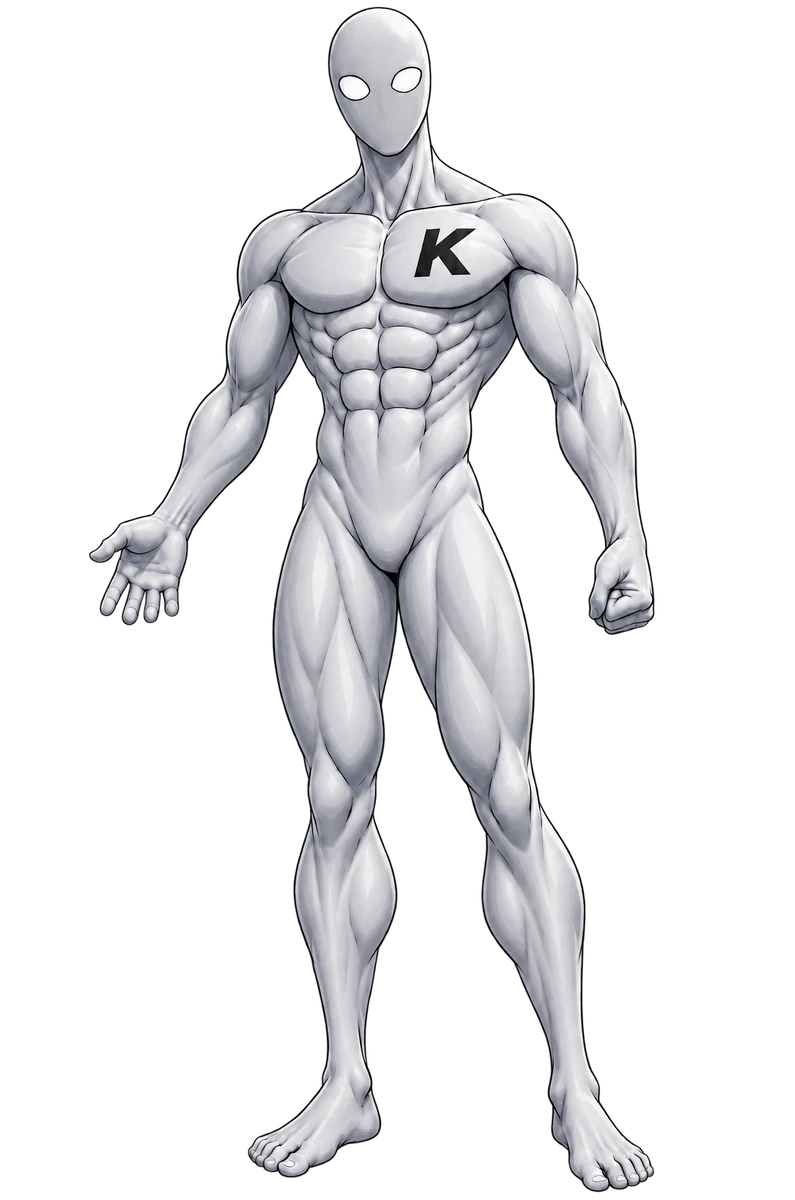
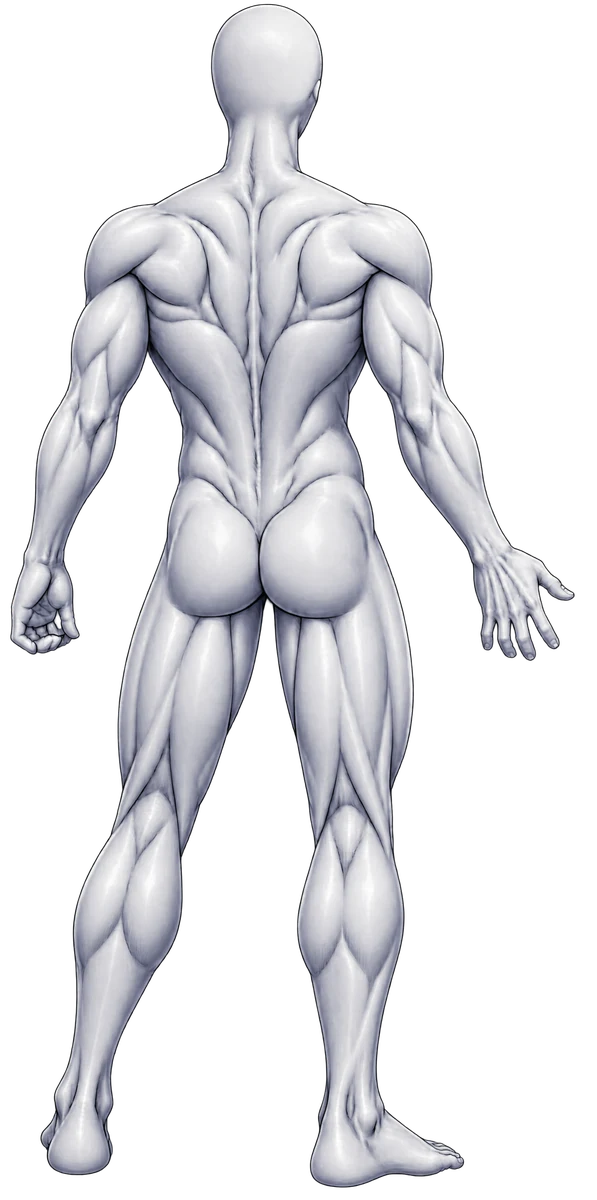
The latissimus dorsi drives most of the pull, extending and adducting the shoulder to bring the body up toward the bar. The biceps and forearms are heavily loaded because the elbow flexes under full bodyweight while the hands sustain grip throughout the hang. The trapezius and surrounding scapular muscles do less visible but essential work: they depress and retract the shoulder blades to initiate and stabilize each repetition, as described in the technique above. The shoulders assist the pulling action, while the chest, core, and lower back contribute at a lower intensity to keep the torso stable and the pulling line vertical.
Stats
- Strength
- 0.00
- Endurance
- 0.00
- Control
- 0.00
- Power
- 0.00
- Mobility
- 0.00
- Balance
- 0.00
The pull-up is fundamentally a strength movement, measured by the ability to move full bodyweight against gravity. Endurance is the main secondary quality, since most training targets multiple clean repetitions rather than a single maximal effort. Control plays a smaller supporting role tied to the scapular sequencing that starts and stabilizes each rep, while power, mobility, and balance contribute only marginally to a standard vertical pull.
Completion criteria
Perform 5 or more continuous dead-hang repetitions: start and finish each rep at a straight-arm hang with relaxed shoulders, pull with no leg kick or trunk swing, and bring the chin clearly over the bar without craning the neck.
Progression thresholds
- Lower threshold
- 3 reps
- Upper threshold
- 10 reps
Roughly 10 clean dead-hang repetitions is a reasonable checkpoint before moving toward heavier or more complex vertical-pull skills, such as the L-sit pull-up or muscle-up progressions. If fewer than about 3 strict repetitions are repeatable, spend more time on negatives or assisted pull-ups before retesting. These numbers are a project guideline, not a hard rule — technique quality should weigh at least as heavily as rep count when judging readiness.