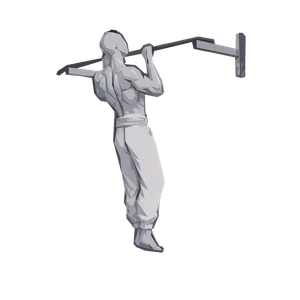
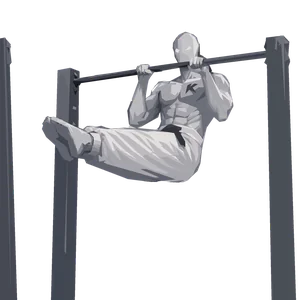
Element preview
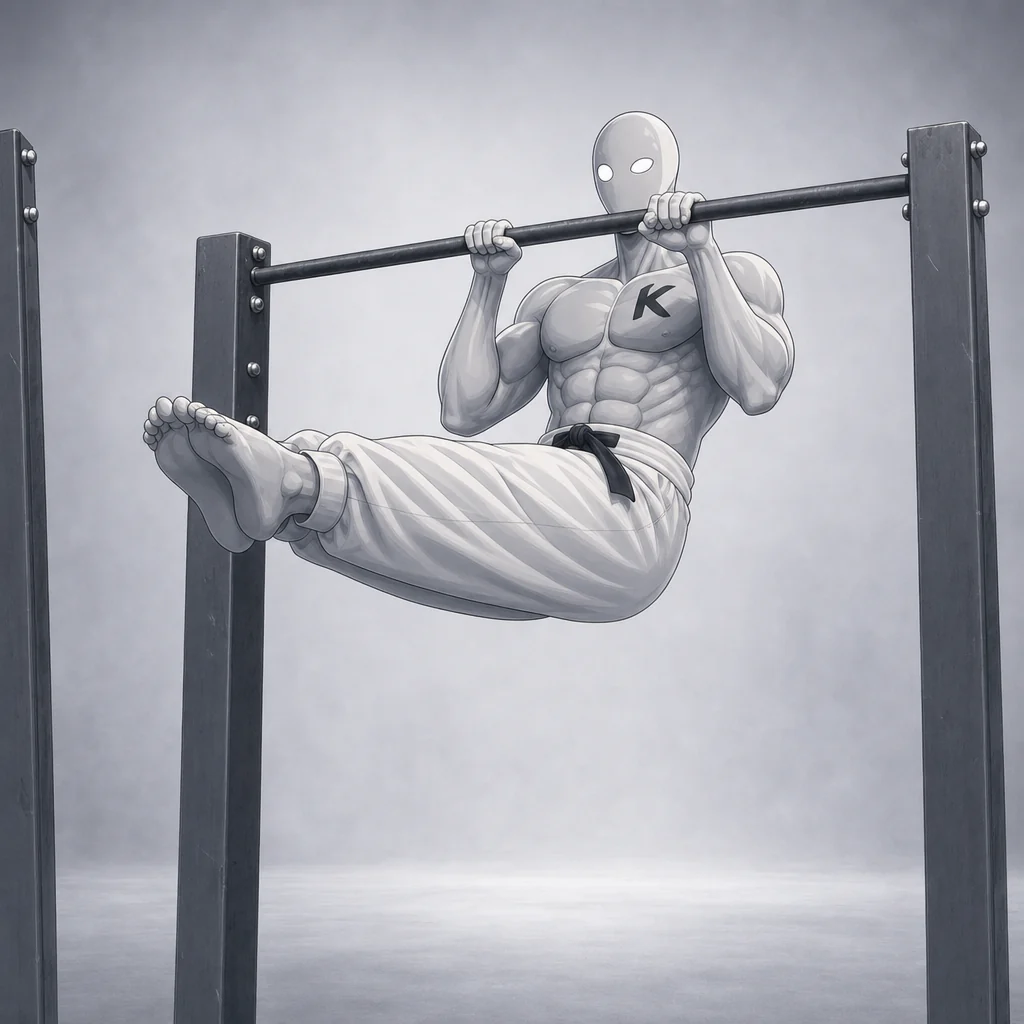
Preview · 0:06
A short look at the whole element in motion.
This is an overview clip, not a technique reference — the form in it may be imperfect. Follow the steps in Technique.
The L-sit pull-up combines a strict bar pull-up with a straight-leg compression hold. The upper body still travels from a full hang to chin-over-bar height, but the legs remain horizontal throughout the repetition. Holding that shape shifts the body's center of mass forward and decreases mechanical advantage at the shoulder compared with an ordinary pull-up, so the shoulder muscles must produce more force while the trunk and hip flexors work continuously to keep the legs from falling.
This makes the movement useful as a harder, more controlled pull-up variation. It develops vertical pulling strength without a kip and exposes whether the athlete can maintain whole-body tension while the arms move through a full repetition.
Technique
- Take a shoulder-width overhand grip on a secure bar and begin in a motionless hang with straight elbows, relaxed elevated shoulder blades, and enough clearance for the legs.
- Without swinging, straighten the knees and raise both legs until they are parallel to the floor. Brace the trunk, contract the quadriceps, and keep the toes at hip height or slightly higher.
- Initiate the pull by depressing the shoulder blades. Drive the elbows down toward the sides while keeping the legs fixed in the L position.
- Continue until the chin clears the bar and the upper chest approaches it. Keep the neck neutral, the elbows close to the body, and the knees locked.
- Lower under control to straight elbows, allowing the shoulder blades to return smoothly toward the starting hang while the legs remain horizontal.
- Re-establish a still L-sit hang before beginning the next repetition. End the set if the legs drop, the knees bend, or momentum replaces the strict pull.
Preparation
Equipment and conditions
Use a rigid pull-up bar high enough for a full hang while the straight legs remain clear of the floor in front of you. Keep the surrounding area unobstructed and the landing surface stable. A step may be used to reach the bar, but move it out of the leg path before starting.
Treat the pull and the L position as two prerequisites that can be trained in parallel. First, establish strict pull-ups from a still hang, using scapular depression to begin each repetition and keeping the elbows close rather than flared wide. Separately, build an L-sit with straight knees and active compression. Seated leg lifts, tuck holds, and single-leg L-sits are useful ways to strengthen the position without compromising the pull.
When combining the skills, begin with a tucked L-sit pull-up. Progress to one straight leg, then extend both legs only when the torso stays quiet. The full variation should look like a pull-up performed around an unchanged L shape; if the legs swing, sag, or rise to create momentum, the regression is still the better training choice.
Risks
Use a securely mounted bar with clear space beneath and in front of you. Build the L-sit hang and strict pull-up separately before combining them, and increase repetition volume gradually.
Do not kick the legs up to start the pull, drop abruptly into the bottom position, or continue once the shoulders shrug uncontrollably. If straight knees and hip-height toes cannot be maintained, regress to a tucked or single-leg version rather than forcing the position. Stop if the exercise causes sharp or increasing pain in the shoulders, elbows, wrists, or back.
Muscles
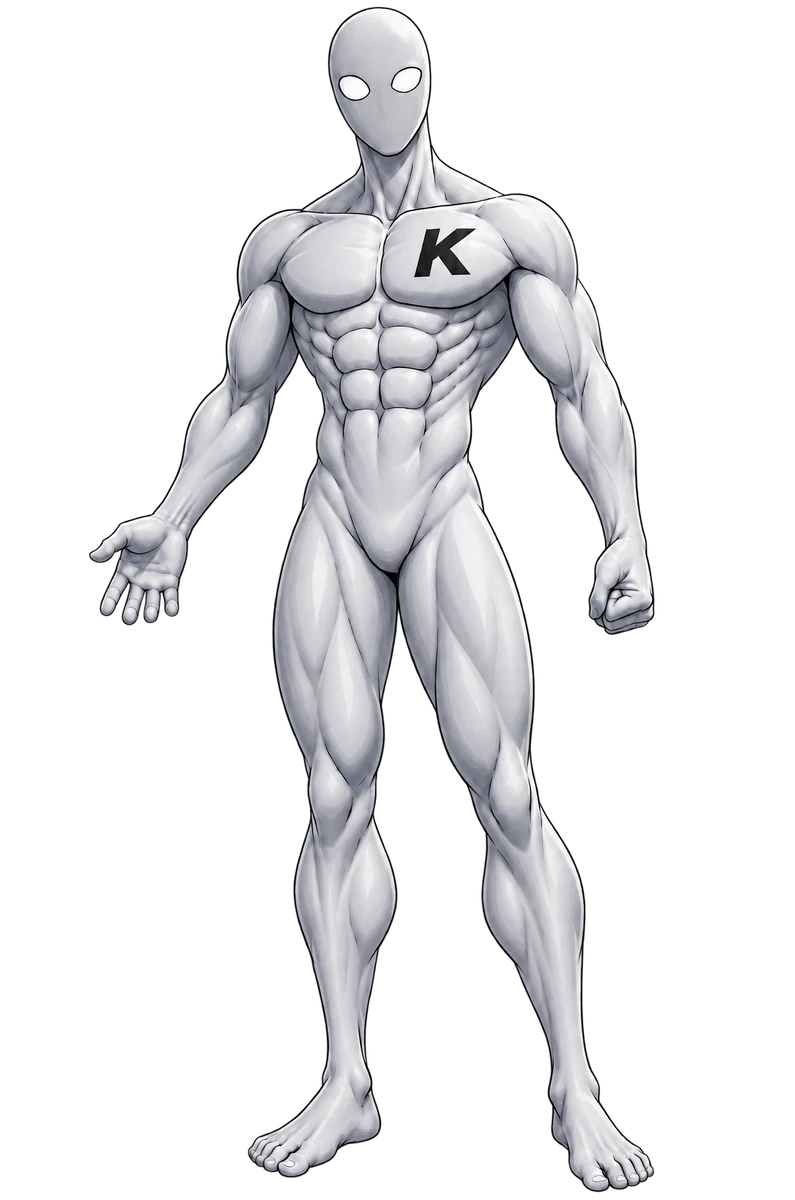
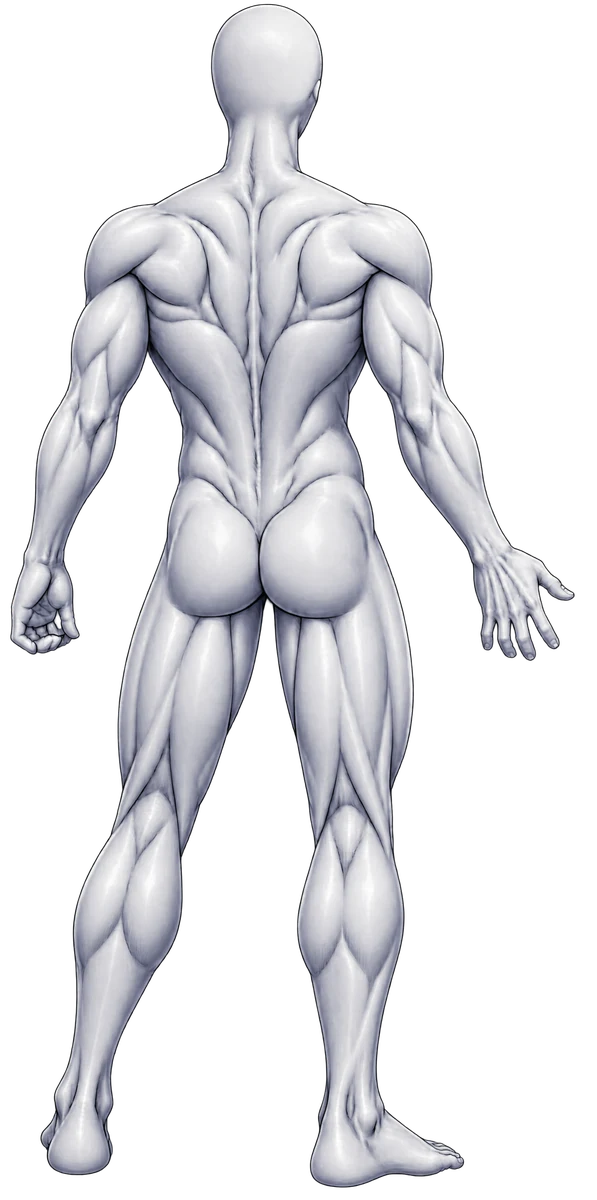
The latissimus and biceps provide the main pulling effort, while the forearms secure the grip and the trapezius and shoulder musculature organize the shoulder blades. The L position adds a strong isometric demand to the core, with the quadriceps locking the knees as the front of the hips maintains compression. The chest and spinal extensors contribute at lower intensity as the torso stays controlled through the pull and descent.
Stats
- Strength
- 0.00
- Control
- 0.00
- Endurance
- 0.00
- Mobility
- 0.00
- Balance
- 0.00
- Power
- 0.00
Strength is dominant because the athlete pulls full body weight while sustaining a demanding leg position. Control is the main secondary quality: the shoulder blades, trunk, pelvis, and knees must remain coordinated as the elbows bend and straighten. Endurance becomes noticeable across repeated holds and repetitions, while mobility, balance, and power play smaller supporting roles in the strict version.
Completion criteria
Perform 5 continuous strict repetitions from a still L-sit hang. On every repetition, keep both knees straight and the toes at least at hip height, bring the chin clearly over the bar without craning the neck, and return under control to straight elbows without kipping or touching the floor.
Progression thresholds
- Lower threshold
- 2 reps
- Upper threshold
- 8 reps
Use 8 clean repetitions as a product checkpoint for moving toward higher or more complex L-sit pulling skills. If 2 strict repetitions are not yet repeatable, return to tuck or single-leg L-sit pull-ups and train the pull-up and compression hold separately. These thresholds are progression guides; position quality should decide whether a repetition counts.