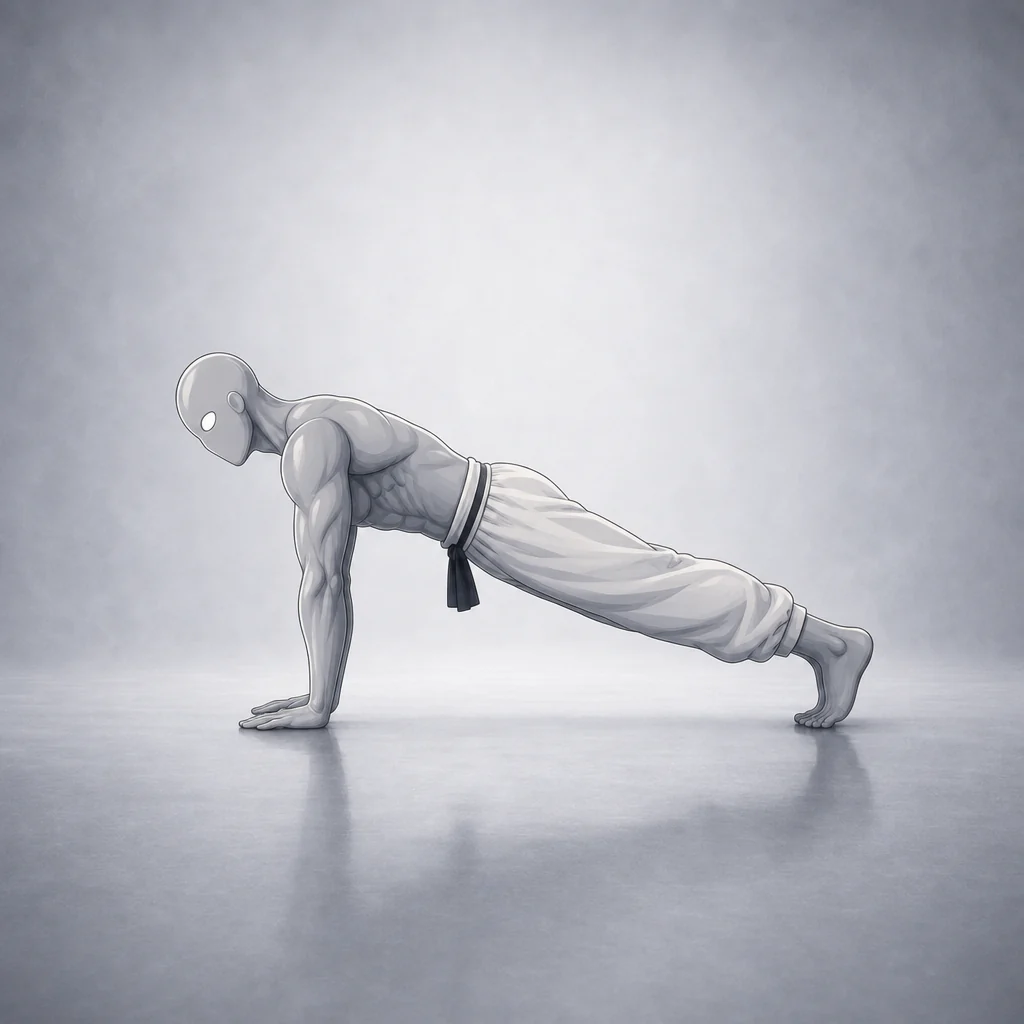
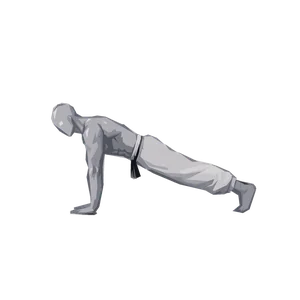
The plank is a whole-body isometric hold performed on the forearms and toes, used to build the baseline of anti-extension core control that heavier straight-arm strength skills — from planche progressions to advanced levers — are built on. It asks the trunk to resist gravity trying to pull the hips and lower back toward the floor, while the shoulders, glutes, and quads share the job of keeping the body rigid.
Technique
- Kneel and place your forearms on the floor, elbows stacked directly under the shoulders, forearms parallel or hands lightly clasped.
- Step the feet back one at a time into a straight-body position, feet hip-width apart.
- Brace the abdominals as if bracing for a light punch to the stomach, rather than hollowing or crunching the ribcage down.
- Squeeze the glutes and quads so the pelvis stays level — no sagging or piking at the hips.
- Keep a long neck with a slight chin tuck, eyes on the floor a few inches ahead of the hands.
- Hold the straight line from head to heels, breathing continuously in a steady rhythm rather than holding the breath.
Preparation
Because the plank is often trained for time rather than quality, the most common failure mode is letting form degrade well before fatigue actually forces a stop.
Risks
The two dominant technical errors are letting the hips sag toward the floor or hiking them up toward a pike. A sagging pelvis drops the lumbar spine into extension and shifts load from the abdominal wall onto the passive structures of the lower back; a piked pelvis is usually a way of quietly reducing the core demand rather than resting in a stronger position. Watch also for shrugged shoulders (excess upper-trapezius tension) and breath-holding, both of which raise intra-thoracic pressure without adding useful stability. None of this makes the plank a high-risk exercise for a healthy trainee — it is a low-impact isometric hold — but poor form performed for long durations is the main way it stops being useful.
Muscles
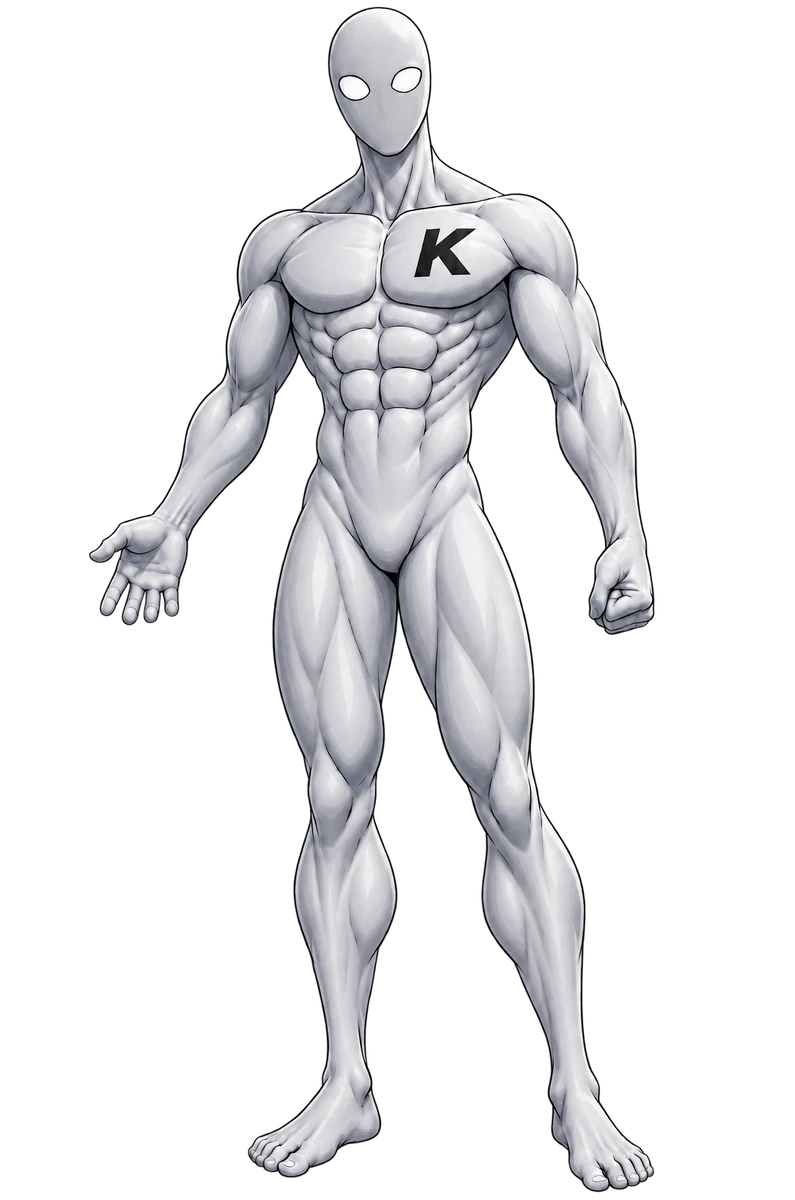
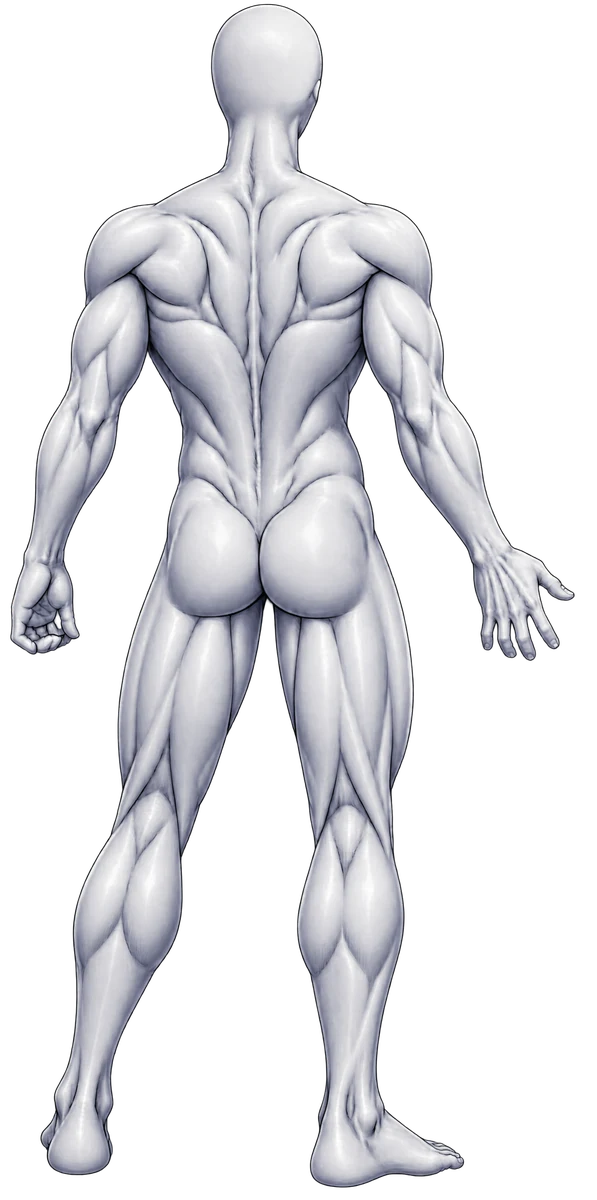
Electromyographic recordings of the standard forearm plank show moderate, fairly even activation across the rectus abdominis and the external and internal obliques, with the lumbar erector spinae working at a much lower level — the abdominal wall, not the low-back extensors, is doing the primary work of keeping the pelvis level. The shoulders, glutes, quadriceps, and forearms act mainly as secondary stabilizers that keep the frame rigid rather than as prime movers.
Stats
- Strength
- 0.00
- Endurance
- 0.00
- Control
- 0.00
- Balance
- 0.00
- Mobility
- 0.00
- Power
- 0.00
As a beginner static hold, the plank leans on strength-endurance more than raw force output: the core muscles work isometrically at a moderate, sustainable intensity for an extended duration. Control matters for keeping the pelvis level throughout the hold, while balance and power play only a minor role since the base of support is wide and there is no dynamic or single-limb demand yet.
Completion criteria
Hold a straight-body forearm plank for about 60 seconds with a level pelvis (no sag or pike), relaxed shoulders away from the ears, and continuous breathing throughout — quality of the line matters more than raw duration.
Progression thresholds
- Lower threshold
- 15 s
- Upper threshold
- 60 s
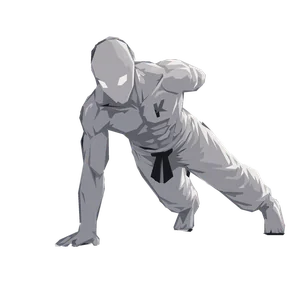
Once a straight, level hold can be kept for about a minute without the hips drifting, there is little further training benefit to simply adding more seconds — that is the cue to move toward more demanding anti-extension and shoulder-loading variations such as the one-arm plank or planche lean. If good form breaks down well before 15 seconds, regress to an incline or knee-supported plank until the position can be held with control.