The vertical row is the easiest entry point into horizontal pulling. You hang from rings, straps, or a bar with your feet on the ground and your body close to upright, so your legs still carry most of your bodyweight, and pull your hands toward your body using the same scapular-retraction pattern as every heavier row that follows. It is a natural first pulling exercise for anyone who cannot yet do a pull-up or who needs a low-load way to build the shoulder-blade control that horizontal pulling depends on.
Technique
- Set a pair of rings, suspension straps, or a fixed bar so that when you hang from it with your feet on the floor, your body sits closer to vertical than horizontal — most of your bodyweight stays on your legs.
- Start each rep with your shoulders relaxed and protracted and your arms extended, standing tall with your heels planted.
- Initiate the pull by retracting and depressing your shoulder blades together, then bend your elbows and keep them close to your sides as you row your hands toward your body.
- Keep your torso braced in a straight line from head to hips throughout the pull; lean your feet further forward (or raise the rings) later on to gradually increase how much bodyweight your arms carry.
- Lower back down under control, letting your shoulder blades protract again at the bottom before starting the next rep.
Preparation
Equipment and conditions
A pair of gymnastic rings, suspension straps, or a fixed bar you can hang from with your feet flat on the floor, plus enough floor space to set your feet at the desired distance from the anchor point.
There is no bodyweight pulling prerequisite here — the vertical row is the starting point of this progression. If even this upright version feels too heavy, stand further under the anchor point (more upright still) or bend your legs/take a staggered stance to shift more weight onto your feet. As the movement feels easier, gradually walk your feet forward or raise the rings so your body tilts further from vertical toward horizontal; once you can control full reps with your body close to horizontal, you are ready for the full row.
Risks
This is the lowest-load entry point of the horizontal-pull family, so injury risk is minimal, but the same shoulder-health logic applies as with any pull: it helps balance out pushing work (push-ups, dips) and protect the front of the shoulder. If you have an existing posterior shoulder weakness, bias your reps toward the top portion of the pull and hold it briefly to bias the posterior deltoid, rhomboids, external rotators, and trapezius. Avoid letting the shoulders round forward or the lower back arch to "help" the pull — let the arms and upper back do the work.
Muscles
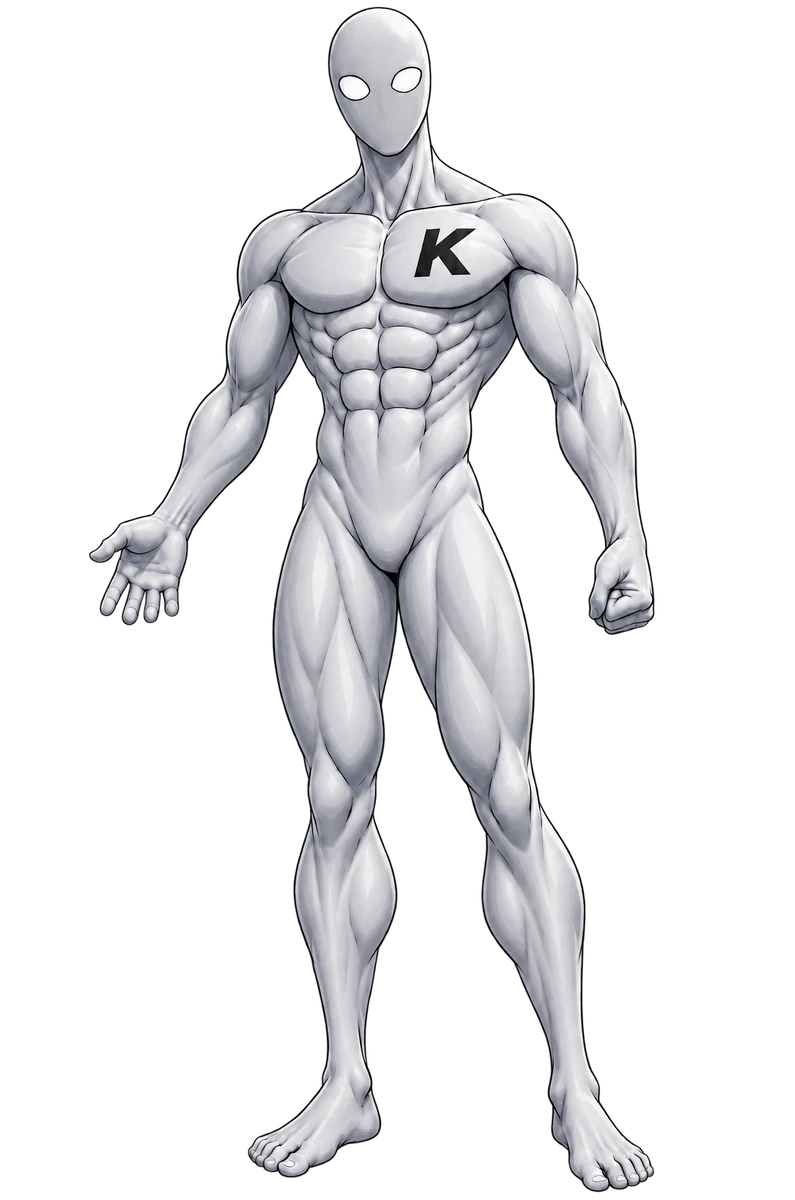
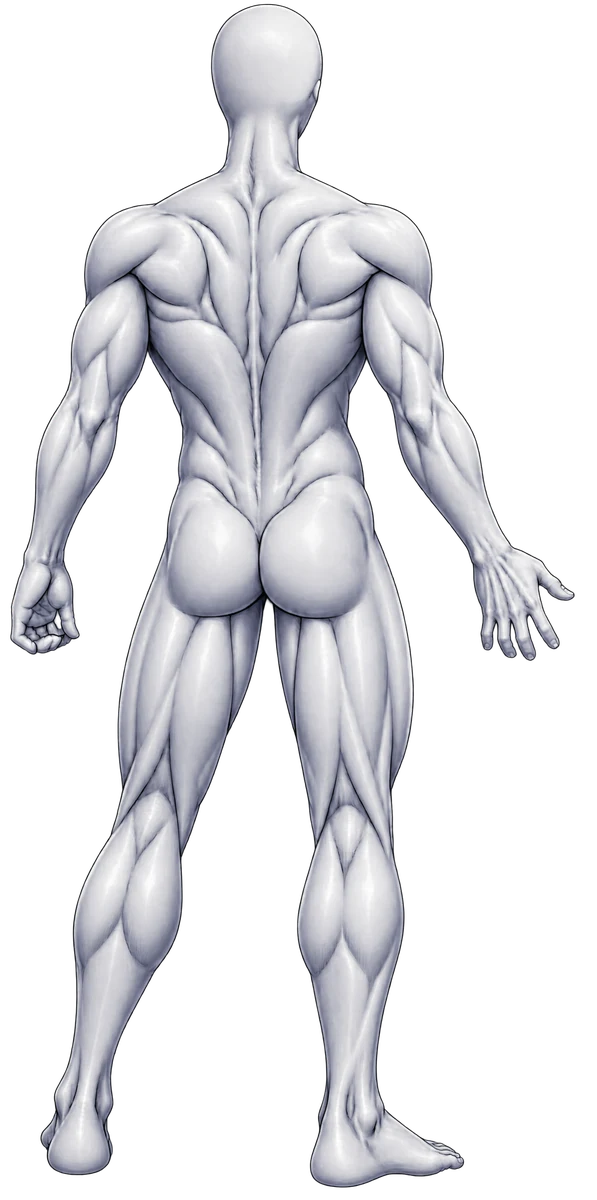
The latissimus and biceps drive the pull, while the trapezius and shoulders retract and depress the shoulder blades and keep them stable through the range — the same roles they play in every heavier row, just under much less load since the legs share the work. The core and lower back brace isometrically to keep the torso from rounding, and the forearms and hands maintain grip on the rings or bar.
Stats
- Strength
- 0.00
- Endurance
- 0.00
- Control
- 0.00
- Mobility
- 0.00
- Balance
- 0.00
- Power
- 0.00
Strength still leads since it is a pull against resistance, but because most of the bodyweight stays on the legs and the exercise is meant to be trained for higher reps while building the pattern, endurance plays a bigger relative role here than in the heavier rows that follow. Control is present but modest — holding a stable, upright body line is easier than the fuller horizontal positions — and balance, mobility, and power stay in the background since the stance is stable and symmetric.
Completion criteria
As a project-calibrated estimate (the source material treats this as a beginner regression without a numeric standard): controlling roughly 15-20 strict reps with an upright, braced body line and full scapular retraction at the top before moving toward the full (more horizontal) row.
Progression thresholds
- Lower threshold
- 10 reps
- Upper threshold
- 20 reps
Once you can control roughly 20 strict reps with an upright, braced body line and no shoulder rounding, walk your feet forward (or raise the anchor point) to tilt your body closer to horizontal and start working toward the full row. If you cannot yet manage about 10 controlled reps, stand more upright, bend your legs, or add a band for assistance before returning to full vertical row reps.