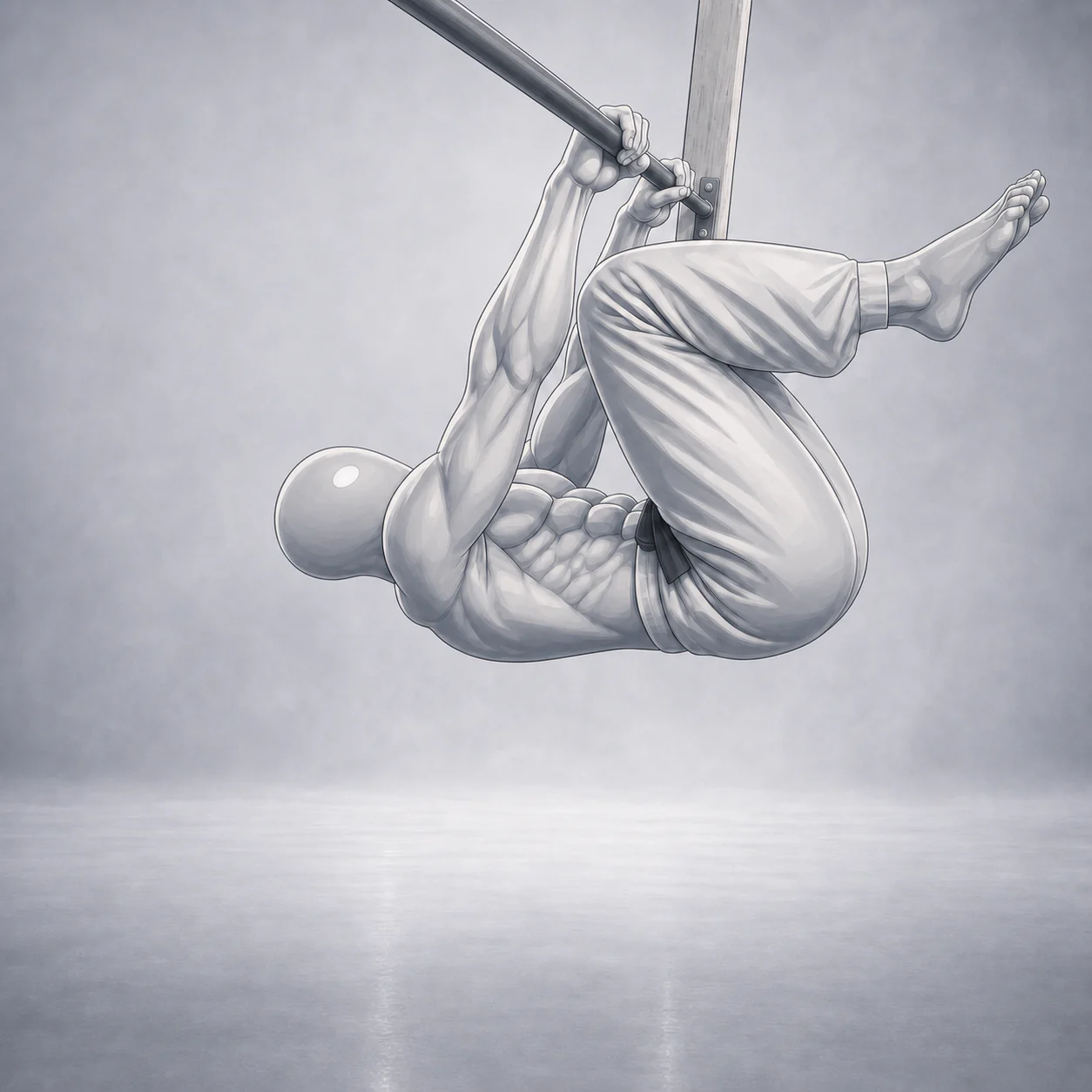
The tuck front lever is the entry point into the front lever family: a straight-arm isometric hold performed face-down, with the knees pulled to the chest so the body's center of mass sits close to the shoulders. Keeping the legs tucked shortens the lever arm dramatically compared to the full front lever, which is what makes this the first front lever variation most people can hold. It builds directly on horizontal-row pulling strength and the scapular control developed in the tuck back lever, and it is the foundation the rest of the front lever progression — advanced tuck, straddle, half-lay, and full layout — is built on.
Technique
- Start from a straight-arm hang on a pull-up bar or rings, using either a parallel or a pronated grip — the pronated grip is a common preference since it works on almost any bar, ledge, or door frame.
- Pull up into a front lever position while keeping the knees tucked tightly toward the chest, so the body's center of mass stays close to the shoulders.
- Level your hips with your shoulders so the tucked torso forms a horizontal line rather than hanging below the bar.
- Push your hands forward toward your hips while pulling the shoulder blades down and together — this "packed shoulder" (depressed, neutral) position activates the torso musculature and gives a leverage advantage.
- Hold with steady breathing, keeping tension through the lats, chest, and core, then reverse the same path back to a hang under control rather than dropping out of the hold.
Preparation
Before working the tuck front lever directly, you should already be comfortable with a horizontal row pattern such as the archer row and with the tuck back lever, since both feed directly into this hold — the row builds the pulling strength to get into position, and the tuck back lever grooves the same depressed, neutral scapular position from the opposite orientation. Grip can be parallel or pronated; either works, and a pronated grip has the practical advantage of being usable on almost any bar or ledge.
Risks
Scapular positioning is the most common point of confusion at this stage: the goal is a depressed and neutral position, reached by pulling the shoulder blades down and together (depressed and retracted) until they settle depressed and neutral — not letting them stay depressed and protracted, which rounds the chest forward. This habit is easiest to correct at the tuck stage and only gets harder to fix as later front lever variations straighten the body and increase the lever arm, so it is worth grooving correctly from the first rep.
Because the knees stay pulled to the chest, the tuck keeps the lever arm short and the torque on the shoulders and elbows lower than in the advanced tuck, straddle, or full front lever. This makes the tuck front lever a reasonable place to adapt to the straight-arm, horizontal pulling position, but it does not remove the need for the same "packed shoulder" habit the harder variations depend on.
Muscles
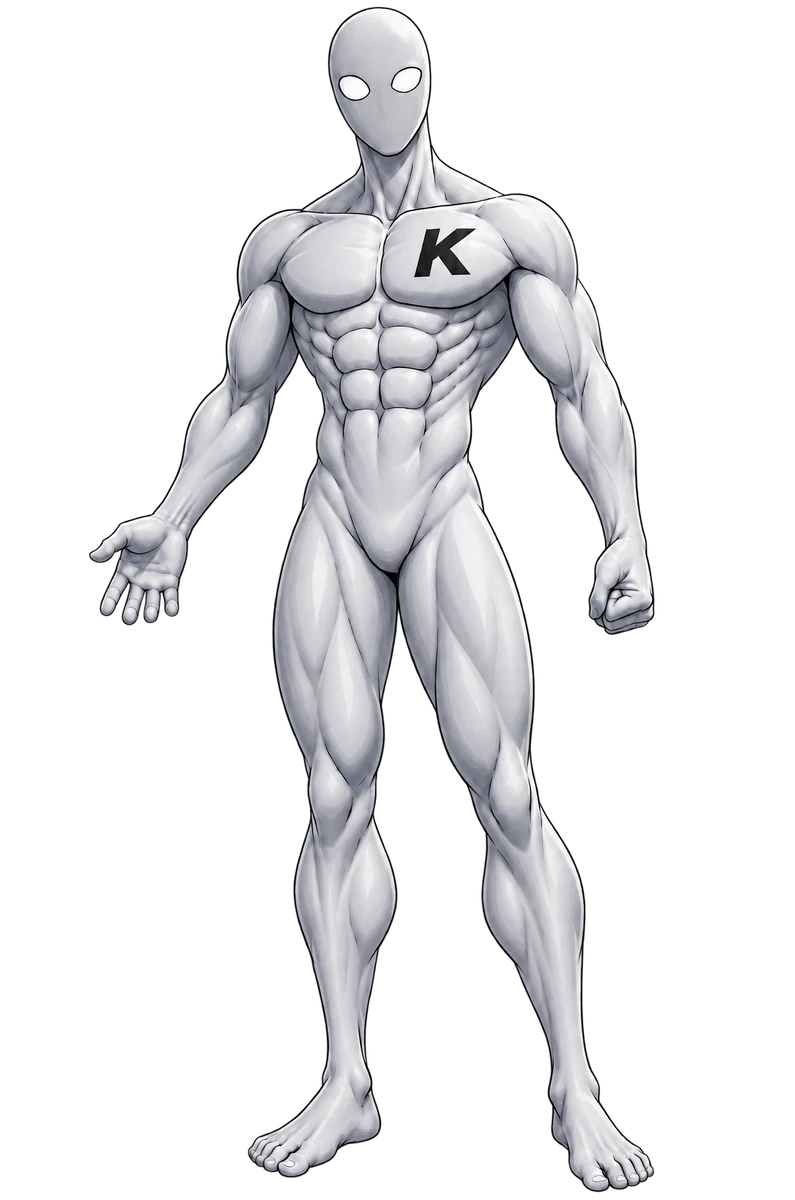
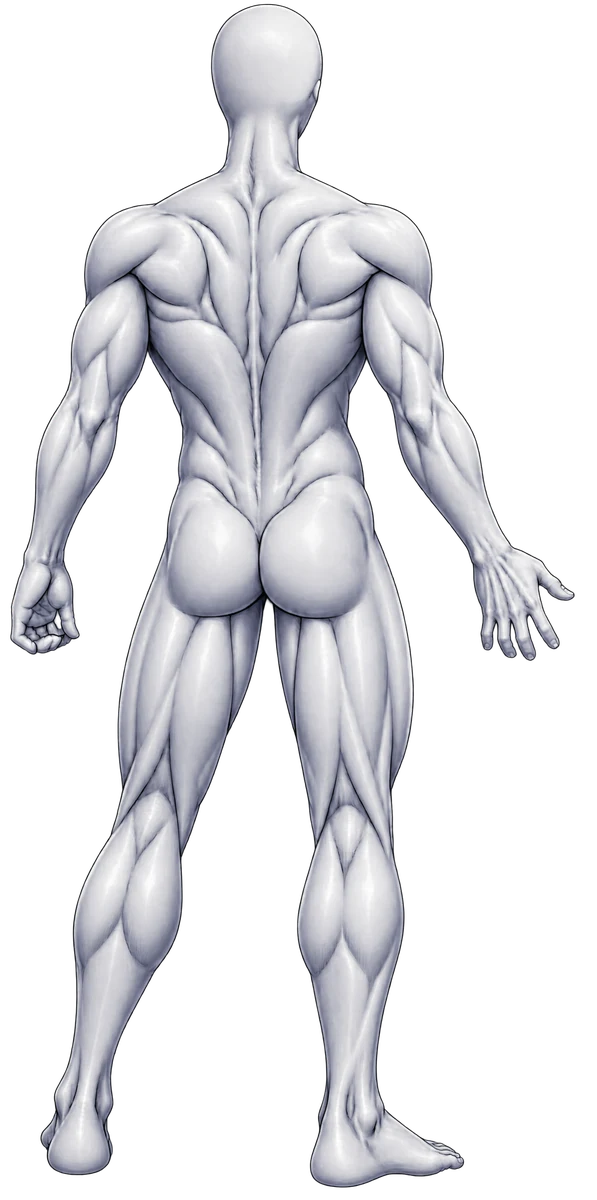
Pulling the shoulders into extension and holding the tucked torso horizontal against gravity is driven mainly by the latissimus dorsi, with the chest assisting. The core and hip flexors work hard to keep the knees pulled tightly to the chest, which is why core involvement stays high even though the tucked legs barely add to the lever arm. The shoulders and trapezius hold the scapulae depressed and neutral under sustained isometric tension, the biceps help keep the elbows locked straight, and the forearms and hands manage grip while the lower back helps keep the tucked torso rigid.
Stats
- Strength
- 0.00
- Control
- 0.00
- Endurance
- 0.00
- Mobility
- 0.00
- Balance
- 0.00
- Power
- 0.00
This is an isometric strength hold, so strength leads the profile, though at a lower demand than the later, longer-lever front lever variations. Control is the clear secondary stat, since the technical challenge is almost entirely about finding and holding a depressed, neutral scapular position rather than raw pulling force. Endurance covers sustaining the tuck once it is found, with mobility, balance, and power playing only minor roles — the short lever arm makes this the most stable hold in the front lever family.
Completion criteria
Hold the tuck front lever — hips level with the shoulders, knees pulled tightly to the chest, scapulae depressed and neutral, hands pressed forward toward the hips — for the target time below without the chest rounding forward or the hips dropping below shoulder height.
Progression thresholds
- Lower threshold
- 10 s
- Upper threshold
- 25 s
Once you can hold a clean tuck front lever for the target time above, progress to the advanced tuck front lever by gradually opening the hips and knees toward ninety degrees while keeping the same torso position. If you cannot yet reach the lower threshold, spend more time building horizontal row strength and tuck back lever holds before retrying — both directly transfer to the scapular position and pulling strength this hold depends on.