Element preview
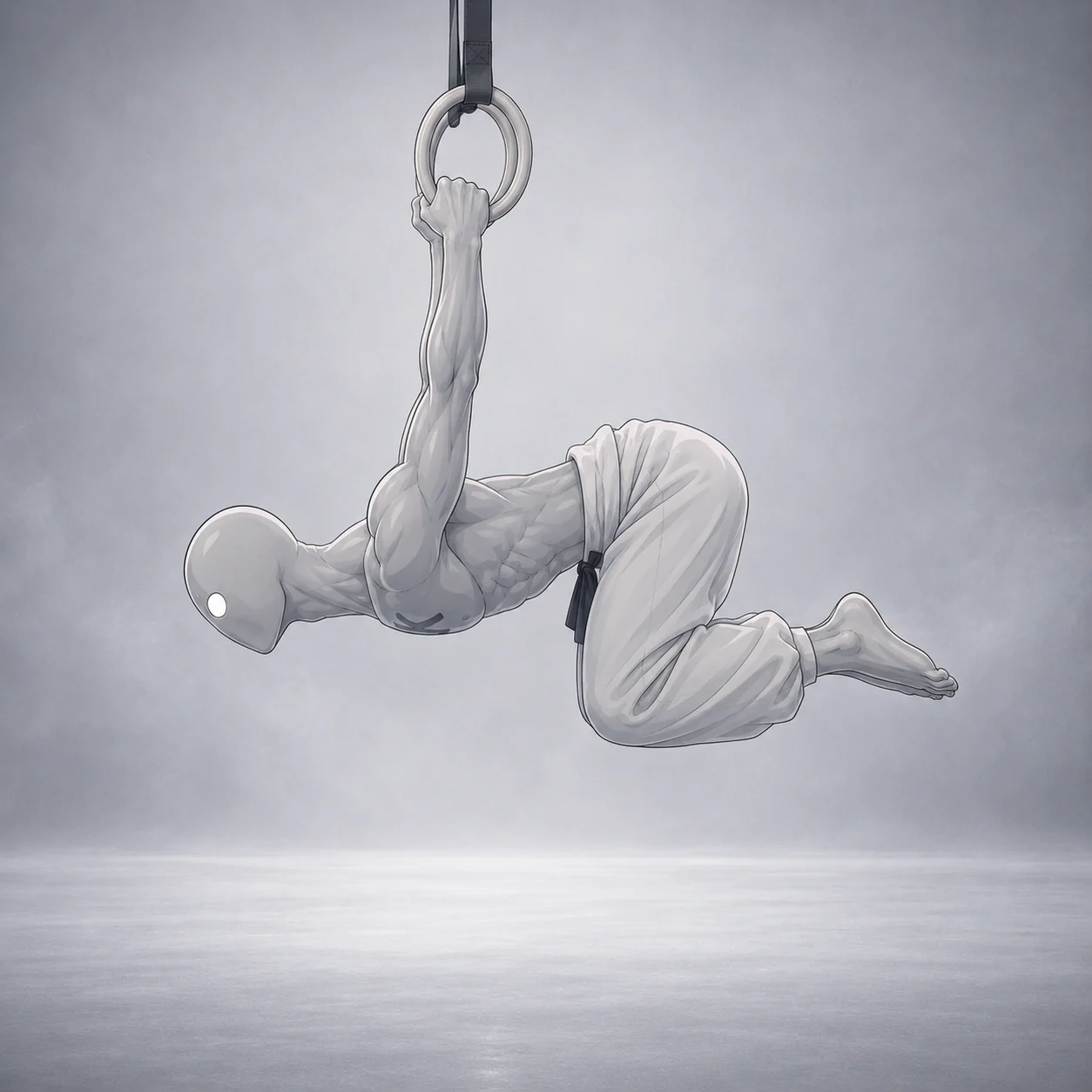
Preview · 0:04
A short look at the whole element in motion.
This is an overview clip, not a technique reference — the form in it may be imperfect. Follow the steps in Technique.
The tuck back lever is the simplest hold in the back lever family: an inverted, straight-arm isometric position where the knees stay pulled to the chest, keeping the body's center of mass close to the shoulders and the torque on the shoulders and elbows low. It is the entry point into a long progression — tuck, advanced tuck, straddle, one-leg or half-layout, then full back lever — that builds the scapular control and supinated-grip tolerance the later, straight-body holds depend on.
Technique
- Start from an inverted hang or an inverted pike/skin-the-cat position on a pull-up bar or rings, using a supinated (palms-toward-you) grip.
- Tense the pectorals, latissimus dorsi, and front of the shoulders, then lower backward slowly and under control rather than dropping into position.
- Pull the knees to the chest using the abdominals and hip flexors, letting the torso round into a tuck.
- Stop as soon as the hips reach shoulder height — specifically when the greater trochanter (the bony point on the outside of the hip) lines up with the shoulders — and hold there.
- Keep the scapulae depressed and neutral: avoid protracting them (which rounds the chest) or retracting them (which arches the back).
- Hold with steady breathing, then reverse the same controlled path back up to the inverted hang.
Preparation
Before working the tuck back lever directly, get comfortable moving between an inverted hang and an inverted pike (skin-the-cat), since that is both the entry path into the hold and useful conditioning for the shoulders and elbows. If the hold feels unstable at first, negatives from an inverted hang toward a German hang, or supplementing with pull-ups and rowing work, both make the isometric position easier to build toward.
Risks
The supinated grip trains useful elbow connective-tissue and biceps tolerance for later back lever progressions, and mild elbow soreness while adapting to it is normal; back off and add German hang or skin-the-cat conditioning, plus light biceps isolation work, if soreness persists or turns sharp. The tucked position keeps the lever arm short, so the load here is lower than in the straddle, one-leg, or full back lever — but the same supinated, straight-arm setup means poor tolerance can still be aggravated by rushing the hold before it feels stable.
Two technique faults are common and worth eliminating early: pulling the arms in and squeezing the lats harder to make the hold easier, which retracts the scapulae and arches the back; and letting the chest round forward, which becomes harder to correct as later back lever variations extend the body further.
Muscles
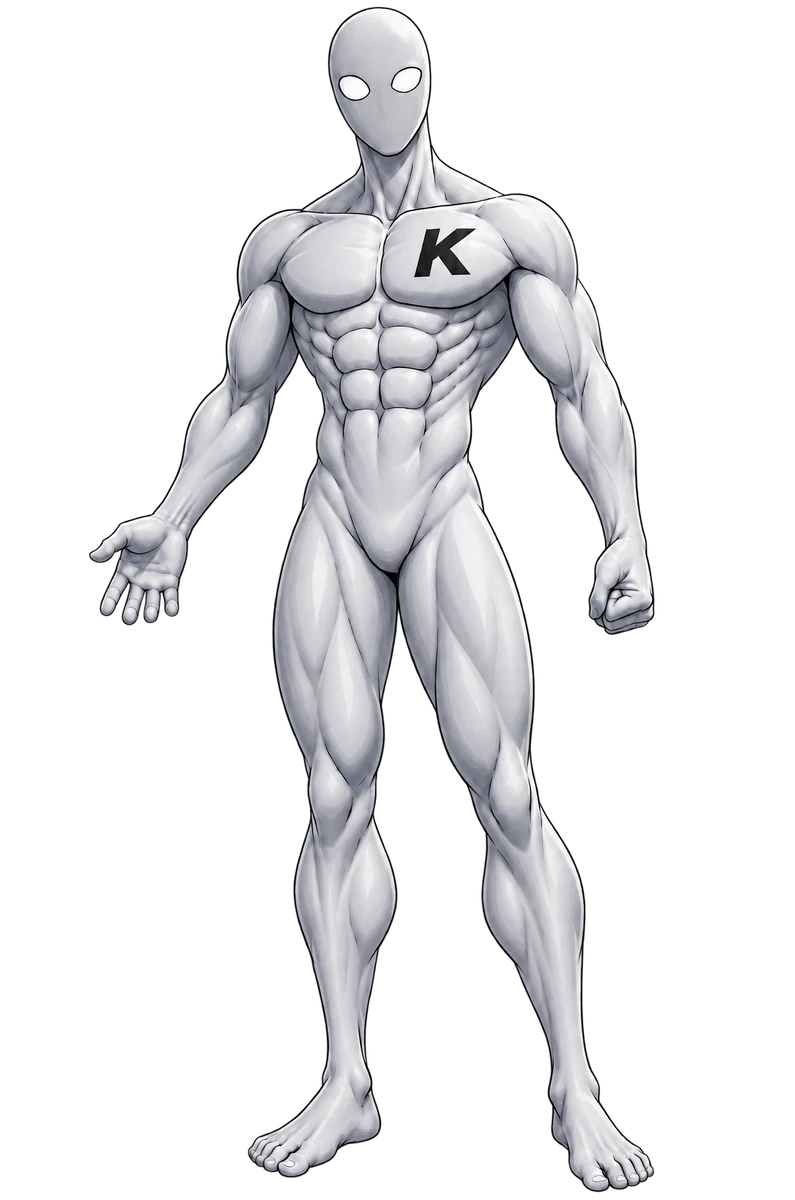
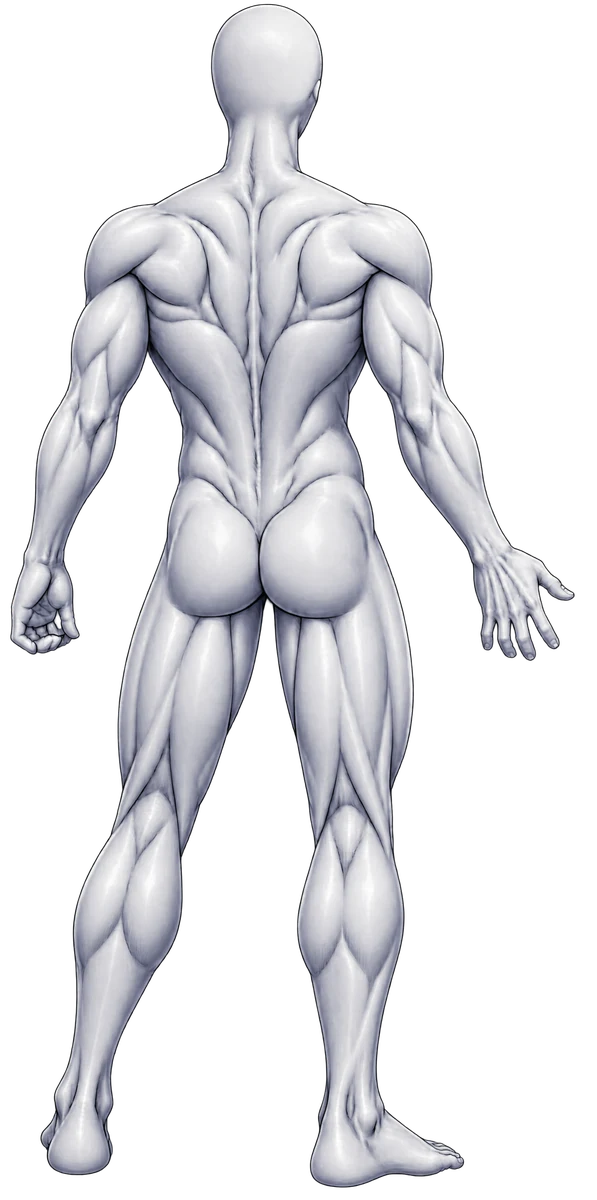
Holding the tuck against gravity is driven mainly by the latissimus dorsi, chest, and front of the shoulders, which pull the shoulders into extension and resist the swing back toward a normal hang. The core and hip flexors do the work of pulling the knees to the chest and keeping them there, which is why core involvement is nearly as high as in the straighter back lever variations even though the legs barely load. The biceps stay isometrically tense to protect the elbow under the supinated grip, while the forearms, hands, and trapezius handle grip strength and scapular stabilization.
Stats
- Strength
- 0.00
- Control
- 0.00
- Endurance
- 0.00
- Balance
- 0.00
- Mobility
- 0.00
- Power
- 0.00
This is still primarily an isometric strength hold, so strength leads the profile, matching the floor set by the harder back lever variations. Control is the clear secondary stat since the main technical challenge is resisting the urge to cheat the hold by pulling the arms in or letting the chest round. Endurance covers sustaining the position, while balance, mobility, and power are minor: the tucked position is the most stable of the back lever holds, so there is comparatively little to balance against.
Completion criteria
Hold the tuck back lever — hips level with the shoulders (greater trochanter aligned with the shoulder line), knees pulled tightly to the chest, scapulae depressed and neutral, without pulling the arms in to cheat the hold or letting the chest round forward — for the target time below.
Progression thresholds
- Lower threshold
- 12 s
- Upper threshold
- 30 s
The tuck position is the shortest lever in the family, so it calls for the longest hold time before moving on — once you can hold it cleanly for the target time above, progress to the advanced tuck or straddle back lever. If you drop below the lower threshold, spend more time on inverted-hang-to-German-hang negatives and pulling/rowing work to rebuild the isometric base before retrying.