Element preview
The straddle planche is a straight-arm support hold in which the body stays parallel to the floor while the legs spread wide apart. Widening the straddle shortens the effective body lever compared with a legs-together planche, which is why it sits as an easier waypoint between the tuck progressions and the full planche: the shoulders still resist a large forward-leaning moment, but the wide stance trades some of that leverage demand for a hip and hamstring flexibility requirement.
Technique
- Begin in the bottom of a squat with your hands on a firm, level floor or on low parallettes, just outside your hips, gripping the support firmly.
- Lock the elbows and keep the shoulder girdle active, with the shoulder blades fully protracted and depressed without rounding the upper back.
- Lean forward to shift your weight from your feet onto your arms, then continue leaning as you raise the hips toward shoulder height.
- Spread the legs apart as far as comfortably possible while you lift the feet from the floor, keeping a straight line from shoulders through hips and knees to pointed toes.
- Some athletes prefer leaning in gradually with the hips slightly bent before lifting the legs; others jump into the position and balance from there. Either entry is acceptable if the final body line is correct.
- Hold the straddle position with straight arms, an active shoulder girdle, and the hips level with the shoulders. End the attempt before the elbows bend or the hips rise above shoulder height, then return the feet to the floor under control.
Preparation
Equipment and conditions
- A clear, firm, level floor with enough space to lean forward and step out of the hold safely.
- Optional low parallettes for a more neutral wrist position.
- A proficient straddle from press-handstand, back-lever, and front-lever work, plus a controlled advanced tuck planche, before attempting the full straddle position.
By this stage a proficient straddle should already be familiar from press-handstand work, abdominal compression training, and the back- and front-lever progressions — if the straddle itself feels tight or unstable, spend time on that range before loading it here. Most people also need dedicated supplementary work to reach this position: a planche isometric hold paired with dynamic pressing work such as planche-progression push-ups or pseudo planche push-ups is the combination called out for closing the remaining strength gap. Bridging from the advanced tuck can also be done with an assisted straddle planche, a weighted or vested advanced tuck hold, or elastic-band assistance.
Risks
- This is a straight-arm, long-lever support skill: the wrists, elbows, and shoulders bear the full bodyweight in extended positions. Build exposure to the hold gradually and treat wrist, elbow, or anterior shoulder pain as a signal to reduce volume or regress the progression rather than push through it.
- The two faults called out for this skill are bent arms and hips raised above shoulder height. Both reduce the demand on the shoulders by shortening the effective lever, which defeats the purpose of the hold and can encourage compensations elsewhere; use a mirror, camera, or spotter to check position.
- A wide straddle asks the hips and hamstrings for real end-range flexibility. If the legs cannot spread without rounding the lower back or losing the shoulder position, work on straddle mobility separately rather than forcing the range under load.
- Persistent joint pain, swelling, or loss of motion warrants assessment by a qualified healthcare professional rather than more attempts at the hold.
Muscles
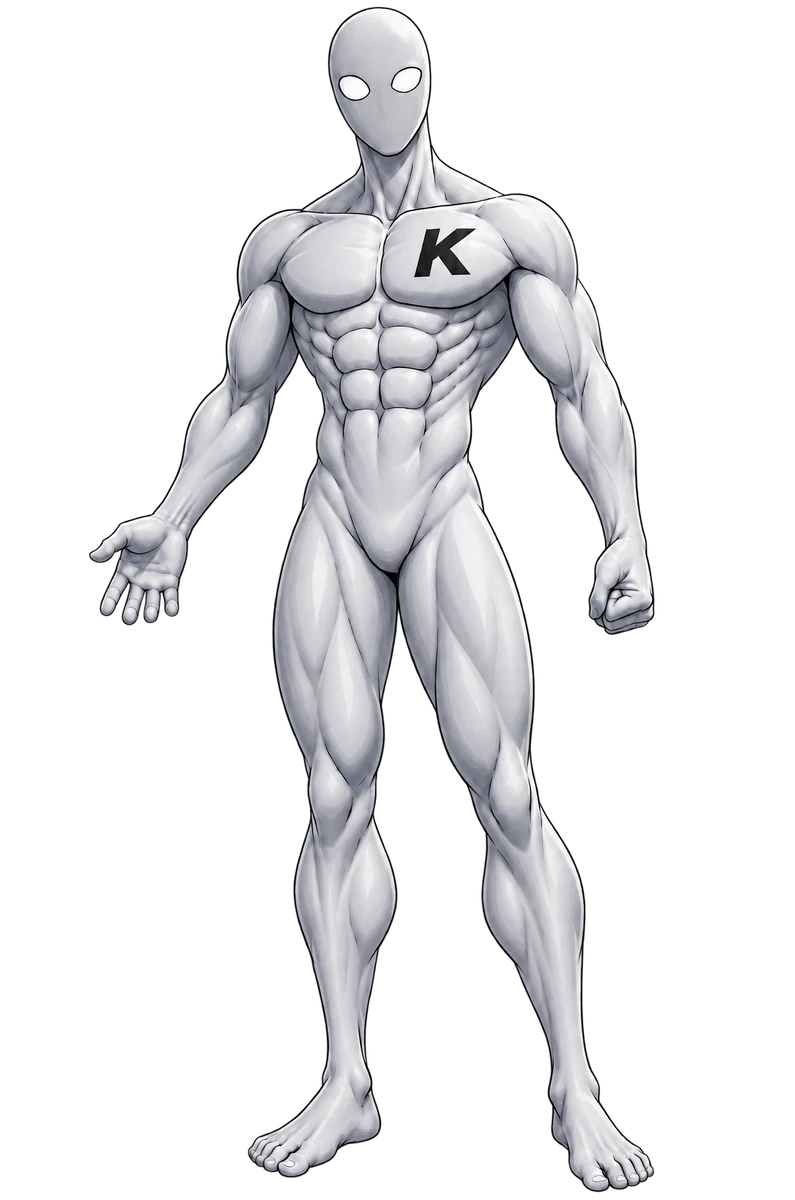
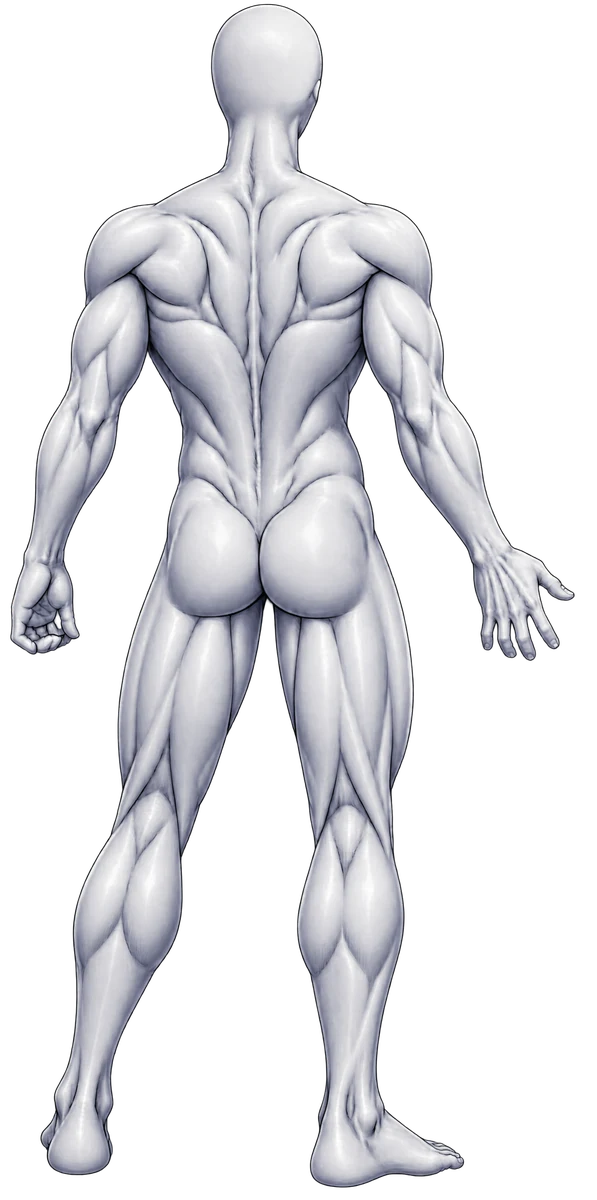
- Shoulders0%— show exercises
- Core0%— show exercises
- Biceps0%— show exercises
- Chest0%— show exercises
- Hands0%— show exercises
- Forearms0%— show exercises
- Trapezius0%— show exercises
- Glutes0%— show exercises
- Latissimus Dorsi0%— show exercises
- Triceps0%— show exercises
- Quadriceps0%— show exercises
- Lower Back0%— show exercises
- Hamstrings0%— show exercises
The shoulders take the dominant load as the arms resist the forward-leaning body lever, with the biceps contributing strongly to the straight-arm shoulder-flexion action. The chest, serratus anterior (grouped here with the shoulders), trapezius, and latissimus coordinate the shoulder blade and upper arm, while the core, glutes, and legs create a rigid trunk despite the wide leg separation. The hands and forearms maintain grip and fine pressure adjustments for balance. Because the straddle shortens the lever compared with a legs-together planche, target percentages here sit below the full planche on every shared muscle group; direct EMG evidence for this exact floor variant is limited, so the balance among these muscles is a conservative, biomechanically reasoned estimate rather than a measured value.
Stats
- Strength
- 0.00
- Balance
- 0.00
- Control
- 0.00
- Mobility
- 0.00
- Endurance
- 0.00
- Power
- 0.00
Strength remains the defining quality, though the wider base of support makes the straddle planche somewhat less strength-limited than the full planche, which is reflected in a lower primary weight. Balance is secondary: the wide stance is more forgiving than a legs-together position, but the center of mass over the hands still shifts constantly. Mobility carries more weight than in the full planche because spreading the legs to a wide, straight-leg straddle under load asks directly for hip and hamstring range; control and endurance support the position without dominating it.
Completion criteria
Hold a clean straddle planche with straight elbows, a fully protracted and depressed shoulder girdle, hips at shoulder height, and legs spread apart with no bend at the hips. A commonly used practical benchmark is about 10 seconds of continuous, unbroken hold before shifting primary volume toward the half-layout/one-leg-out or full planche progressions.
Progression thresholds
- Lower threshold
- 5 s
- Upper threshold
- 15 s
These figures are a product checkpoint, not a universal physiological threshold. Once the hold is clean for roughly 15 seconds, shift primary volume toward the half-layout/one-leg-out or full planche progressions. If a clean straddle position cannot be held for about 5 seconds, return to the advanced tuck planche or an assisted/banded straddle variation and keep the same technical landmarks — locked elbows, protracted-depressed shoulders, and hips no higher than shoulder height.