Element preview
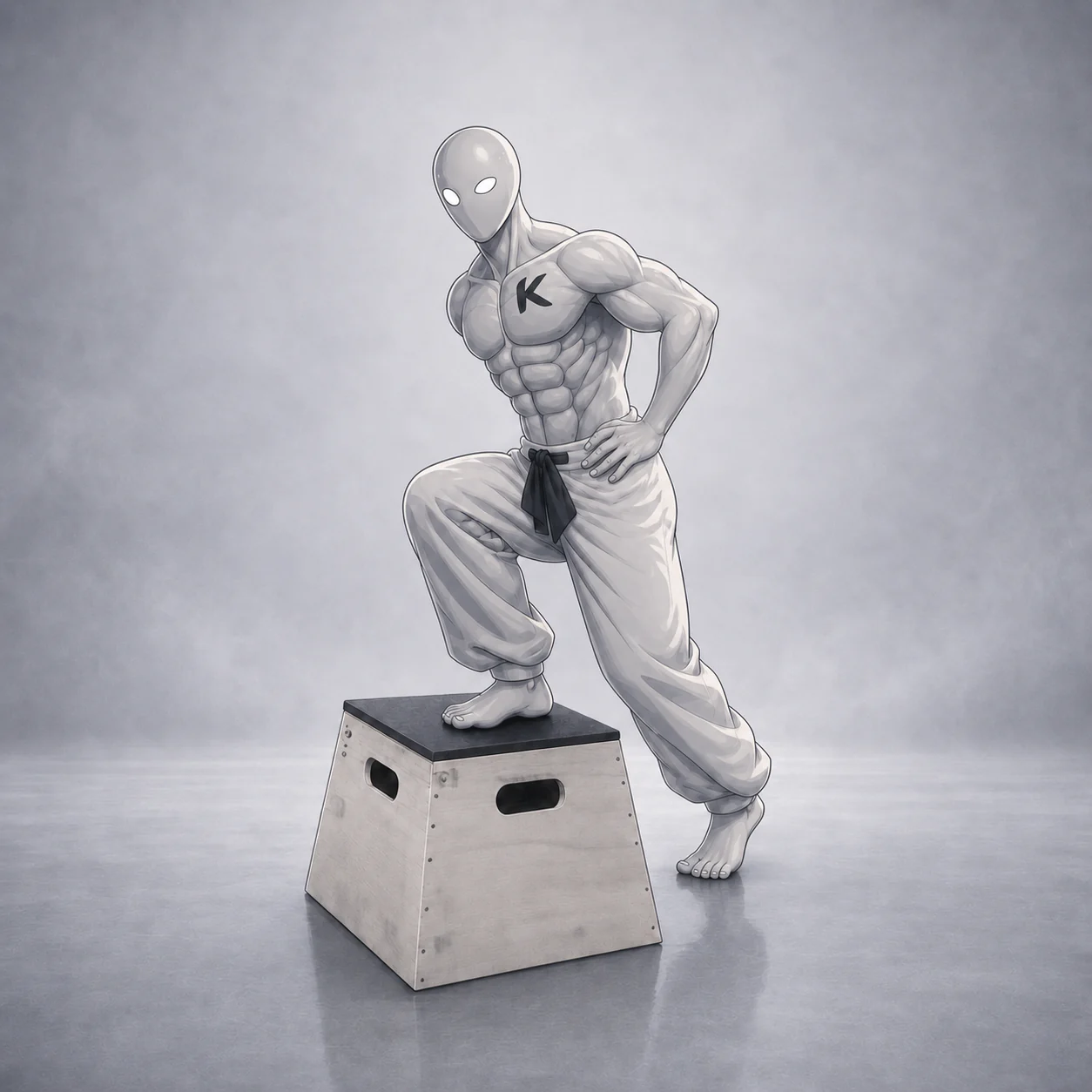
Preview · 0:06
A short look at the whole element in motion.
This is an overview clip, not a technique reference — the form in it may be imperfect. Follow the steps in Technique.
A step-up is a unilateral, closed-chain leg exercise: one foot drives the whole body up onto an elevated surface while the other leg stays passive. Because the working leg has no trailing-leg support to lean on during the concentric drive, it demands more single-leg strength and balance than a split squat while staying more accessible than a full pistol squat, which is why it sits just past split squat on the way toward harder single-leg squat patterns.
Technique
- Stand facing a stable box or bench set at roughly knee height, far enough away that the working foot lands flat on top without stretching forward.
- Place the entire working foot on the box, weight centered over the middle of the foot rather than the toes.
- Drive up through the working leg only — extend the hip and knee to stand fully on the box. Do not push off the trailing leg on the ground; it should stay relaxed and simply follow.
- At the top, briefly stack hip over knee over ankle on the working leg before controlling the descent back down through the same leg.
- Keep the torso tall and the working knee tracking in line with the toes throughout, instead of caving inward.
Preparation
Box height is the main lever for difficulty: a lower box keeps the knee angle shallow and the balance demand modest, while a higher box increases both hip/knee range of motion and the strength and control needed to stand up on one leg without the trailing leg helping.
Risks
Choosing a box that is too high for current single-leg strength is the most common technical fault: it forces extra forward trunk lean and knee valgus (the knee drifting inward) to complete the rep. Weak hip abductors/external rotators or limited ankle dorsiflexion make this collapse more likely. Cue "knee out, weight through the middle of the foot" and regress to a lower box rather than tolerating valgus. Avoid using the trailing leg to push or bounce off the ground — that turns the step-up into an assisted movement and hides asymmetries between legs.
Muscles
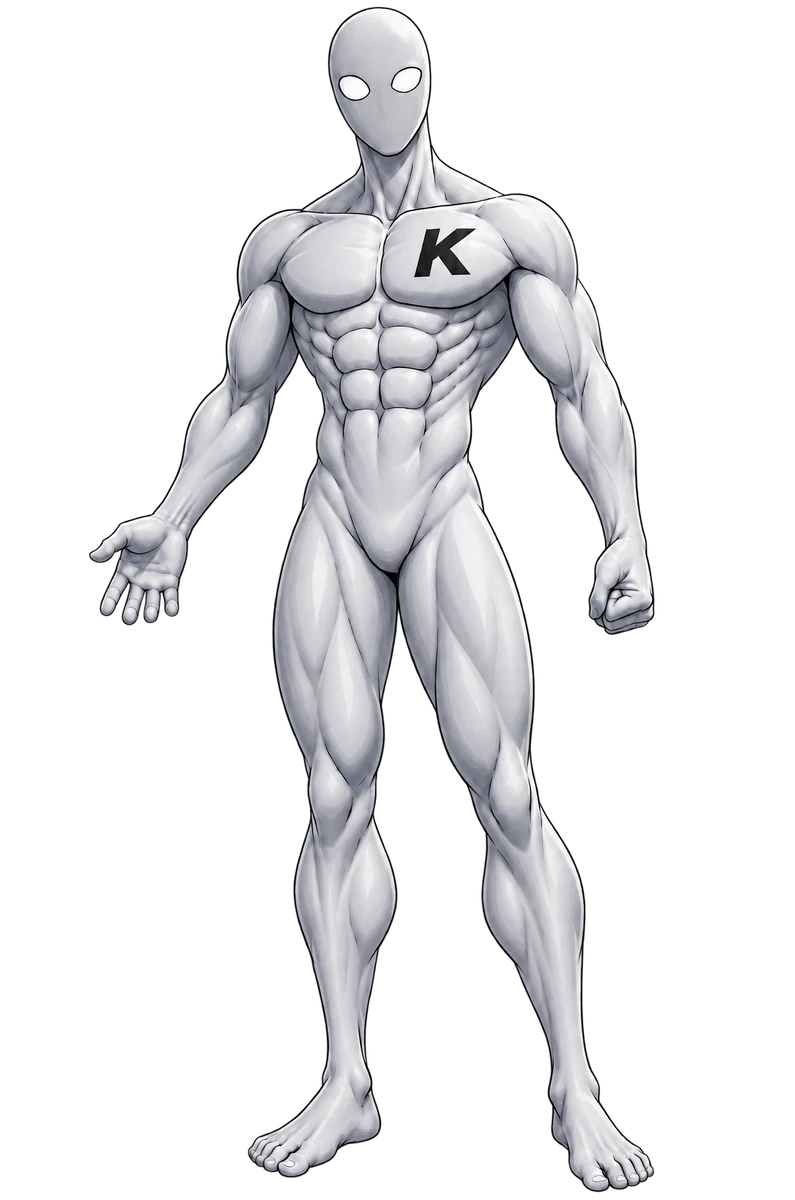
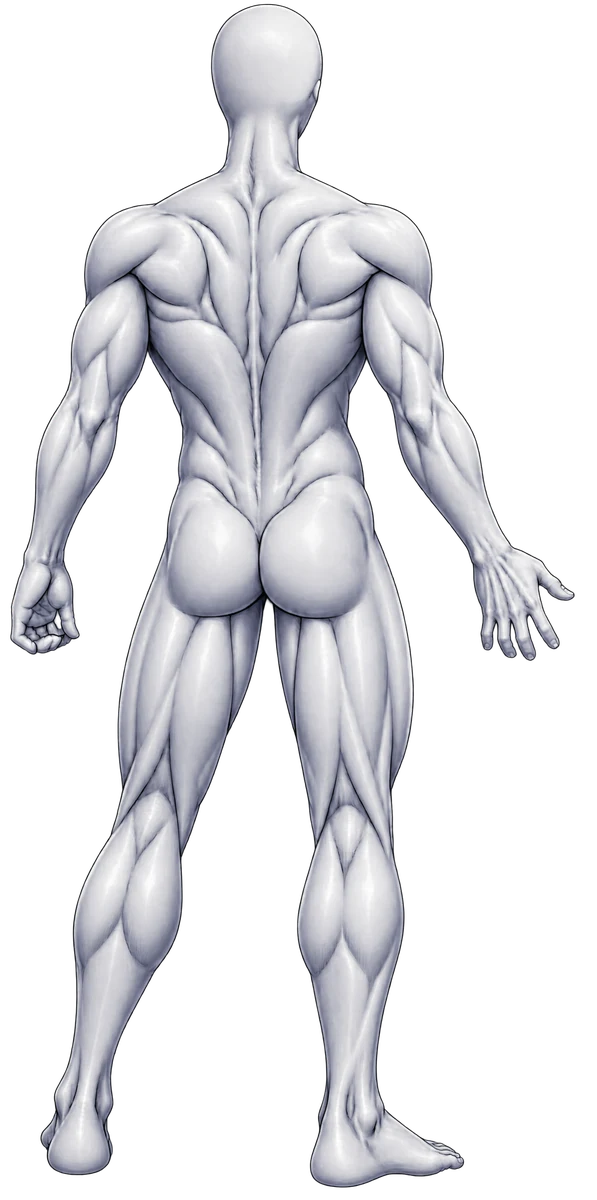
Electromyography on the lateral step-up shows the vastus lateralis and vastus medialis (quadriceps) reaching the highest activation, with the gluteus medius and gluteus maximus close behind and the rectus femoris lower — the exercise is quad- and glute-dominant, with hamstrings and calves contributing through hip extension and forefoot push-off. Core and lower-back musculature work isometrically to keep the trunk upright over a shifting single-leg base.
Stats
- Strength
- 0.00
- Balance
- 0.00
- Control
- 0.00
- Mobility
- 0.00
- Endurance
- 0.00
- Power
- 0.00
The step-up is primarily a strength movement expressed unilaterally, so balance and control are the next-largest demands — the working leg has to stabilize the whole body over a small base without help from the trailing leg. Power and endurance contributions are comparatively small since the movement is typically trained at a controlled tempo for moderate reps rather than for speed or prolonged sets.
Completion criteria
Perform 12-15 smooth, controlled step-ups per leg on a knee-height box, with no push-off from the trailing leg and no visible knee cave, before progressing toward more demanding single-leg squat variations.
Progression thresholds
- Lower threshold
- 6 reps
- Upper threshold
- 15 reps
Drop to a lower box or reduce reps if knee tracking or trunk control breaks down before the rep target; once the target is met cleanly on both legs, raise the box height or add load before moving toward more demanding single-leg squat variations.