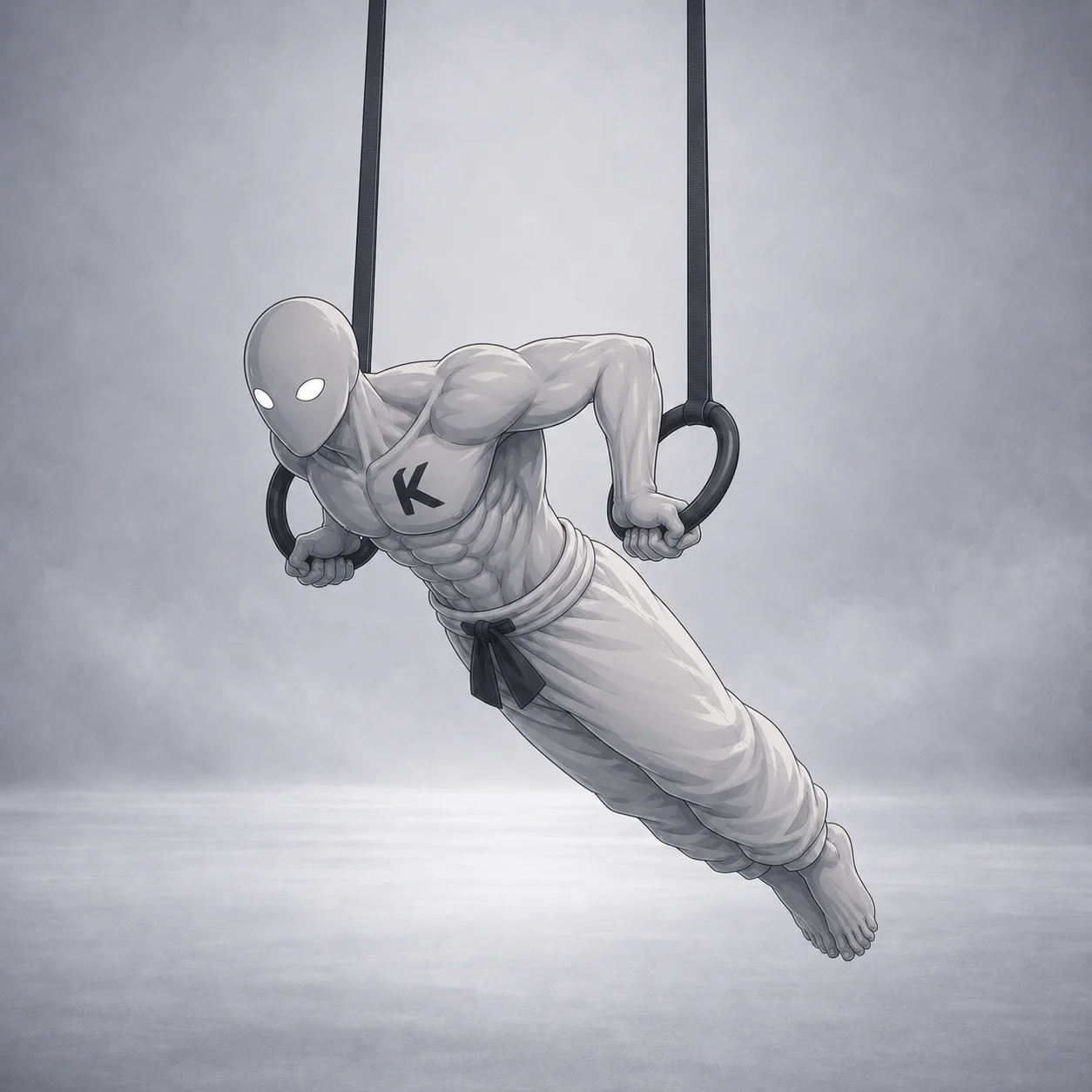
The ring turned-out 90° dip pushes the standard ring dip's turn-out much further: instead of the modest rotation used to keep the wrists comfortable on a plain ring dip, the rings are rotated toward a full 90° turn-out and held there through a dip to roughly 90° of elbow bend. Rotating the rings this far turns the shoulder into a much more externally rotated, less mechanically favorable position for pressing, which is why ring coaches commonly use this drill as accessory or preparation work for skills built around a fully turned-out ring position, such as the iron cross, rather than as a strength test on its own.
Technique
- Press to a stable ring support and turn the rings out as far as control allows, working toward a full 90° turn-out (palms rotated to face forward, elbow pits rotated toward the front) rather than the partial turn-out used in a standard ring dip.
- Keep the rings pulled in close to the body, arms locked, and shoulders actively depressed away from the ears before starting to lower.
- Lower under control until the upper arms are roughly parallel to the floor (about 90° of elbow bend), actively resisting the rings rolling back toward a neutral or under-rotated position as depth increases and the turn-out is hardest to hold.
- Keep the elbows tracking back near the torso and the rings from swinging, twisting, or separating; a full turn-out held to depth is far less stable than the same depth with a partial turn-out.
- Press back up to full lockout through the triceps, chest, and shoulders while keeping the turn-out and shoulder depression intact all the way to the top.
- Reset fully between reps rather than bouncing out of the bottom, and stop the set once the turn-out starts collapsing toward neutral before full depth or lockout, since that is a sign the position is no longer being trained.
Preparation
Before adding load or reps here, be solid in a rings-turned-out (RTO) support hold for time and comfortable with standard ring dips at a moderate, partial turn-out. Coaching sources on RTO progressions consistently describe building the static turned-out support first, then adding a slow, controlled eccentric at full turn-out, before attempting full concentric reps — trying to press out of a full 90° turn-out before the support position itself is stable tends to show up as the rings rolling back toward neutral partway through the rep.
Risks
This is the same deep, loaded shoulder-extension pattern as a plain ring dip, but held at a much more extreme external-rotation position: turning the rings a full 90° rotates the humerus further in the socket throughout the whole rep, which several ring-training coaching sources describe as increasing shoulder-stabilizer and rotator-cuff demand relative to a standard, partially turned-out ring dip. A systematic review of still-rings elements found generally higher shoulder-muscle EMG activity on rings than on fixed apparatus and linked still-rings shoulder injuries mainly to fatigue and technique breakdown rather than to one specific mechanism, though the review noted injury-specific evidence remains sparse (Malíř et al., 2023). Because the turn-out is more extreme here, losing it under fatigue — letting the rings roll back toward neutral mid-rep — is the main technical failure to watch for, and it tends to show up before elbow lockout fails. Keep depth to a comfortable, consistent range, do not chase full 90° turn-out before the rings-turned-out support hold and a standard ring dip are both solid, and stop the set if the rings become uncontrolled, the turn-out collapses, or you feel shoulder or biceps-tendon discomfort.
Muscles
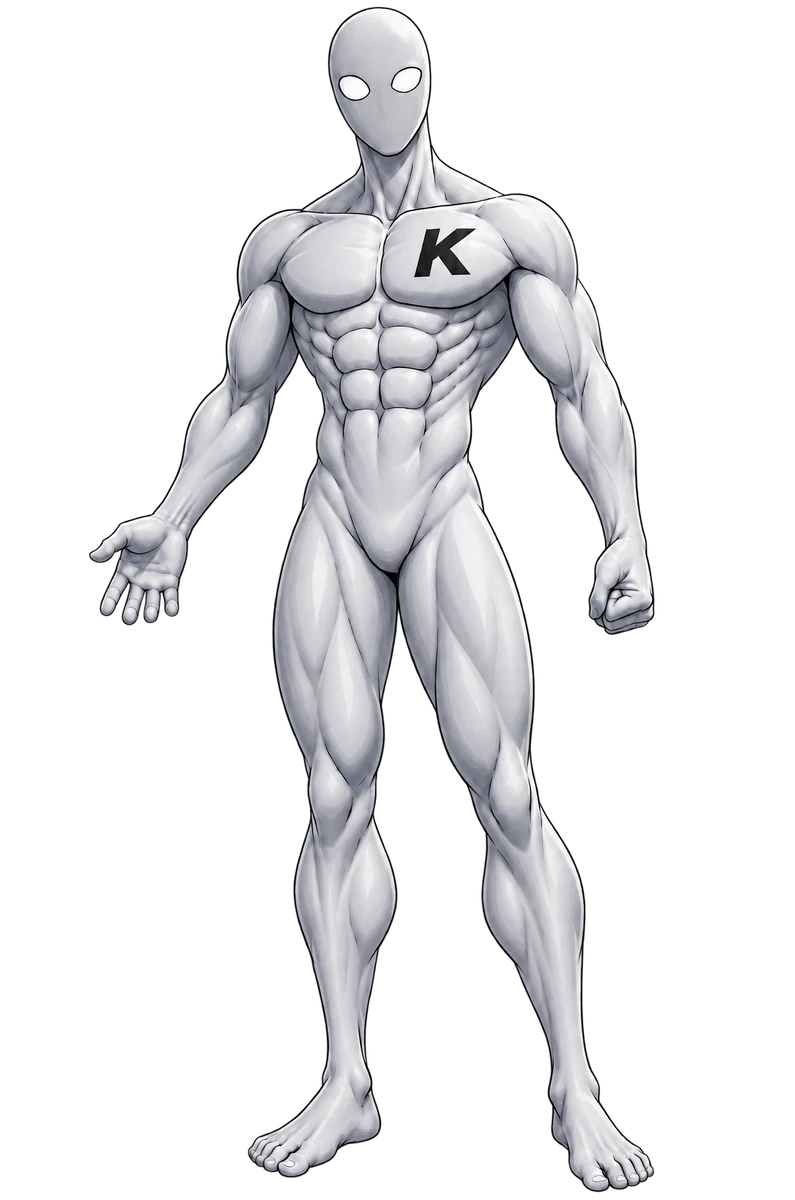
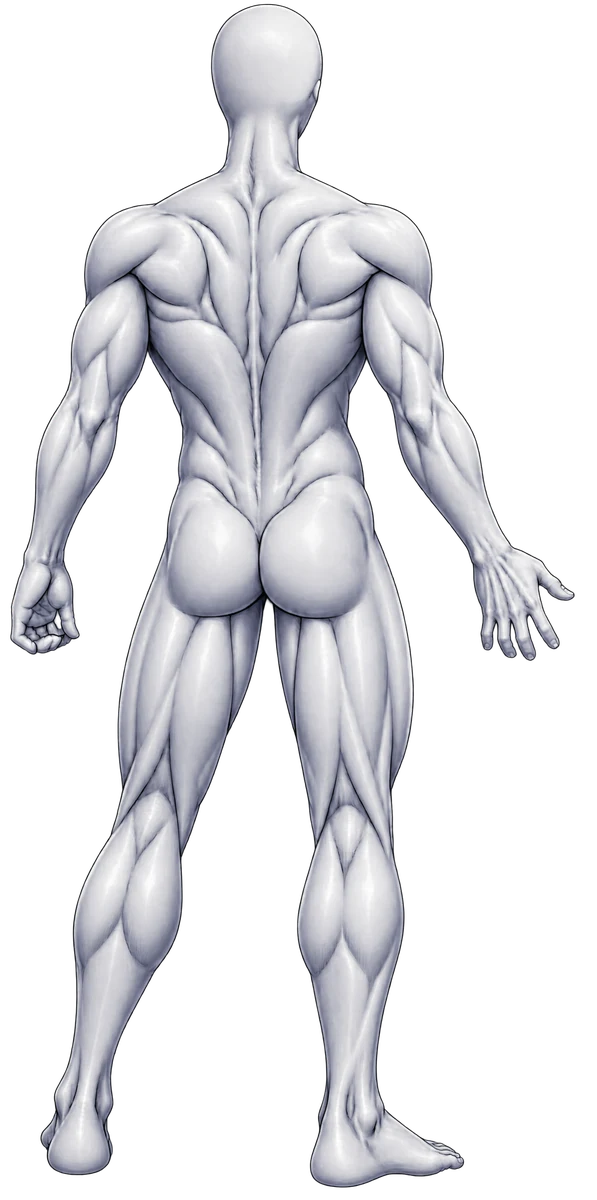
The triceps and chest still drive the pressing action, much as in a standard ring dip, but the shoulders take on a noticeably larger share here because holding a full 90° turn-out to depth is primarily a shoulder-positioning and rotator-cuff-stability demand rather than an extra pressing load. The latissimus dorsi and trapezius work harder to keep the rotated rings pulled in and the shoulder blades stable as the turn-out increases the leverage trying to pull the arms back toward neutral, and the core braces the trunk against the added sway of a more unstable ring position. The biceps, forearms, and hands pick up additional stabilizing and grip work from maintaining the deeper rotation and fine ring position throughout the rep.
Stats
- Strength
- 0.00
- Control
- 0.00
- Balance
- 0.00
- Mobility
- 0.00
- Endurance
- 0.00
- Power
- 0.00
Strength still leads, since the underlying pattern is still a loaded pressing dip, but control and balance both sit higher than on a standard ring dip because holding a full 90° turn-out stable through the whole range of motion is a coordination and stability demand distinct from simply pressing the load. Mobility also plays a larger role than in a plain ring dip, since reaching and holding a full external rotation at the shoulder requires more range than a partial turn-out. Endurance and power remain smaller contributors, since this is trained for a handful of controlled reps rather than for volume or speed.
Completion criteria
5–6 consecutive reps to a consistent ~90° elbow bend with the rings held close to a full 90° turn-out throughout the descent and ascent, full lockout at the top, stable (non-swinging) rings, and no loss of turn-out, ring control, or shoulder pain.
Progression thresholds
- Lower threshold
- 3 reps
- Upper threshold
- 8 reps
Regress toward standard ring dips with a partial turn-out, or toward holding the RTO support and its eccentric lowering alone, if the full turn-out collapses before depth or lockout is reached. This drill is generally used as accessory or preparation work for further fully turned-out ring skills, such as the iron cross, rather than progressed by adding load or reps once it is solid — most ring-training sources treat 4–6 controlled reps at full turn-out as sufficient before shifting toward the target skill itself.