Element preview
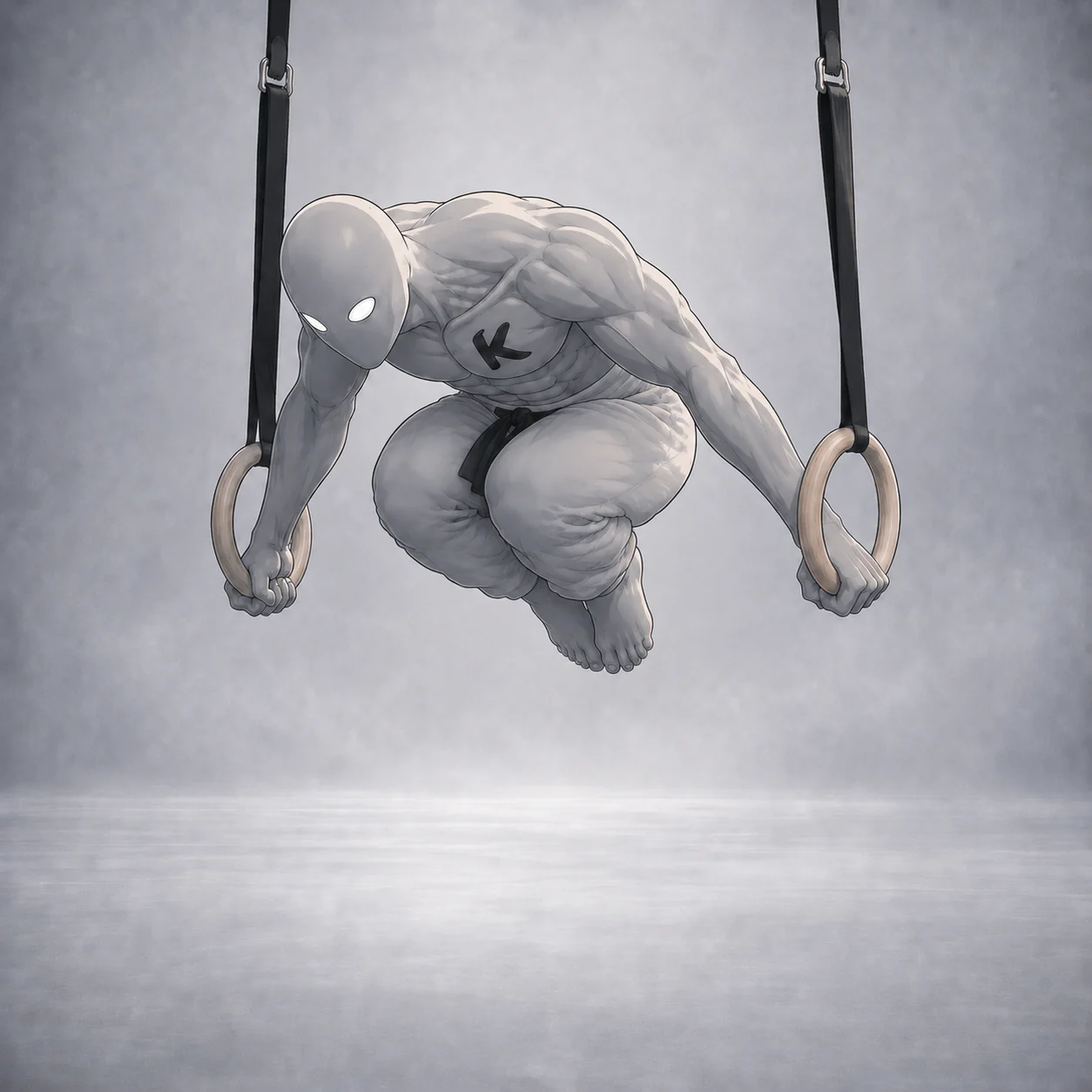
The ring tuck planche is the entry point into straight-arm planche work on gymnastic rings: knees tucked to the chest, hips lifted to roughly shoulder height, and the shoulders leaning forward past the hands with the elbows locked. It marks a mechanical shift away from the bent-arm shelf of the ring frog stand toward full shoulder-flexion support, while the tucked body shortens the lever enough to make that shift attainable. Because the rings themselves can swing, rotate, and drift, a tuck shape that is comparatively straightforward on a fixed floor or parallettes becomes a genuinely new balance and ring-control problem here — the direct foundation for later opening into the ring straddle planche.
Technique
- Start from a support hold on the rings (or from a tucked L-sit support), arms locked straight, rings turned out so the wrists are not twisted against the straps.
- Pull the rings in toward the hips and press them down and slightly apart to resist their natural inward drift; protract and depress the shoulder blades without letting the upper back round.
- Tuck the knees up toward the chest, compacting the body so the shoulders only have to support a short lever.
- Lean the shoulders forward past the hands, shifting your weight off a neutral support and onto the forward-leaning shoulder girdle — the same "face-plant" sensation described for the floor planche, just now over a base that can also move.
- Raise the hips until they sit roughly level with the shoulders, keeping the tuck compact and the toes pointed.
- Make continuous small wrist and finger corrections throughout the hold; the rings will try to rotate or drift as the lean and hip height change, and losing that correction collapses the hold faster than it would on a fixed support.
- Reverse the lean and lower the hips back into a tuck support to exit, rather than dropping out of the hold.
Preparation
Equipment and conditions
- A pair of gymnastic rings on adjustable straps, hung low enough to enter and exit safely, with clear space to bail forward if the lean is lost.
- A comfortable straight-arm ring support hold and an established ring frog stand before attempting the forward lean.
- A mat or soft landing surface under the rings while learning.
Treat the ring frog stand as the locked prerequisite, not a suggestion — it builds tolerance for ring drift and grip/shoulder loading on a hanging apparatus before the forward-lean and straight-arm demand are added on top. A comfortable straight-arm support hold on the rings and, where available, a floor or parallette tuck planche are useful complements: they let you separate the general lean-and-tuck pattern, which can be learned on a fixed surface, from the added problem of keeping a moving apparatus still, instead of learning both at once.
Risks
- Rings are a free-moving support, so losing ring-path control while leaning forward can shift load suddenly onto the shoulders, elbows, or wrists rather than letting it build gradually.
- The forward-leaning, straight-arm shoulder position is the newest demand at this stage of the progression; if the shoulder blades lose their protracted, depressed set or the upper back rounds, stop the attempt rather than forcing the lean further.
- Build a comfortable ring frog stand and a controlled straight-arm ring support before adding the forward lean — trying to solve ring stability and the new straight-arm loading pattern at the same time is a common way to lose control.
- Shoulder-joint problems are frequently reported among ring specialists in the gymnastics literature, but a systematic review of still-rings studies found that only 2 of 37 reviewed studies addressed injury risk factors directly, so the evidence on specific causal mechanisms is sparse and largely non-causal. Treat this as a reason to load the position gradually and stop at sharp or pinching pain, not as a specific diagnosis. Persistent shoulder, elbow, or wrist pain warrants assessment by a qualified healthcare professional.
Muscles
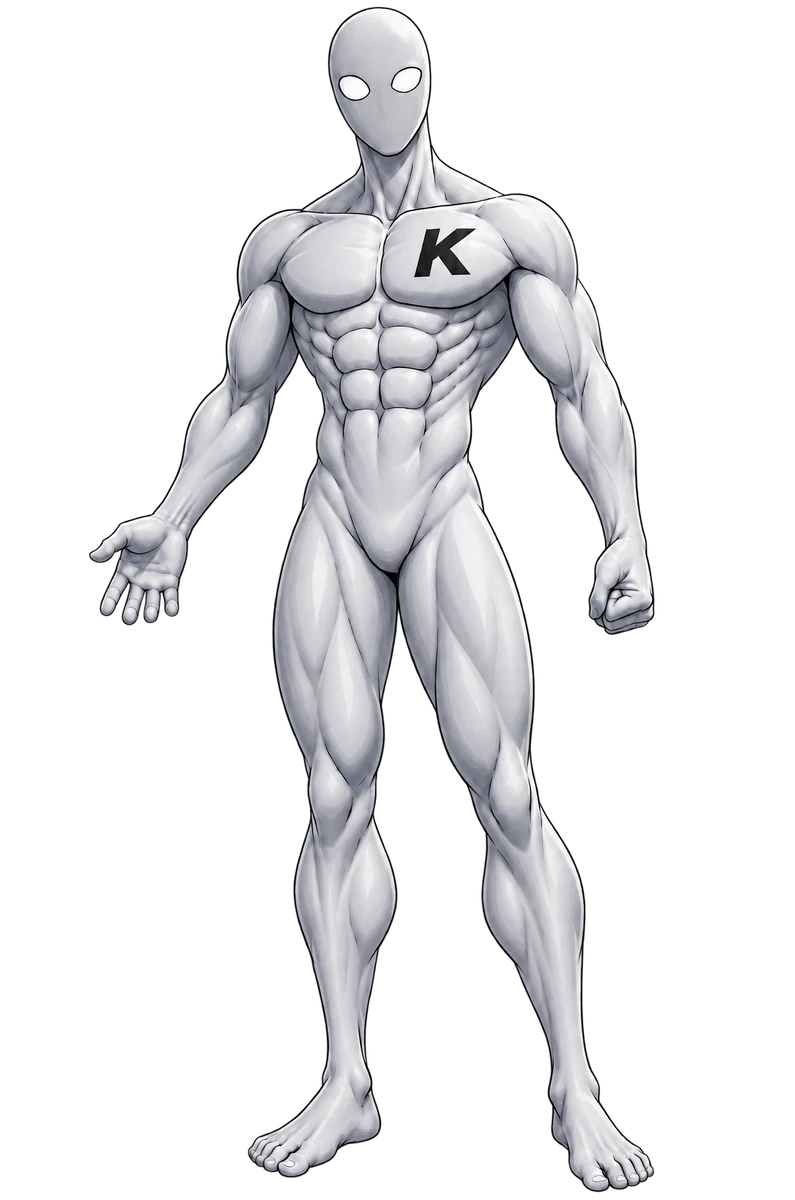
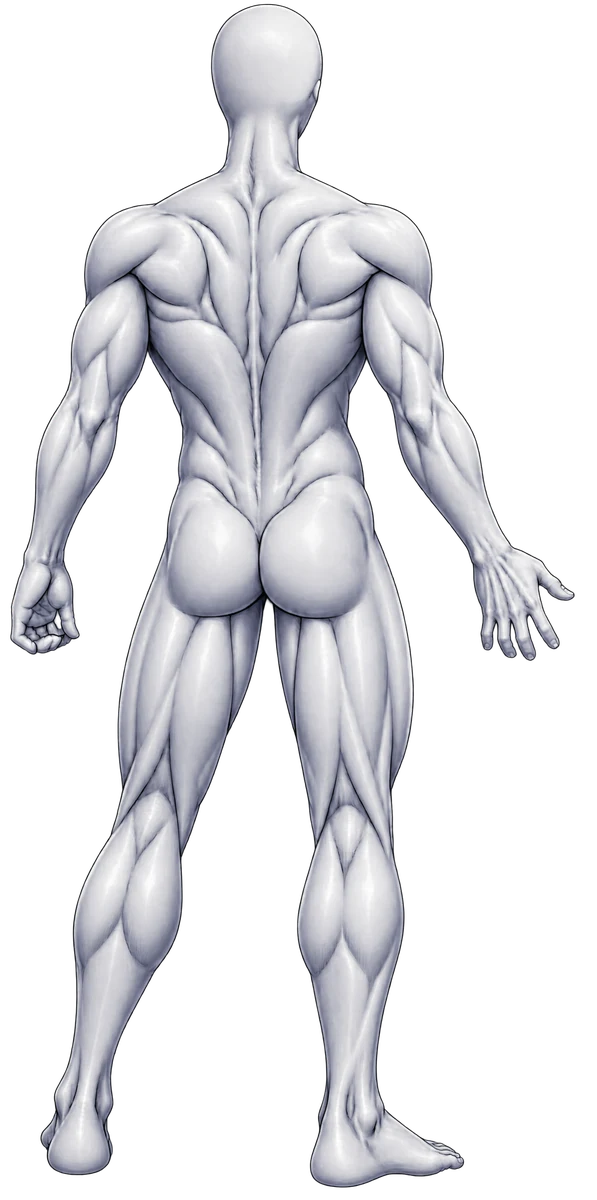
Because this is the first straight-arm hold in the ring planche progression, the load pattern shifts from the frog stand's bent-arm shelf to genuine shoulder-flexion support work. The shoulders remain the dominant mover, protracting and depressing to sustain the forward lean, while the hands and forearms make continuous grip and wrist corrections to stop the rings rotating or drifting — a demand that has no real equivalent on a fixed surface. A systematic review of EMG studies on still-rings hold elements found consistently high shoulder-girdle activation (pectoralis major, latissimus dorsi, biceps brachii, trapezius, deltoid) that the authors attributed specifically to ring instability; those studies covered handstand and other named hold elements rather than the tuck planche itself, so the pattern is used here as a reasonable generalization rather than a direct measurement of this exact position. The core stays active to keep the tucked body compact and resist the small rotational forces the rings transmit into the trunk, and the biceps and triceps share the work of locking the elbows and steering the ring path. Because the knees stay tucked rather than extended, the glutes and quadriceps contribute only lightly here compared with the open-leg straddle planche.
Stats
- Strength
- 0.00
- Balance
- 0.00
- Control
- 0.00
- Endurance
- 0.00
- Mobility
- 0.00
- Power
- 0.00
Strength is the primary quality: for the first time in this progression the arms are straight and the shoulder girdle, rather than a bent-arm shelf, carries the forward lean — though the tucked, shortened lever keeps the overall demand below the wider ring straddle planche. Balance is a close secondary quality here, and set higher than in the straddle planche, since the compact tuck sits closer to the frog stand's balance-heavy pattern and the rings must be actively settled through a larger range of body lean before the straight-arm position feels trustworthy. Control covers the continuous small corrections to ring path and shoulder set through the hold. Mobility is lower than in the straddle planche because the tucked knees remove the hip and hamstring range demand of an open straddle; power and endurance stay minor supporting qualities for what is fundamentally an isometric hold.
Completion criteria
Product estimate: hold a ring tuck planche — straight elbows, rings turned out and settled without drifting or rotating, knees tucked to the chest, hips at roughly shoulder height — for about 15 seconds, entering from and returning to a controlled tuck support rather than dropping in or out of the hold.
Progression thresholds
- Lower threshold
- 6 s
- Upper threshold
- 15 s
Struggling to keep the rings still while leaning forward, or losing the tuck as the hips rise, points back to more time on the ring frog stand and on a comfortable straight-arm ring support before retrying the lean. Once a settled 15-second ring tuck planche is consistent with controlled entries and exits, the same forward-lean and ring-control skills transfer directly to opening the legs into the ring straddle planche.