Element preview
Preview · 0:06
A short look at the whole element in motion.
This is an overview clip, not a technique reference — the form in it may be imperfect. Follow the steps in Technique.
The ring handstand push up takes the freestanding handstand push up and removes its one fixed point of contact: like the ring handstand, the rings can swing and rotate independently of each other and of the body, but now that instability has to be controlled while also pressing the whole body through a full elbow bend. It sits at the top of the vertical-push tree because it stacks the full pressing strength and range of motion of the floor handstand push up on top of the ring-specific stabilization demand of the ring handstand — neither piece alone is enough.
Technique
- Set the rings turned out and press into a strict, controlled ring support/handstand position first — do not attempt the pressing rep itself until the static ring handstand is solid, since the rings must already be stable before you start moving through them.
- From the handstand, initiate the descent by closing the shoulder angle and bending the elbows, keeping them tracking back close to your ribs rather than flaring outward, since flared elbows let the rings drift apart and rotate uncontrolled.
- Lower under control until your head approaches the level of your hands (rings), keeping the torso and legs in a straight line and the rings turned out throughout the descent — resist the rings sliding forward, backward, or twisting.
- Press back up by driving through the shoulders and triceps while actively pulling the rings back into a turned-out, stable position, re-elevating the scapulas to return to the handstand.
- Treat every rep as its own balance problem: because the rings can swing or rotate independently in any direction, corrections come from a mixed wrist/shoulder/torso strategy rather than the wrist-dominant strategy that works on a fixed surface, and that correction has to happen continuously through the full range of the press, not just at the top.
Preparation
Before attempting the ring handstand push up, you should already have:
- A solid freestanding handstand push up on a fixed surface (parallettes or similar), so the pressing strength, range of motion, and body-line control are already trained.
- A strict, controlled ring handstand, so the shoulders and rings are already comfortable bearing bodyweight in an unstable, turned-out position before you start moving through a press.
- Comfort with a ring support hold and general ring work, so the wrists and forearms already tolerate sustained ring loading before adding a dynamic pressing range.
Because this movement asks for both qualities at once, most of the learning curve is in keeping the rings turned out and still while the body moves through them — small errors that barely show on a fixed handstand push up make the rings swing or twist immediately.
Risks
- This combines two demanding faults sources at once: the freestanding handstand's fall risk and the rings' independent swing and rotation, so a loss of balance during the press can develop faster and with less warning than on a fixed handstand push-up. Only attempt it once the floor freestanding handstand push-up and a strict ring handstand are both solid, with a practiced bail path.
- Letting the lower back arch or the elbows flare under fatigue is the most common technical breakdown; on rings this also lets them drift apart and rotate, compounding the loss of stability rather than just degrading the press pattern.
- The shoulders take sustained pressing load through a full range of motion while also resisting ring movement in multiple directions. Evidence from still-rings research is limited and largely observational, and it did not study pressing elements specifically; it associates ring instability with higher shoulder muscle activity and links some rings-related shoulder complaints to improper technique rather than establishing a specific injury mechanism for this movement, so this should be read as a plausible, non-causal caution rather than an established risk figure.
- Wrists and forearms take continuous fine stabilization under load; build up tolerance gradually and warm up thoroughly before attempting reps.
Muscles
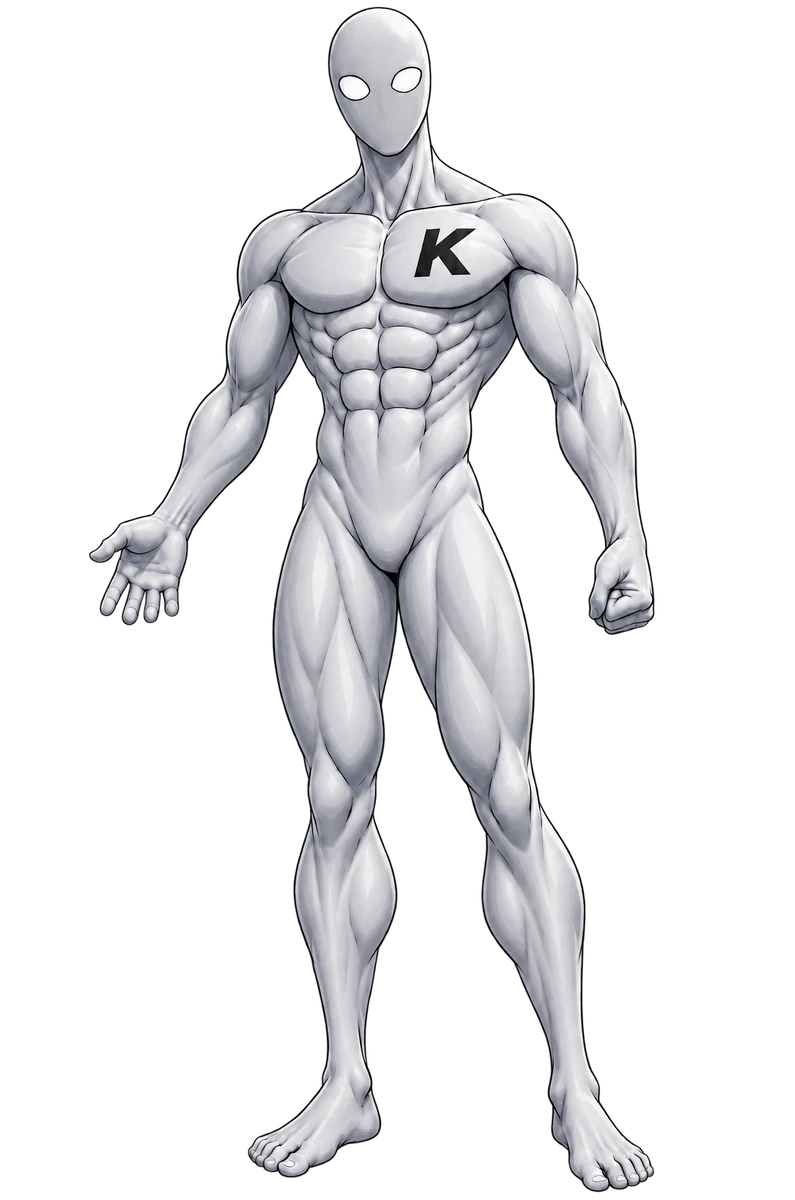
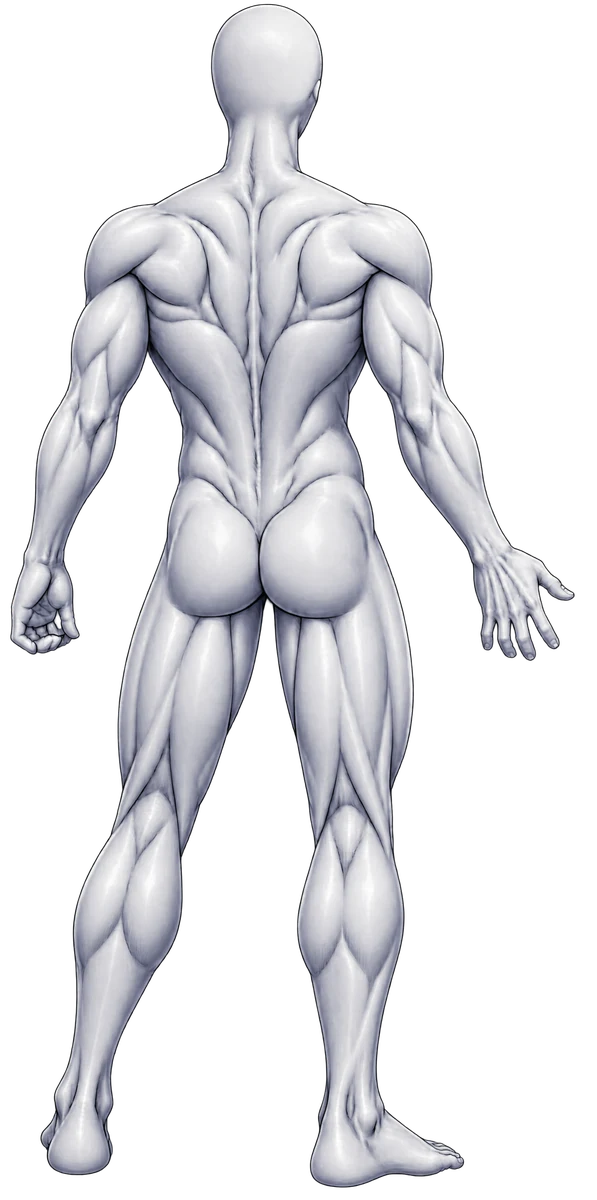
The shoulders remain the primary mover, pressing the body through the full overhead range as in the floor version, but here they also have to resist the rings swinging and rotating throughout the movement, which raises their overall demand along with the trapezius that keeps the scapulas locked and the rings turned out. The triceps drive elbow extension through a large range against bodyweight. A systematic review of still-rings elements found meaningfully higher EMG activity for handstand-type ring positions than for the same positions on more fixed apparatus, with added involvement from the chest, latissimus dorsi, and biceps that help lock the arms and pull the rings into a stable, turned-out line; that review did not test pressing elements specifically, so extending it to the push-up rep is a reasonable but not directly measured inference. The core and lower back brace harder than in the floor version to keep the body rigid while the base of support itself keeps moving, and the forearms and hands provide continuous fine correction through the rings across the whole rep, not just at the top.
Stats
- Strength
- 0.00
- Balance
- 0.00
- Control
- 0.00
- Endurance
- 0.00
- Mobility
- 0.00
- Power
- 0.00
This is still primarily a strength movement — pressing full bodyweight through a large range of motion overhead — so strength sits at the top of its normal range, slightly above the floor handstand push up. Balance and control both rise more than any other stat relative to the floor version, because the rings never stop moving and every phase of the press has to double as a balance correction rather than just a strength effort. Endurance, mobility, and power play the same small supporting roles as in the floor version.
Completion criteria
Perform 5 clean ring handstand push-ups: rings turned out, full range of motion, straight body line, no back arch, and the rings staying reasonably still rather than swinging between reps.
Progression thresholds
- Lower threshold
- 2 reps
- Upper threshold
- 6 reps
Because this stacks the ring handstand's instability on top of the floor handstand push up's strength demand, rep counts here are expected to run lower than on a fixed surface for the same relative effort — this is a project estimate calibrated conservatively against the floor version rather than a measured threshold. Once you can perform close to 6 clean reps with the rings staying controlled throughout, you have real headroom in this skill; if you're struggling to keep the rings stable for 2 solid reps, drop back to rebuilding the ring handstand and the floor handstand push up separately before recombining them.