Element preview
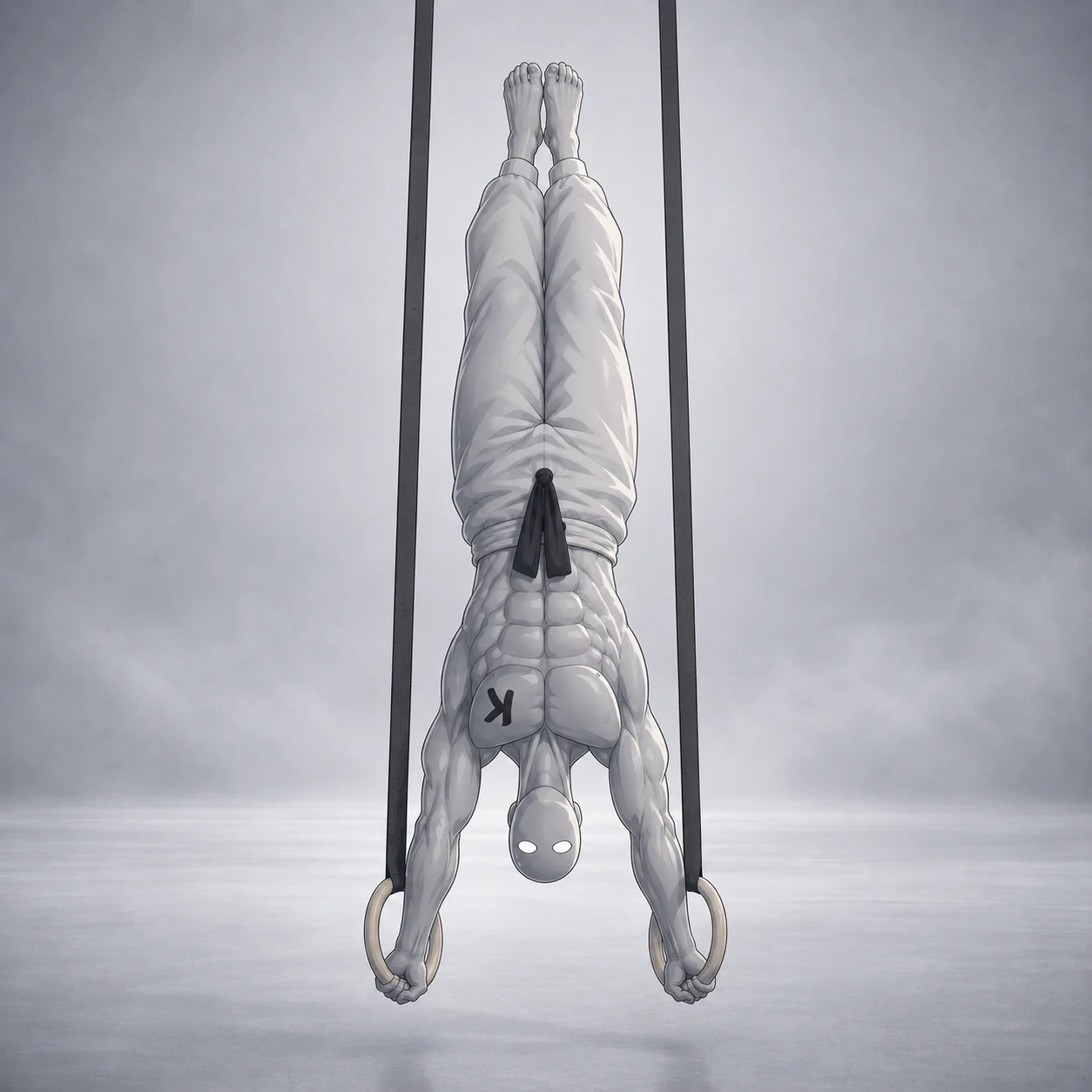
Preview · 0:06
A short look at the whole element in motion.
This is an overview clip, not a technique reference — the form in it may be imperfect. Follow the steps in Technique.
The ring handstand takes the freestanding floor handstand and removes its one fixed point of contact: the rings can swing and rotate independently of each other and of the body, so every correction that on the floor happens mostly at the wrists now has to be shared across the wrists, shoulders, and torso. It sits later in the vertical-push tree than the floor handstand and its supporting handstand push-up work, because it asks the athlete to keep producing that same full-body vertical line while actively neutralizing an apparatus that wants to move underneath them.
Technique
- Start from a stable support hold on the rings with the rings turned out and arms fully locked, then either press or carefully kick up into the handstand — do not attempt a dynamic kick-up until the support hold itself is solid.
- Stack shoulders over hands, hips over shoulders, and heels over hips, keeping the scapulas elevated and the rings turned out through the whole hold, exactly as in the floor handstand.
- Because the rings can swing and rotate independently in any direction, balance corrections come from a mixed strategy across the wrists, shoulders, and torso rather than the wrist-dominant strategy that works on a fixed floor surface — anticipate ring sway before it grows large instead of reacting to it late.
- Keep the rings pressed down and turned out with active shoulder depression; letting the rings drift or rotate uncontrolled is usually the first sign the hold is breaking down.
Preparation
Before attempting the ring handstand, you should already have:
- A confident freestanding floor handstand with minimal wrist corrections — the vertical alignment and scapular control trained there transfer directly.
- A strict, controlled ring support hold with the rings turned out, so the shoulders and rings are already comfortable bearing bodyweight in an unstable position before you invert.
- Solid handstand push-up strength off a fixed surface, since the ring version asks the shoulders to stabilize load and resist ring motion at the same time.
Rings amplify small errors that the floor simply doesn't show: a tiny weight shift that would be invisible on the floor makes the rings swing or tilt immediately, so build up hold time in small increments and treat every wobble as feedback rather than something to muscle through.
Risks
- The apparatus itself is unstable: unlike a floor handstand, a ring handstand can start swinging or rotating with no fixed reference point, so falls can develop faster and with less warning. Only attempt this once the floor handstand and a strict ring support hold are both solid, and always have a clear, practiced bail path.
- The shoulders carry sustained isometric load while also resisting ring movement in multiple directions; the limited research on still-rings work that exists has associated shoulder complaints with fatigue and breakdown in technique, though injury-prevention evidence for rings specifically is sparse and this is not an established causal link — stop the set once form or ring control starts to degrade rather than fighting for a few extra seconds.
- Wrists and forearms take continuous fine stabilization; build up tolerance gradually and warm up thoroughly before loaded holds.
Muscles
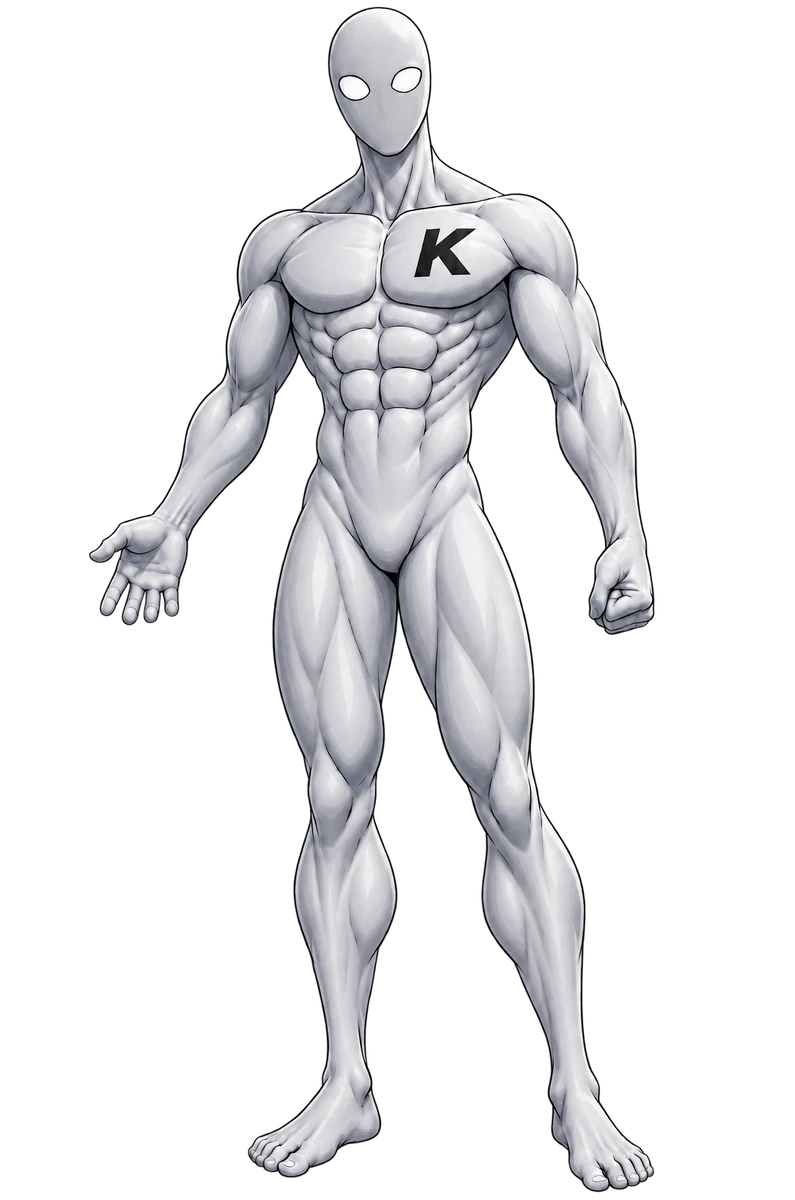
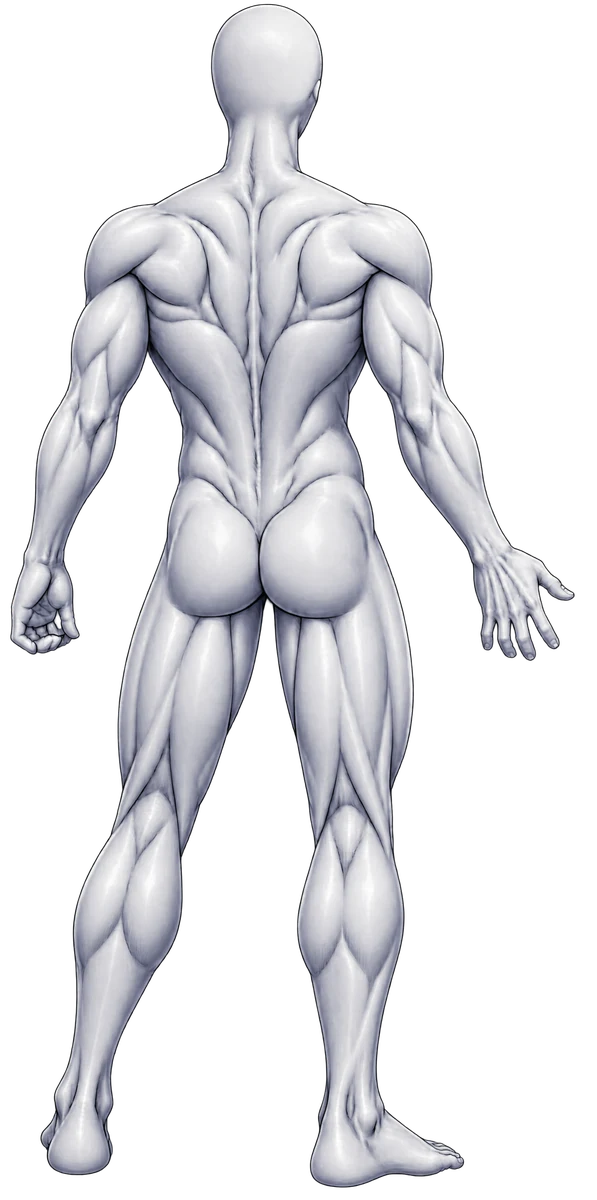
The shoulders remain the primary load-bearer, as on the floor, but now they also have to resist the rings rotating and swinging, which increases their overall demand along with the trapezius that keeps the scapulas locked in place. A systematic review of still-rings elements found consistently higher EMG activity for handstand-type positions on rings than on other apparatus, with additional involvement from the chest (pectoralis major), latissimus dorsi, and biceps that help lock the arms and pull the rings into a stable, turned-out position — muscles that barely register in the floor version. The core works harder to keep the body rigid while the base of support itself is moving, and the forearms and hands provide continuous fine correction through the rings.
Stats
- Balance
- 0.00
- Control
- 0.00
- Strength
- 0.00
- Endurance
- 0.00
- Mobility
- 0.00
- Power
- 0.00
Like the floor handstand, this is still a balance-dominant skill — the athlete is inverted and stationary, not moving explosively — so balance and control make up the largest share of the demand, and both are pushed higher than the floor version because the rings never stop moving. Strength also rises relative to the floor handstand, since holding the rings turned out and resisting their sway adds a real isometric strength component beyond simple bodyweight support.
Completion criteria
Hold a ring handstand for 10 seconds with the rings staying turned out and reasonably still, allowing only small corrective movements.
Progression thresholds
- Lower threshold
- 5 s
- Upper threshold
- 20 s
Because the instability of the rings makes this meaningfully harder than the floor handstand, the target hold times are shorter: treat a controlled 10-second hold with minimal ring drift as the point where the skill is basically owned, and 20 seconds as a strong, well-controlled version worth building toward. If the rings won't stay turned out or keep spinning past a few seconds, spend more time on the strict ring support hold and floor handstand before returning here.