Element preview
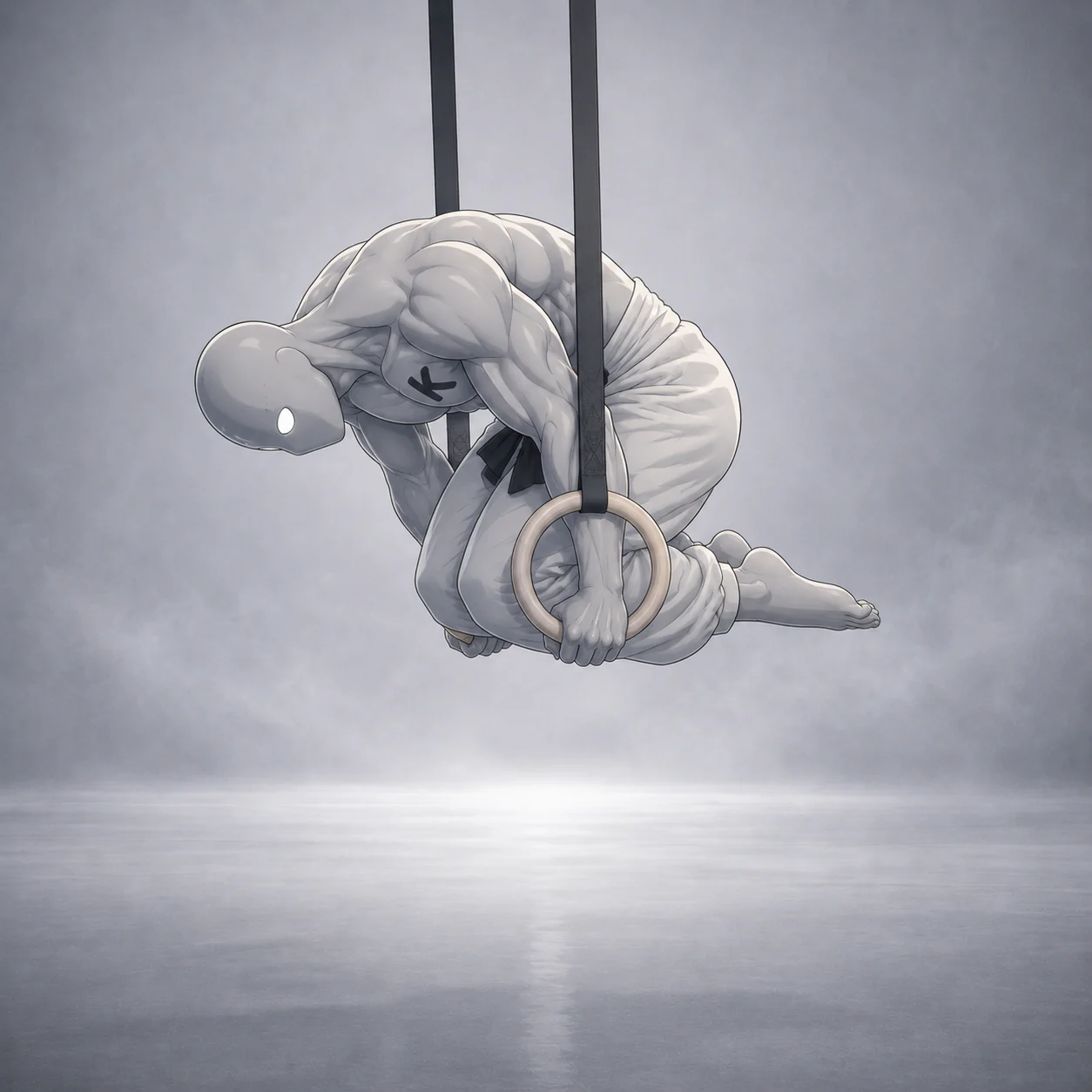
Preview · 0:06
A short look at the whole element in motion.
This is an overview clip, not a technique reference — the form in it may be imperfect. Follow the steps in Technique.
The ring frog stand takes the same bent-arm, knees-on-elbows shelf as the floor frog stand and moves it onto a pair of freely hanging rings. The body position does not change, but the base of support does: instead of two fixed points on the floor, the hands now hold two independent points that can swing, rotate, and drift. That instability is what makes this the harder sibling of the floor frog stand and an early, low-height introduction to the balance demands of ring support and planche work.
Technique
- Set the rings low, roughly mid-shin to knee height, and let them hang dead-still before you start.
- Squat down and grip the rings (or a ring cuff/false-grip depending on your setup) at roughly shoulder width, turning the hands slightly inward compared to a floor frog stand so the rings track close to the body.
- Bend the elbows and rest the knees on the back of the upper arms, just as in the floor frog stand, forming the same "shelf" — but now that shelf is suspended and free to swing or rotate.
- Shift your weight forward slowly, letting the rings drift slightly forward and inward as your shoulders pass over your hands, until the feet become light.
- Lift the feet only once the rings have settled and stopped drifting. Chase stillness in the rings first, then stillness in your body.
- Actively pull the rings in toward the midline and press them down and slightly apart; this is what keeps them from swinging out from under you.
- Exit with control by reversing the shift — settle the rings, then lower the feet — rather than bailing out of an unstable rock.
Preparation
Equipment and conditions
- A pair of gymnastic rings (or ring cuffs) set low enough that the feet are close to the floor or a mat.
- A mat or soft landing surface under the rings while learning.
- A frog stand held comfortably on the floor for at least 20 seconds before attempting the ring version.
Treat the floor frog stand as a strict prerequisite, not a suggestion — it is the locked prerequisite for this element and the only reasonable way to separate "can I hold this shape" from "can I hold this shape on rings." A little time on basic ring push-ups is also useful beforehand, mainly to get comfortable with how the rings move under load and to build some baseline grip and shoulder tolerance for holding onto free-swinging apparatus before adding a balance challenge on top of it.
Risks
Everything that makes the floor frog stand hard is still present here, plus the rings can swing, rotate, or drift out from under the hands, which increases the chance of an uncontrolled forward fall. Learn over a mat or with the rings set low enough that a fall to the feet or a controlled roll-out is always available. Do not attempt the ring version until the floor frog stand is genuinely comfortable — trying to solve "ring stability" and "the forward weight shift" at the same time is a common way to lose control. Warm up the wrists and grip before loading them, and stop if you feel sharp wrist or finger pain rather than the ordinary fatigue of holding on.
Muscles
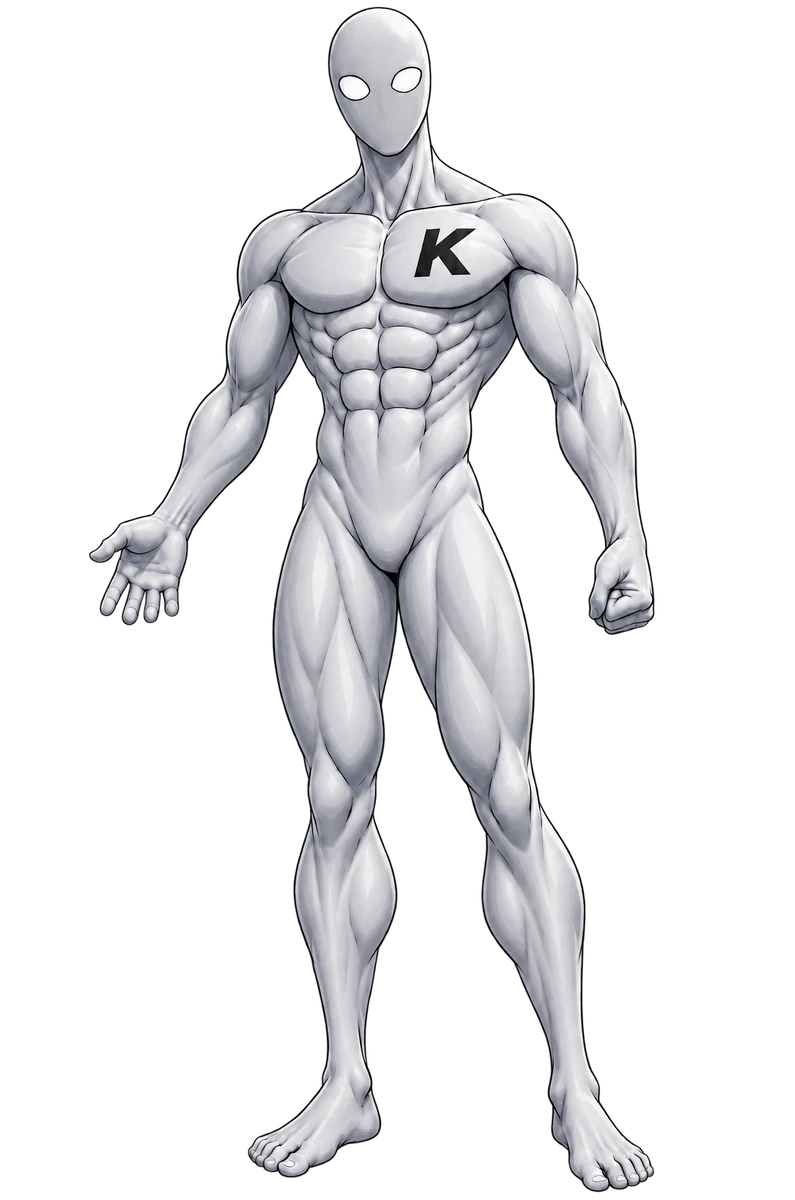
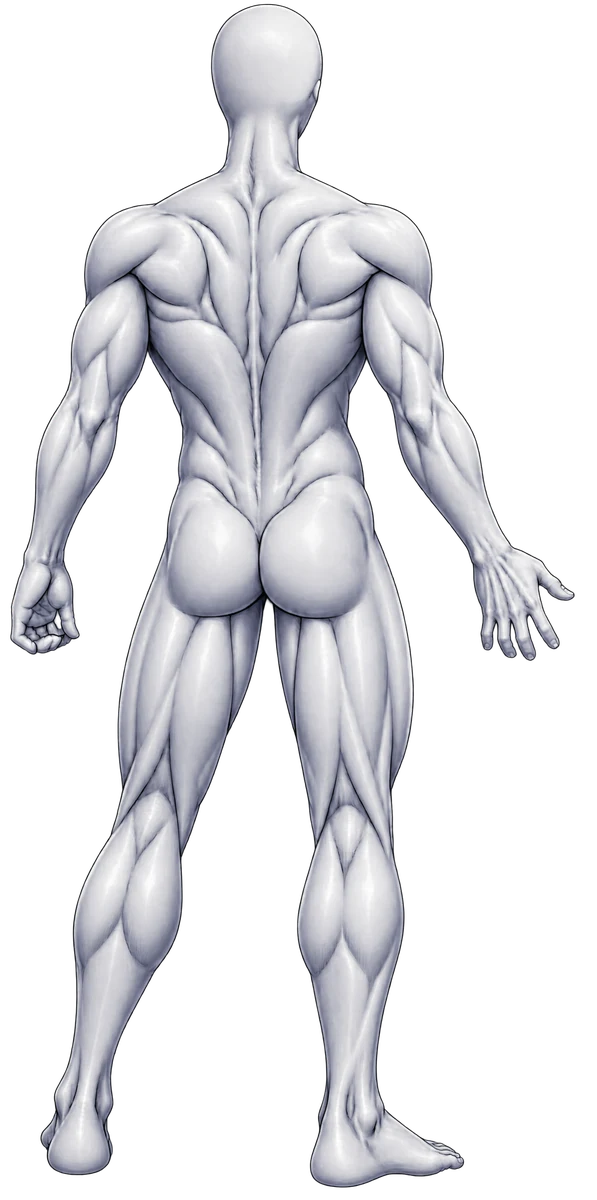
The muscles doing the work are the same ones used in the floor frog stand, but each one works harder because the base itself can move. The shoulders and triceps still form the bent-arm shelf, but now they also have to react to the rings swinging or rotating, which is consistent with EMG research on still-rings support and hold elements showing sustained, high activation of the shoulder-girdle musculature (pectoralis major, deltoids, trapezius) during ring holds as gymnasts continuously correct the apparatus's position. The hands and forearms take on a larger role than on the floor: gripping a ring is a closed, dynamic task rather than pressing on a fixed flat surface, so grip and wrist stabilizers fire almost constantly. The core keeps the tucked body compact and resists the small rotational forces the rings transmit into the trunk, while the latissimus dorsi and biceps help pull the rings inward and control their path so they do not swing out from under the hands.
Stats
- Balance
- 0.00
- Control
- 0.00
- Strength
- 0.00
- Endurance
- 0.00
- Mobility
- 0.00
- Power
- 0.00
Like its floor counterpart, this is fundamentally a balance skill, not a strength skill — but the balance problem is harder, because the two contact points can move independently instead of staying fixed. Control is a close second and slightly higher here than on the floor, since the athlete must actively settle the rings (rather than just the body) before and during the hold. Strength requirements move up modestly from the floor version — mainly grip, wrist, and shoulder-girdle demands from managing a moving apparatus — but strength is still secondary to finding and holding the balance point.
Completion criteria
Product estimate: hold a controlled ring frog stand — feet off the floor, rings settled (not actively swinging), controlled entry and exit — for 10-15 seconds. This is a shorter target than the 20-30 second floor frog-stand benchmark because settling the rings and holding the body position at the same time is a harder combined skill; build the floor hold first, then transfer time under tension to the unstable version.
Progression thresholds
- Lower threshold
- 5 s
- Upper threshold
- 15 s
If the rings keep swinging or you cannot settle them before your feet leave the ground, spend more time on ring push-ups and on low, feet-assisted attempts where you can bail out easily. Once you can hold a genuinely still 10-15 second ring frog stand with a controlled entry and exit, you have the base to start exploring straighter-arm ring holds and ring tuck-planche work.