Element preview
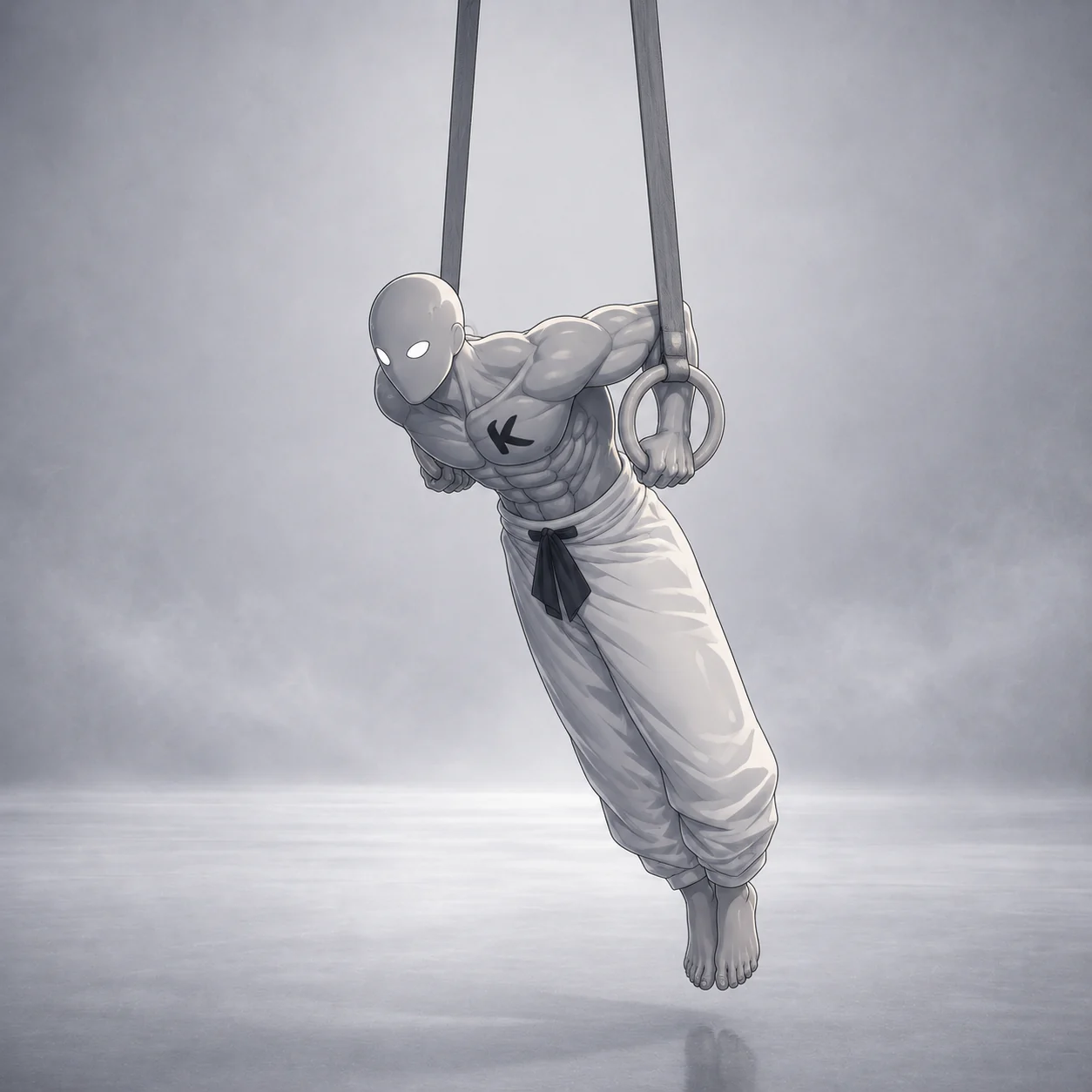
Preview · 0:06
A short look at the whole element in motion.
This is an overview clip, not a technique reference — the form in it may be imperfect. Follow the steps in Technique.
The ring dip is the unstable-apparatus version of the parallel-bar dip: the same lowering-and-pressing pattern, but performed while gripping a pair of freely hanging rings instead of a fixed bar. Because the rings can swing, rotate, and drift apart, the body has to actively stabilize the apparatus on top of moving it, which is why the ring dip is generally treated as a harder skill than the fixed-bar dip even though the joint pattern is the same.
Technique
- Turn the rings out ("turn-out" or RTO grip) before pressing to support, so the elbow pits face forward and the wrists are neutral rather than twisted.
- Hold the rings at arm's length with the arms locked, the rings pulled in close to the body, and the shoulders actively pulled down away from the ears.
- Lower under control (slower than on a fixed bar) until the upper arms are roughly parallel to the floor, keeping the elbows tracking back near the torso instead of flaring or letting the rings drift apart.
- Actively resist the rings swinging, twisting, or separating throughout the descent — the rings should stay stable and turned out, not drift back to a neutral grip.
- Press back up to full lockout through the triceps and chest while keeping the shoulders depressed and the rings under control all the way to the top.
- Keep the same depth and tempo on every rep instead of trading control for extra range once fatigue sets in.
Preparation
Solid parallel-bar dips are the natural lead-in: they build the same elbow-lockout strength and depth tolerance without also demanding ring control. From there, ring support holds and slow, controlled ring push-ups let the shoulders and forearms learn to keep the rings turned out and stable before adding the full dip range of motion. Working the eccentric (lowering) portion alone, with a controlled press back up from a partial range, is a useful regression while ring control is still developing.
Risks
Ring dips load the shoulder in the same deep, extended bottom position as a fixed-bar dip, but the instability of freely hanging rings adds a further demand: the shoulders, scapular stabilizers, and grip must actively resist the rings swinging, twisting, or separating throughout the rep. This generally means more stabilizer work at the shoulder for a given rep, though the exact trade-off between higher stabilizer demand and lower peak load has not been established here — it is a reasonable inference from the instability itself rather than a measured value. As with the bar dip, anterior shoulder discomfort tends to appear when depth, volume, or effort outpace current tolerance rather than from one bad rep. Keep depth to a comfortable range (around 90° of elbow bend), maintain the turned-out grip and depressed shoulders throughout, and back off depth or volume if the rings feel like they are winning the stability battle or if joint discomfort appears.
Muscles
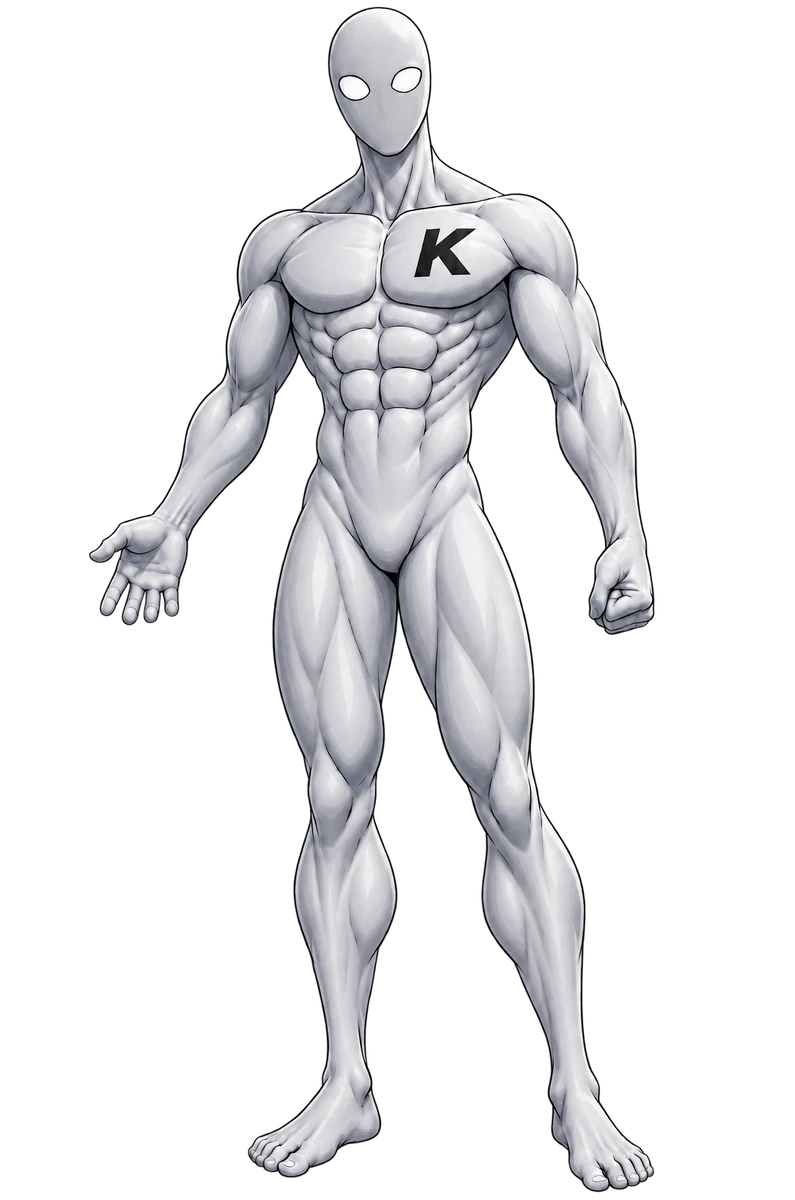
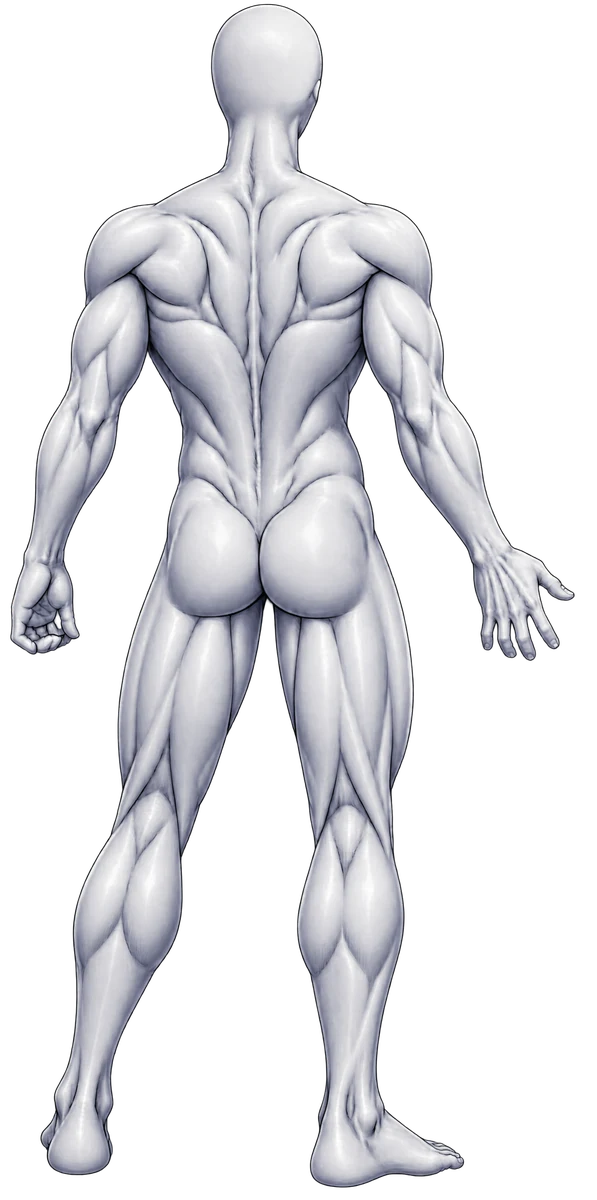
The prime mover is still the triceps driving elbow extension, with the chest heavily involved as the shoulder returns from the extended bottom position to neutral — both carry a similar load to the fixed-bar dip. What changes is everything around them: the shoulders and trapezius work harder to keep the shoulder blades stable and depressed while the rings try to shift underneath them, the latissimus dorsi helps actively pull the rings in and keep them from drifting apart, and the core braces the trunk against the small sway of a freely hanging apparatus. The forearms and hands also pick up extra work maintaining the turned-out grip and fine-tuning ring position throughout the rep.
Stats
- Strength
- 0.00
- Control
- 0.00
- Balance
- 0.00
- Endurance
- 0.00
- Mobility
- 0.00
- Power
- 0.00
Like the fixed-bar dip, this is fundamentally a pushing-strength movement trained for reps, so strength still carries the largest share. Control takes on a much bigger secondary role than on a bar, since continuously resisting the rings' swing, rotation, and separation is a defining feature of the skill rather than an incidental one. Balance also picks up a meaningful share for the same reason, while endurance and mobility remain present but smaller contributors, and power plays only a minor supporting role.
Completion criteria
8–10 consecutive reps with a controlled, turned-out grip, stable rings (no excessive swinging or twisting), a consistent depth of about 90° of elbow bend, and full lockout at the top, with no shoulder or joint pain.
Progression thresholds
- Lower threshold
- 4 reps
- Upper threshold
- 10 reps
Once ring dips feel controlled and pain-free for around 10 reps at a consistent depth with stable rings, there is enough of a strength and stability base to progress toward harder ring-support work such as the ring L-sit dip. If reps consistently fall below about 4, or the rings feel uncontrolled throughout the set, it is worth stepping back to ring support holds, ring push-ups, or plain parallel-bar dips to rebuild the underlying strength and ring control before returning to full ring dips.