Element preview
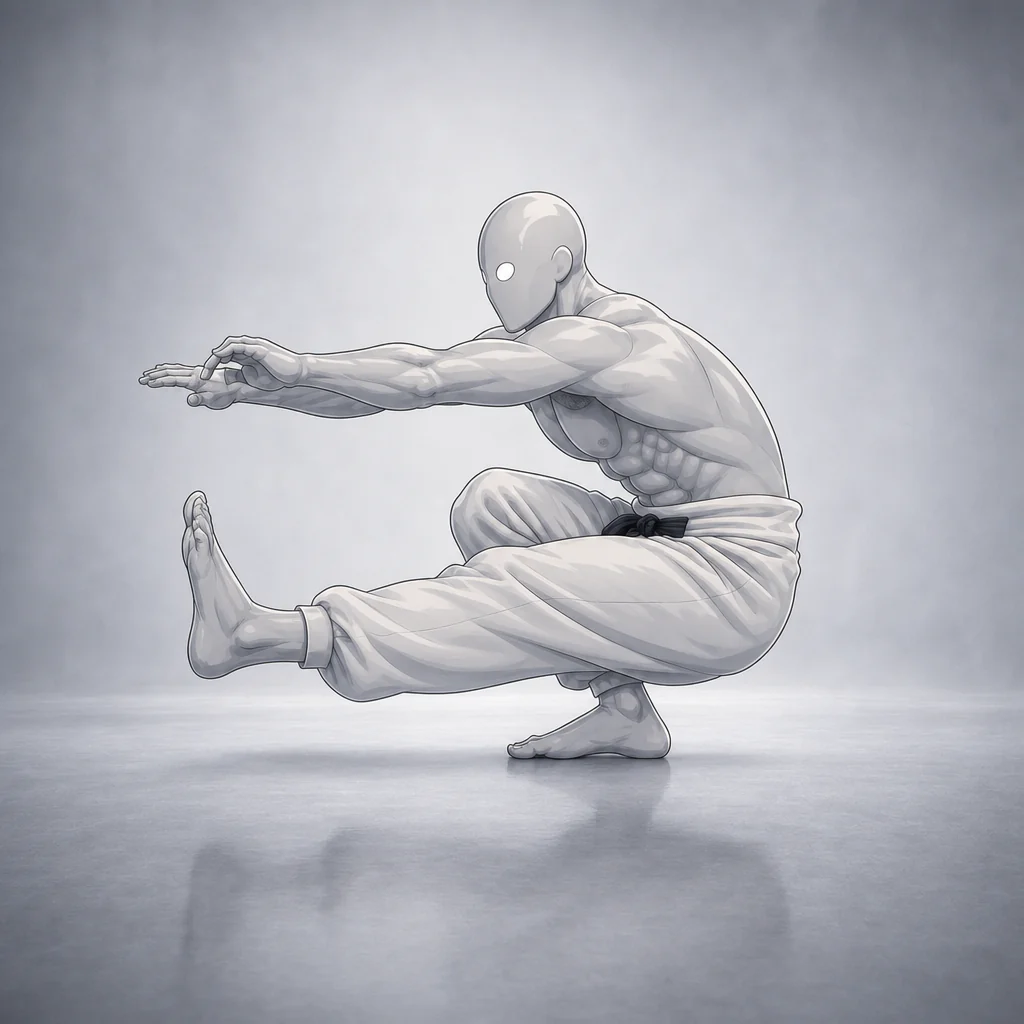
Preview · 0:06
A short look at the whole element in motion.
This is an overview clip, not a technique reference — the form in it may be imperfect. Follow the steps in Technique.
The pistol squat is a full-depth squat performed on one leg while the other leg stays extended in front of the body. Compared with a bilateral squat, the smaller base of support adds a substantial balance and coordination demand to the strength and mobility needed for the descent and ascent.
The strict version is a deliberate strength skill, not a jump or a rebound. A good repetition looks nearly the same on both sides and remains controlled through the deepest part of the range.
Technique
- Stand tall on a flat surface. Shift your weight onto one foot, brace your trunk, lift the other foot, and reach your arms forward for balance.
- Extend the free leg in front of you. Bend the hip and knee of the working leg and descend slowly, keeping the heel down and the knee tracking in line with the toes.
- Keep the full working foot engaged as you lower until the hip crease passes below the top of the working knee. The free foot remains clear of the floor.
- Drive through the full foot to reverse the movement. Keep the knee aligned and the free leg raised as you stand.
- Finish with the working hip and knee fully extended, regain balance, and repeat on the other side.
Preparation
Equipment and conditions
- A flat, non-slip floor with enough space to extend the free leg.
- No equipment is required for the strict movement.
- A stable upright, rail, or box may be used while learning the pattern.
First establish a comfortable full squat with both heels grounded. Then build unilateral strength and alignment with split squats and step-ups. For movement-specific practice, use one or more of these regressions:
- Hold a stable upright and use only as much arm assistance as necessary.
- Squat to a box, lowering the box height as control improves.
- Stand at the edge of a box so the free leg can hang down while you develop working-leg strength.
- Use a light counterweight held in front if balance, rather than leg strength, is the main limitation.
These options preserve parts of the pistol pattern while reducing the immediate strength, mobility, or balance demand. Progress by reducing assistance and increasing depth without sacrificing foot pressure or knee alignment.
Risks
A pistol squat places the whole body on one leg through a large range of motion. Increase depth and repetitions gradually. If the heel lifts, the working knee cannot stay aligned with the toes, or you lose control, reduce the depth or use a stable hand support or box.
Do not bounce into the bottom position or twist out of it. Stop if the movement causes sharp or worsening pain in the ankle, knee, or hip; persistent pain warrants assessment by a qualified clinician.
Muscles
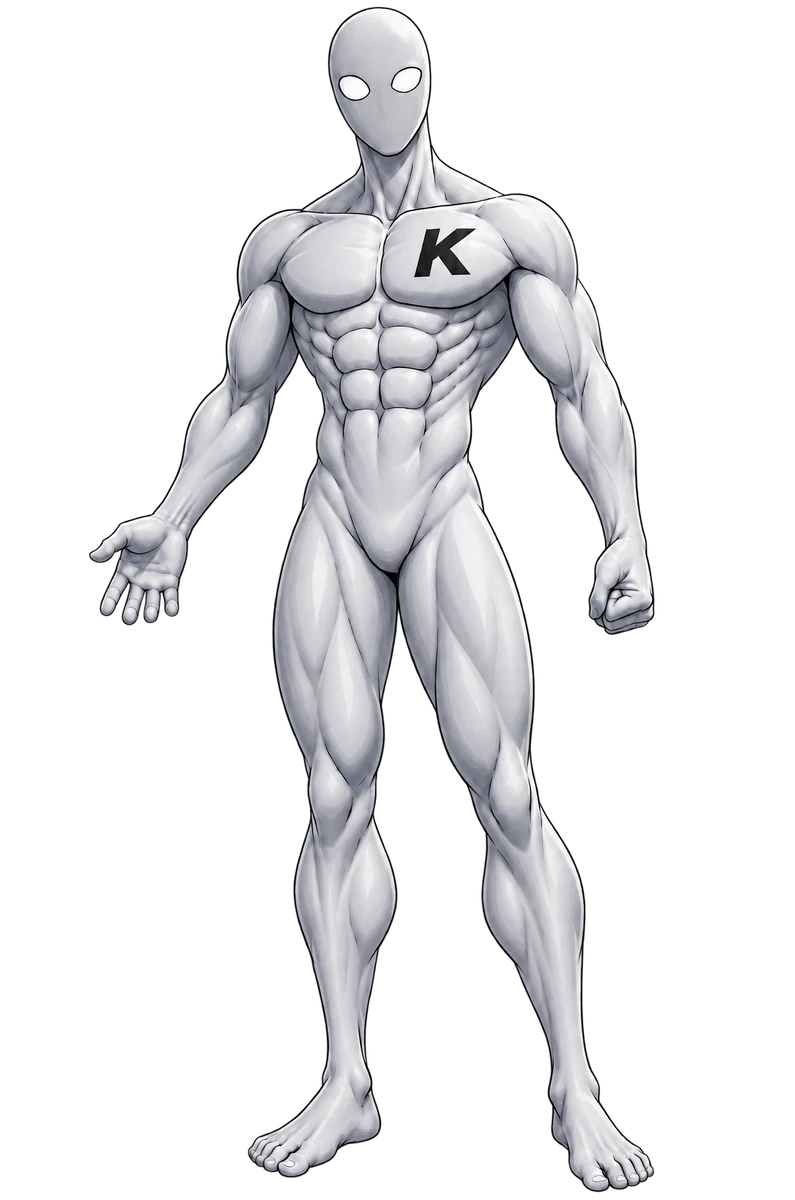
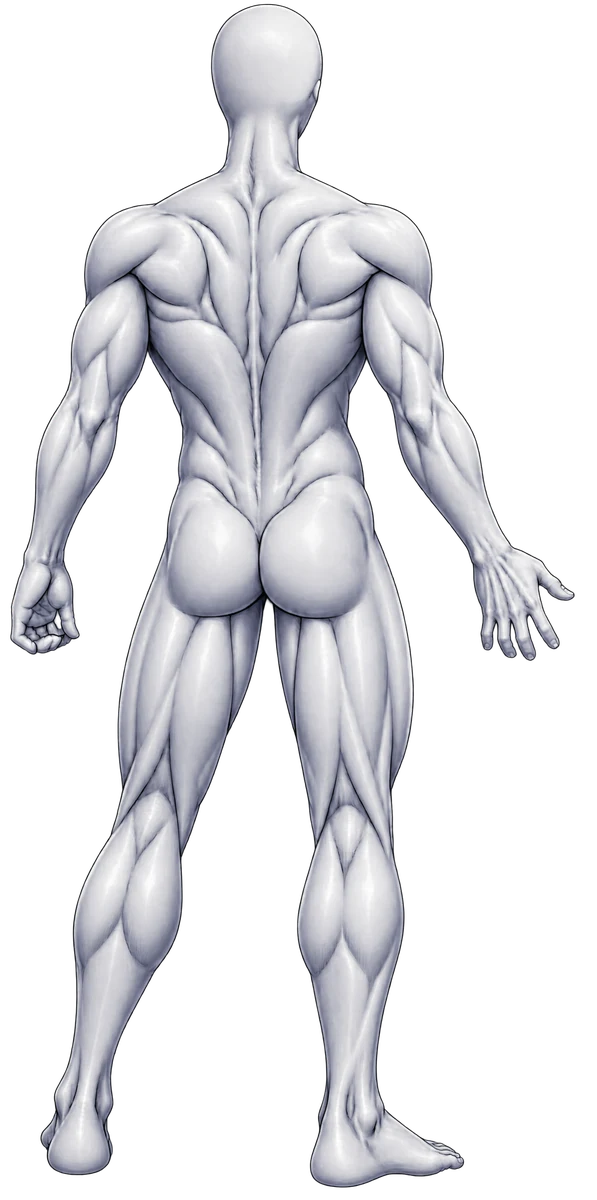
The quadriceps provide the main knee-extension effort, while the glutes extend and stabilize the working hip. The hamstrings and calf contribute across the deep squat, and the gluteal muscles help control hip rotation and side-to-side knee motion. The core and spinal extensors keep the pelvis and trunk organized over a single, narrow base of support.
Stats
- Strength
- 0.00
- Balance
- 0.00
- Mobility
- 0.00
- Control
- 0.00
- Endurance
- 0.00
- Power
- 0.00
Strength is the primary quality because one leg must lower and raise the body through full depth. Mobility and balance are strong secondary demands: the working ankle and hip must access the position while the body stays over one foot. Control matters throughout the slow direction change; power contributes little to a strict repetition.
Completion criteria
Perform 5 controlled repetitions per side from standing to full depth and back to full extension. Keep the working heel down, the knee tracking with the toes, and the free foot off the floor throughout every repetition.
Progression thresholds
- Lower threshold
- 2 reps
- Upper threshold
- 8 reps
When you can perform 8 clean repetitions per side, increase the challenge with slower eccentrics, pauses, or the next movement in the leg progression. If you cannot complete 2 controlled repetitions on a side, return to an assisted or box version and rebuild the same range without compensation.