Element preview
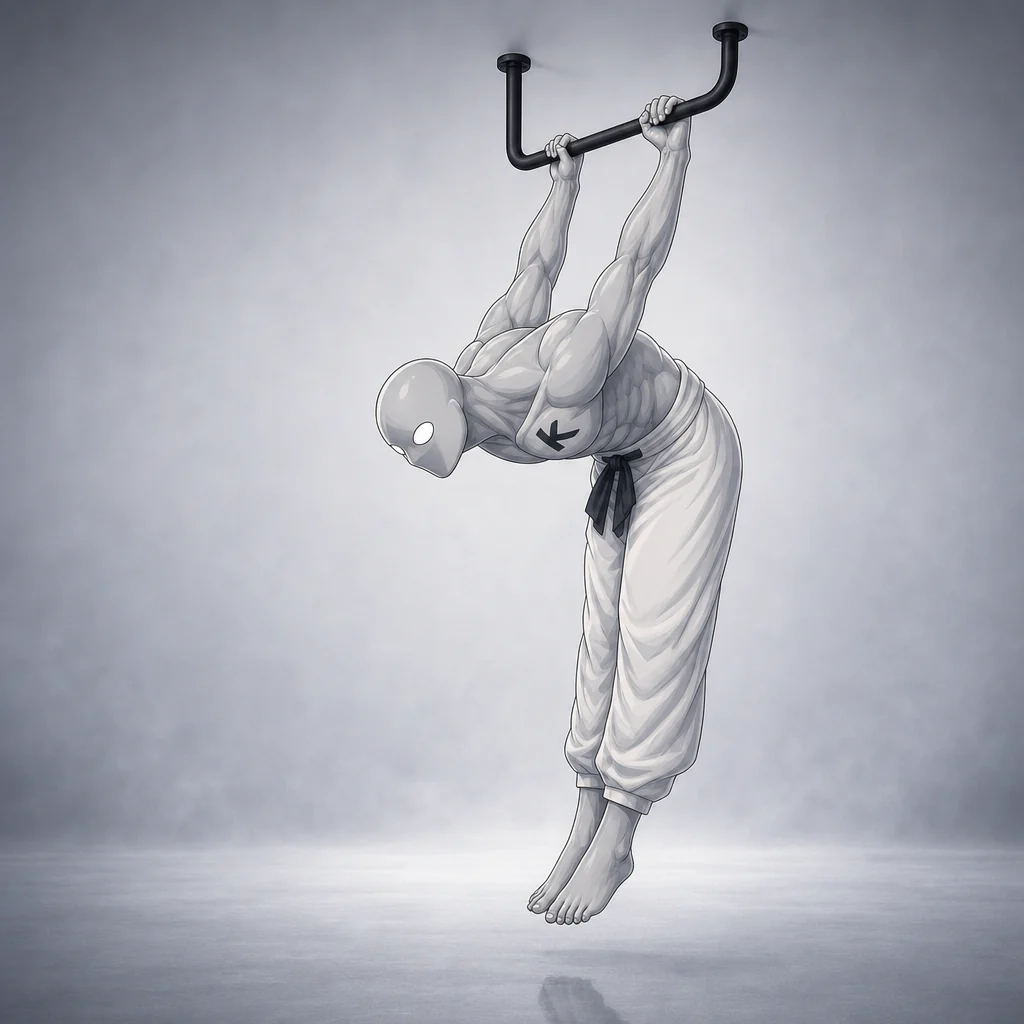
Preview · 0:06
A short look at the whole element in motion.
This is an overview clip, not a technique reference — the form in it may be imperfect. Follow the steps in Technique.
Pike skin the cat is the dynamic cousin of the German hang: instead of holding the bottom stretch statically, you move in and out of it, pulling yourself from an inverted pike back up to the start on every rep. Gymnastics coaching commonly uses it to build the shoulder mobility and shoulder-and-lat strength that later progressions like the back lever and manna depend on, while training the same connective tissue in a lower-stress, self-paced way than a static hold.
Technique
- Hang from a pull-up bar or a pair of rings and pull yourself into an inverted pike (or inverted hang) position, so your hips are near the bar and your body is upside down.
- Slowly bend at the hips and let your legs swing down and back behind you, rotating your shoulders through flexion into extreme extension as you lower into the German hang. Bend the knees if you need more control on the way down.
- Pause briefly at the bottom of the German hang. Keep your shoulders lightly active rather than fully passive, and let the stretch build across the chest, lats, and front of the shoulders.
- Actively pull your legs back up and forward, reversing the hip hinge, until you return to the inverted pike (or tucked, if that is easier) position you started from.
- Keep both the descent and the return slow and controlled — do not drop into the German hang or yank yourself back up with momentum.
Preparation
Equipment and conditions
A pull-up bar or a pair of gymnastic rings at a height that lets you hang and invert freely without your feet touching the floor. Rings let you keep a supinated (palms-forward) grip through the German hang, which is gentler on the elbows than a fixed bar. Beginners with limited shoulder mobility can rest their feet on a box, or lower rings so the feet can touch the floor, to offload part of the bodyweight while learning the range of motion.
You should already be comfortable hanging from a bar or rings and holding a brief inverted pike or inverted hang before adding the dynamic lowering and pulling phases. If a full German hang range feels far away, start by only lowering partway and pulling back up, gradually working toward the full stretch as shoulder mobility improves.
Risks
This movement puts the shoulders into an extreme, end-range hyperextended position under bodyweight load, which can be too much for stiff or previously injured shoulders and elbows. Warm up the shoulders and build shoulder mobility gradually rather than dropping straight into a full-range German hang. If the bottom position feels sharp, pinching, or unstable rather than a stretch, regress by resting the feet on a box or floor, shortening the range of motion, and progressing the depth of the hang over time. Keep the arms and shoulders lightly active throughout rather than hanging completely limp, and avoid bouncing or ballistic drops into the stretched position.
Muscles
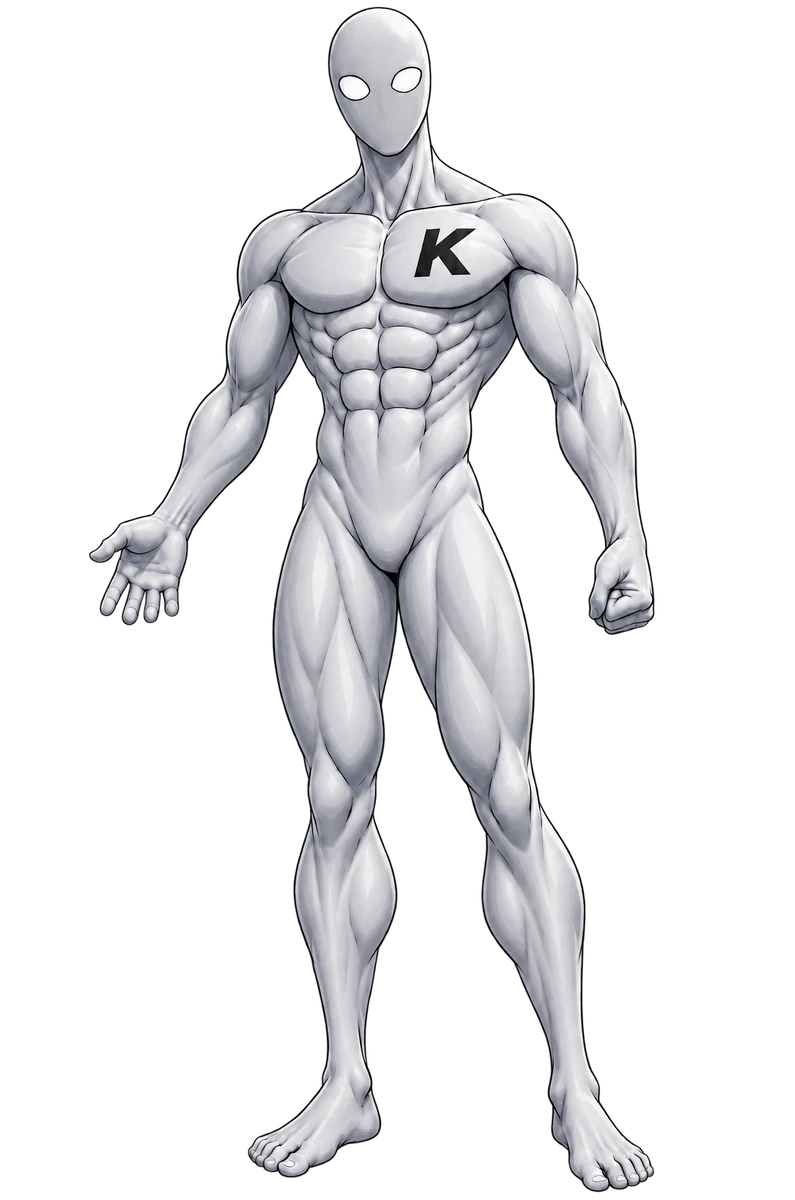
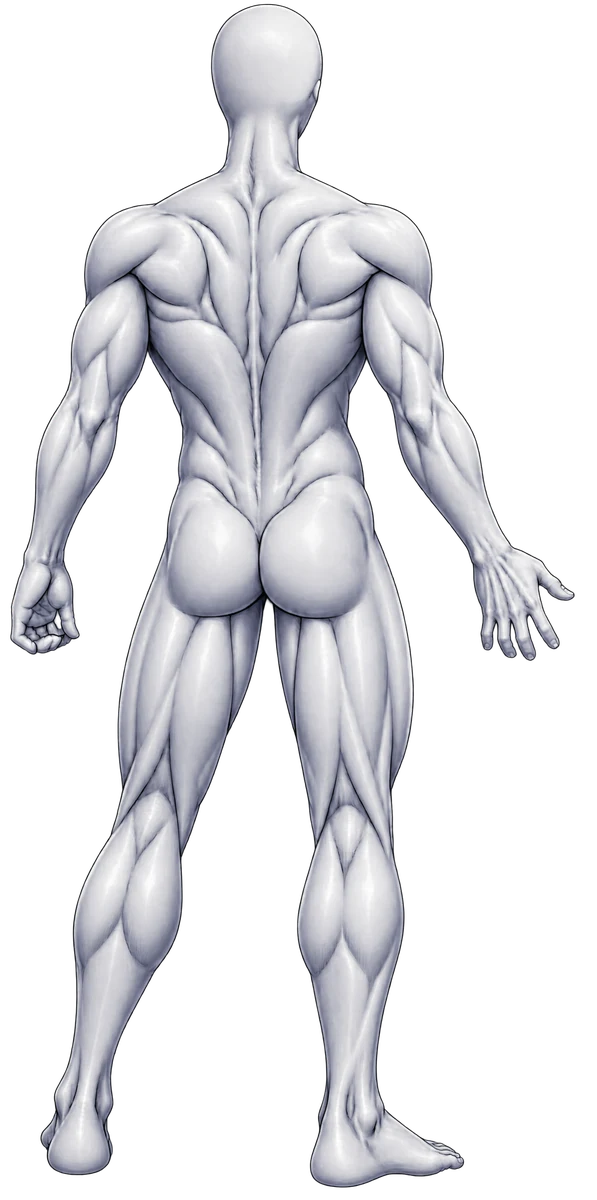
The shoulders do most of the work: they are stretched into extreme extension at the bottom and then have to actively pull the body back up against that disadvantaged angle, which is why this movement doubles as shoulder-mobility and shoulder-strength work at once. The lats and core drive the return to the pike position and control the hip hinge on the way down, the trapezius manages the large scapular elevation-to-depression cycle the book emphasizes for this drill, and the biceps and forearms handle grip and elbow flexion throughout the hang.
Stats
- Strength
- 0.00
- Mobility
- 0.00
- Control
- 0.00
- Endurance
- 0.00
- Balance
- 0.00
- Power
- 0.00
Strength still leads because pulling back up from a full German hang against a stretched, disadvantaged shoulder position is genuinely hard, but mobility is a close second here — the exercise is used specifically to open up shoulder range for later skills. Control matters more than in a simple row because the scapular sequencing through the movement has to be deliberate, while power and balance play only a small role in a slow, bar-anchored movement like this.
Completion criteria
Roughly 5 clean, controlled reps moving from the inverted pike (or inverted hang) to a full German hang and back, with straight arms, no bent knees, and no swinging or momentum used to climb back up.
Progression thresholds
- Lower threshold
- 3 reps
- Upper threshold
- 8 reps
Once you can move through roughly 8 smooth reps without swinging, bending the knees, or losing shoulder control at the bottom, you have the range and strength this drill builds and can move on to harder shoulder-extension and back-lever work. If you cannot yet control about 3 reps, spend more time on partial-range lowers and static German hang holds (with feet supported if needed) before returning to the full movement.