Element preview
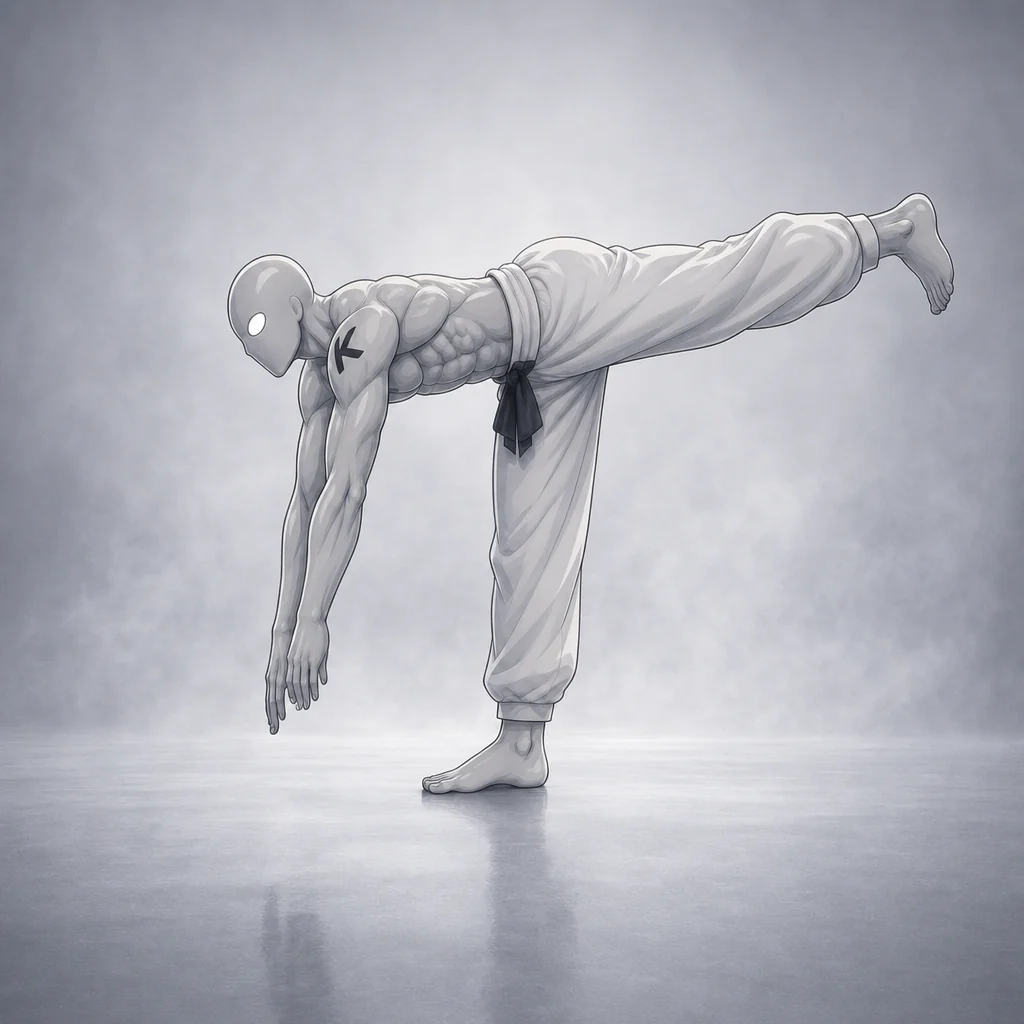
Preview · 0:06
A short look at the whole element in motion.
This is an overview clip, not a technique reference — the form in it may be imperfect. Follow the steps in Technique.
The one-leg deadlift is a single-leg hip-hinge: standing on one leg, the hips fold backward while the free leg swings behind the body as a counterbalance, until the torso is roughly parallel to the floor, before the hips drive forward to return to standing. Unlike the squat-pattern movements earlier in this family, it trains hip-dominant hinging under a narrow, single-leg base, which is why it doubles as both a posterior-chain strength exercise and a balance drill. It is the direct on-ramp to loaded and more demanding hamstring work such as the Nordic curl, where the hips are held in a similarly extended position while the knees do the work instead of the hips.
Technique
- Stand tall on the working leg with a soft bend in the knee; shift your full weight onto that foot before moving.
- Root the standing foot into the floor (heel, big toe, little toe all weighted evenly) to give yourself a stable base to hinge from.
- Hinge at the hips, pushing them straight back while the free leg extends behind you and stays roughly in line with your torso — think of the torso and free leg as one long lever pivoting over the hip.
- Keep the hips square to the floor throughout; do not let the pelvis "open" toward the free-leg side.
- Keep the spine neutral and the shoulder blades gently set — let the hip hinge, not the lower back, produce the range of motion.
- Lower the torso until it is roughly parallel to the floor (or as far as hamstring flexibility and hip control allow without rounding or losing hip squareness), then reverse the motion by driving the hips forward and squeezing the glute of the standing leg back to standing.
Preparation
The full squat is the listed prerequisite for this movement: it builds general single-leg loading tolerance and lower-body control that carries over here, even though the two movements use different joint strategies (squat-dominant knee bend versus hip-dominant hinge). Because a dedicated single-leg hinge prerequisite is not yet part of this tree, calibrate expectations against the full squat and treat balance as the added variable this movement introduces on top of it. Once the hip-hinge pattern and standing-leg balance are solid here, the same hip-extended positioning transfers directly into the Nordic curl, which isolates the hamstrings further under a heavier eccentric load.
Risks
Two technique faults account for most problems with this movement: letting the hips "open" toward the raised-leg side, which unloads the hamstring of the standing leg and adds unwanted rotational stress through the low back and hip, and rounding the lower back to reach further range than current hamstring flexibility and hip-hinge control allow. Reverse the movement by driving the hips forward and extending the standing-leg hip, rather than by pulling the torso up with the lower back. Because the exercise is performed on one leg, balance is part of the challenge; start with a small range of motion and only a light or bodyweight-only load until the standing-leg balance and hip-hinge pattern are solid, and keep a wall, rack, or light support nearby while first learning the movement.
Muscles
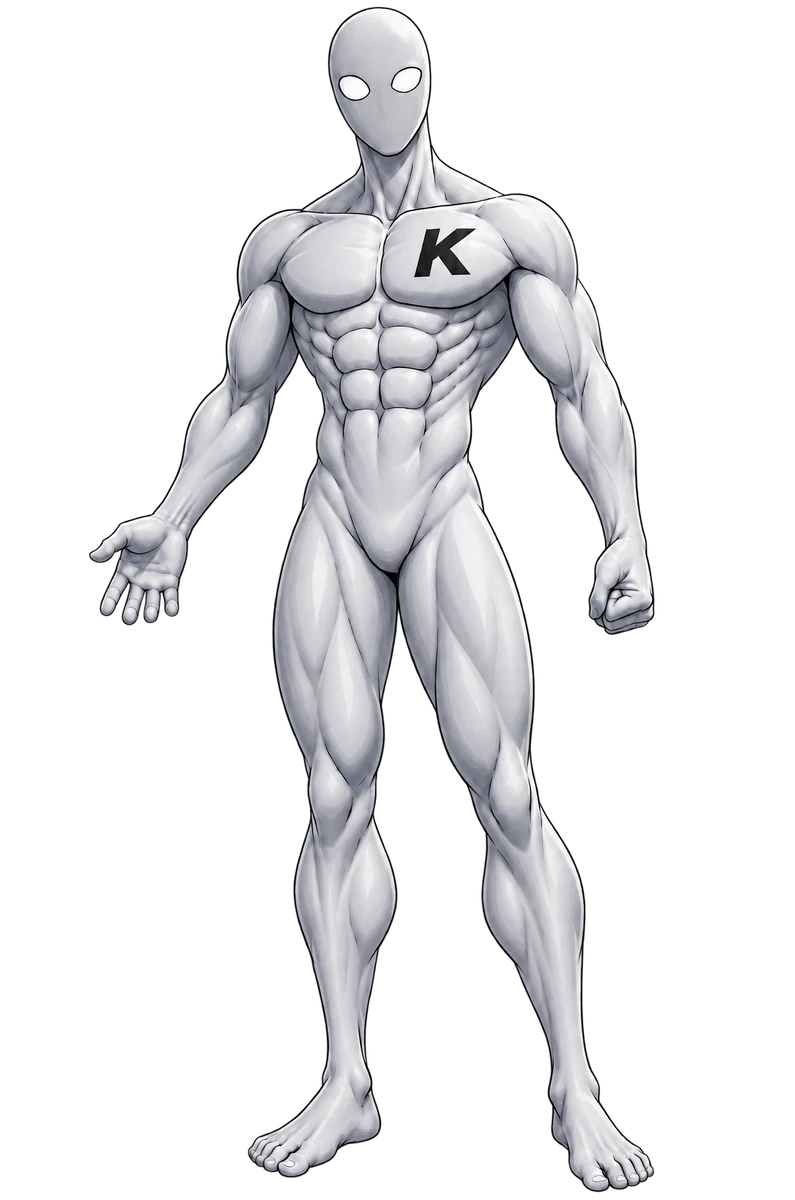
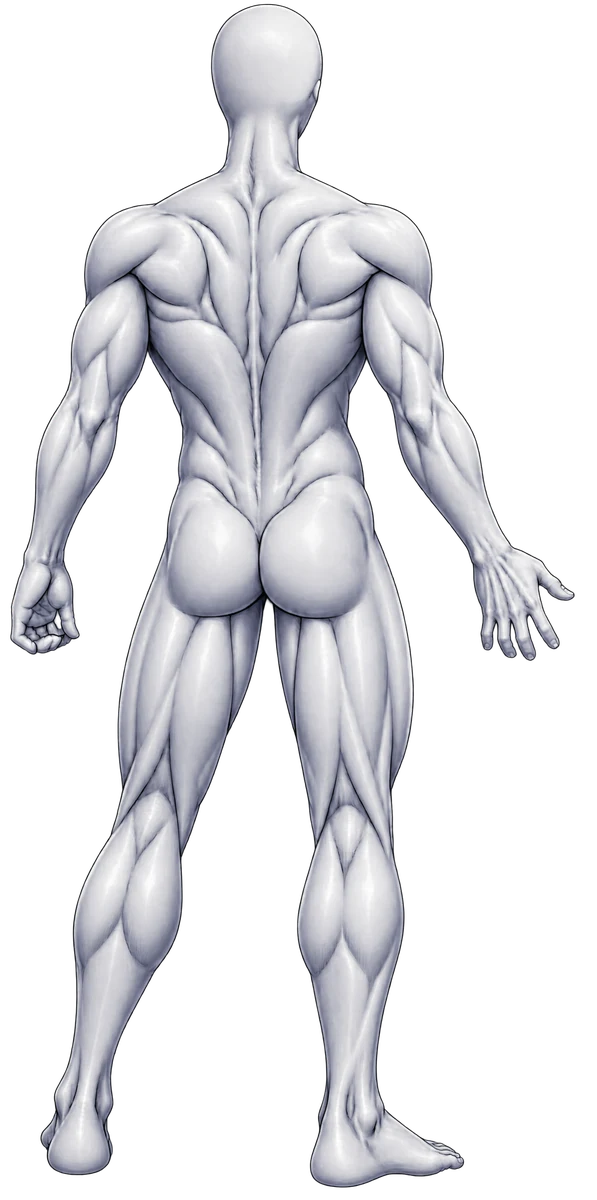
The hamstrings and glutes of the standing leg are the prime movers, working together to control the hip hinge on the way down and to drive hip extension back to standing; published EMG work on the single-leg deadlift records elevated activation in the hamstrings (biceps femoris, semitendinosus) and gluteus medius compared with resting baseline, consistent with their role as both movers and hip stabilizers on a single-leg base. The core and lower back brace isometrically to resist the forward-folding and rotational tendencies created by hinging on one leg, the calf and foot muscles make constant small adjustments to hold balance, and the quadriceps of the standing leg play a minor supporting role in controlling the knee's slight bend.
Stats
- Strength
- 0.00
- Balance
- 0.00
- Control
- 0.00
- Mobility
- 0.00
- Endurance
- 0.00
- Power
- 0.00
This is a strength-dominant movement, but the single-leg base makes balance the largest secondary demand — most of the early learning curve is about staying stable on one foot while hinging, not about moving load. Control and mobility (particularly hamstring and hip flexibility) play meaningful supporting roles, while power and endurance are only lightly involved since the movement is performed at a controlled, deliberate tempo.
Completion criteria
Perform 10 controlled reps per leg with the torso reaching roughly parallel to the floor, a neutral spine, square (non-rotated) hips, and no hand or free-foot touchdown used for balance.
Progression thresholds
- Lower threshold
- 6 reps
- Upper threshold
- 12 reps
Because balance and hip control usually limit this movement before raw strength does, progress reps and range together: once 12 clean reps per leg are comfortable with full hip-square control, move on to loaded single-leg hinge work or the Nordic curl. If fewer than 6 controlled reps per leg are achievable without the hips opening or the back rounding, reduce the range of motion and rebuild the hinge pattern and standing-leg balance before continuing.