Element preview
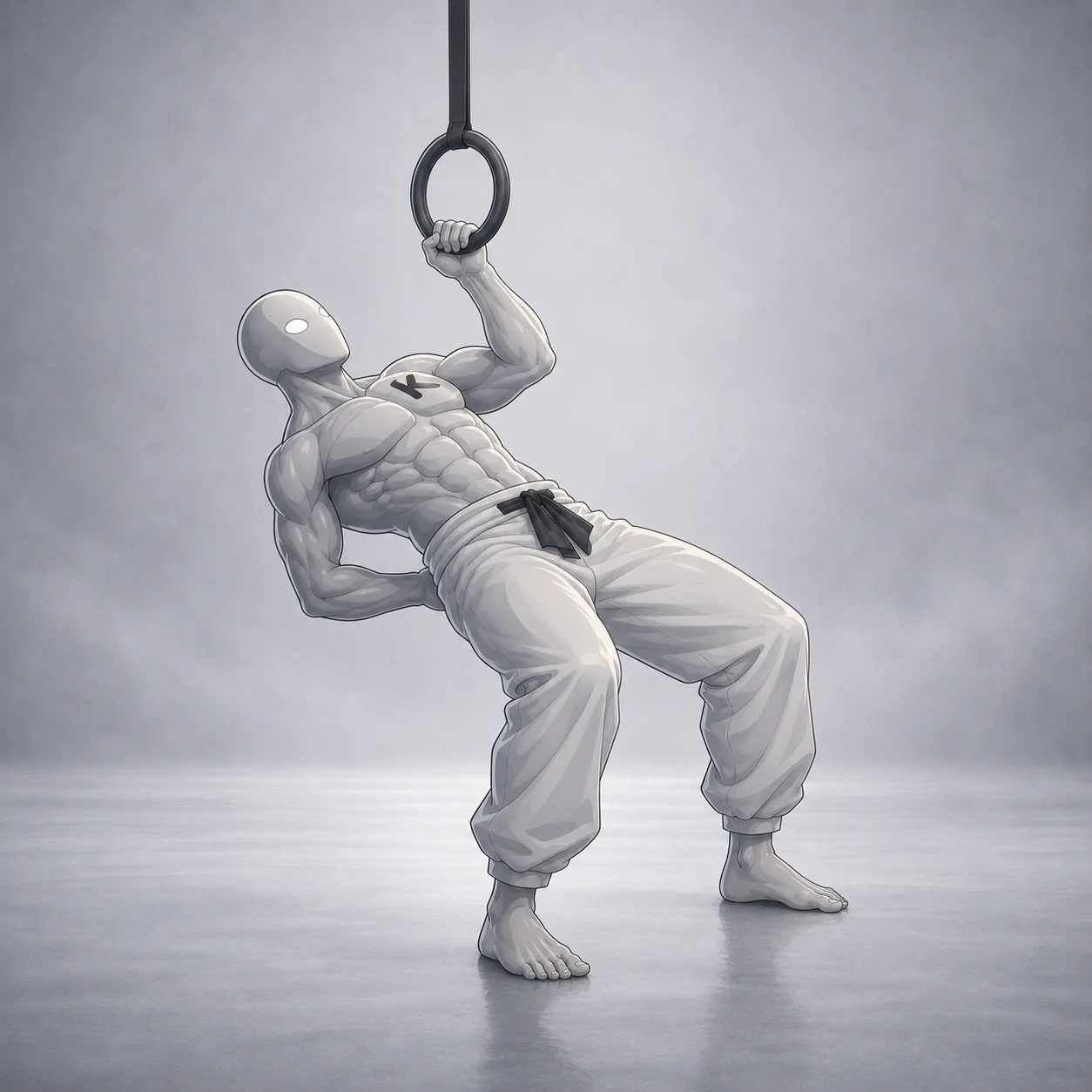
The one-arm row is the final step of the calisthenics ring-row progression: a single arm handles the entire pull while the other hangs free, with feet together rather than straddled. It asks for the scapular control built in the archer row, but now with no assisting arm and no straddle to help manage the anti-rotation demand.
Technique
- Grip a single ring (or a fixed bar/strap) with one hand and place your feet on a sturdy block or raised support, roughly shoulder height, with your legs together rather than straddled.
- Start with your shoulder relaxed and protracted, then initiate the pull by retracting and depressing that shoulder blade before the elbow bends.
- Keep your body straight by bracing your core and squeezing your hips and glutes, then pull with the elbow tracking in close to your side so your hand travels as close to your ribs as possible.
- Expect not to reach all the way to your body on early reps — get as close as your current strength allows rather than breaking body position to finish the range.
- Optionally finish the top of strong reps by rotating your torso toward the pulling arm so the opposite shoulder drifts toward the ring or bar, then lower back down under full control.
- Always start sets with your weaker arm and cap the stronger arm at the same rep count, either alternating single reps or matching full sets, so you do not widen a side-to-side imbalance.
Preparation
Equipment and conditions
A single gymnastic ring (or a fixed bar/suspension strap) set low enough to hang from one-armed, plus a sturdy block or raised support to place both feet on at roughly shoulder height. A padded floor helps since your heels rest on the support for the whole set.
Do not approach the one-arm row until your archer row is strict and even on both sides, since the same scapular retraction pattern is the base you are refining, not something you build from scratch here. If you have access to an arm-in ring row or a straddle one-arm row as an in-between step, use it first — pulling the straight arm in against the torso (arm-in) or keeping the feet straddled (straddle one-arm row) both remove part of the single-arm demand while you groom the pull to a true one-arm row.
Risks
With only one point of contact and no assisting arm, the torque that tries to twist and rotate your torso toward the working side is much stronger than in an archer or straddle one-arm row, and it shows up as pressure through the working arm and the opposite foot. Actively brace your core and hips through the whole rep to resist that rotation rather than letting the hips or shoulders sag and twist out of the straight-body line. Because a single arm now carries the entire pulling load through a wide range of motion, do not attempt full one-arm rows until archer rows (and ideally an arm-in or straddle one-arm row) are strict and controlled for both arms — jumping to a single point of contact too early overloads the shoulder's posterior structures and the grip before they are ready.
Muscles
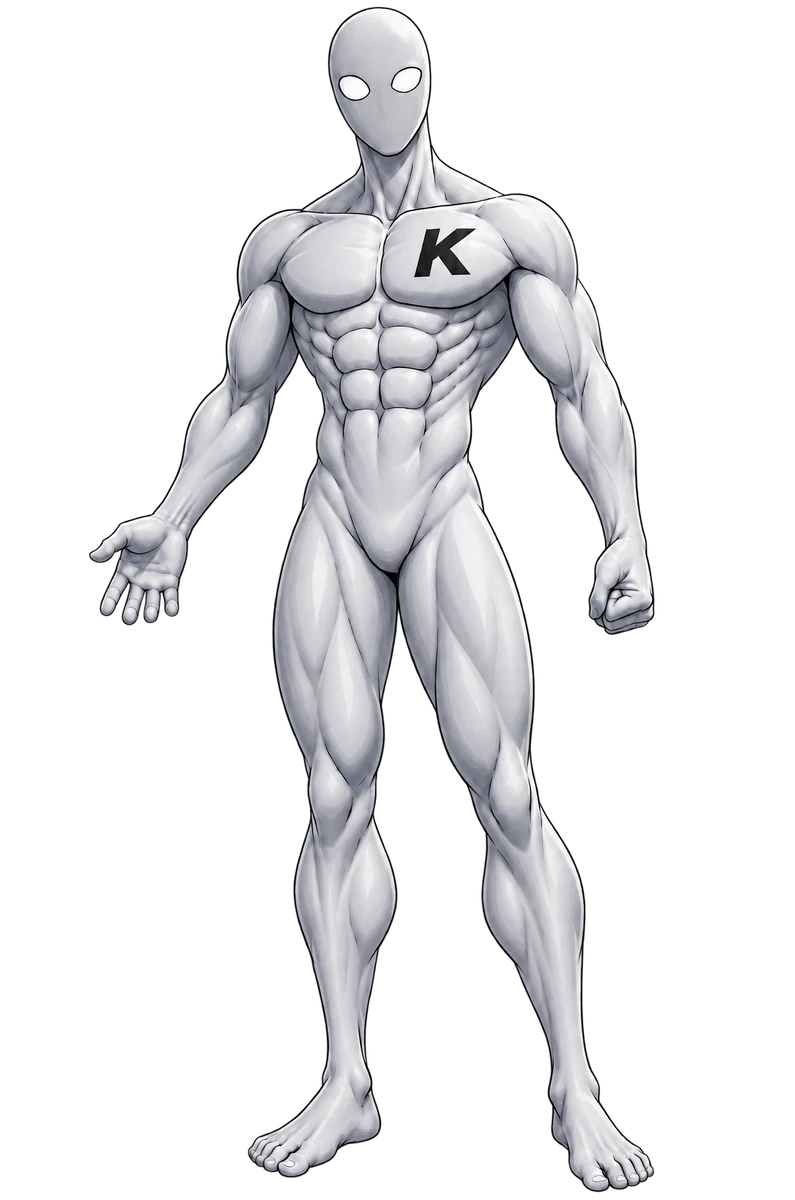
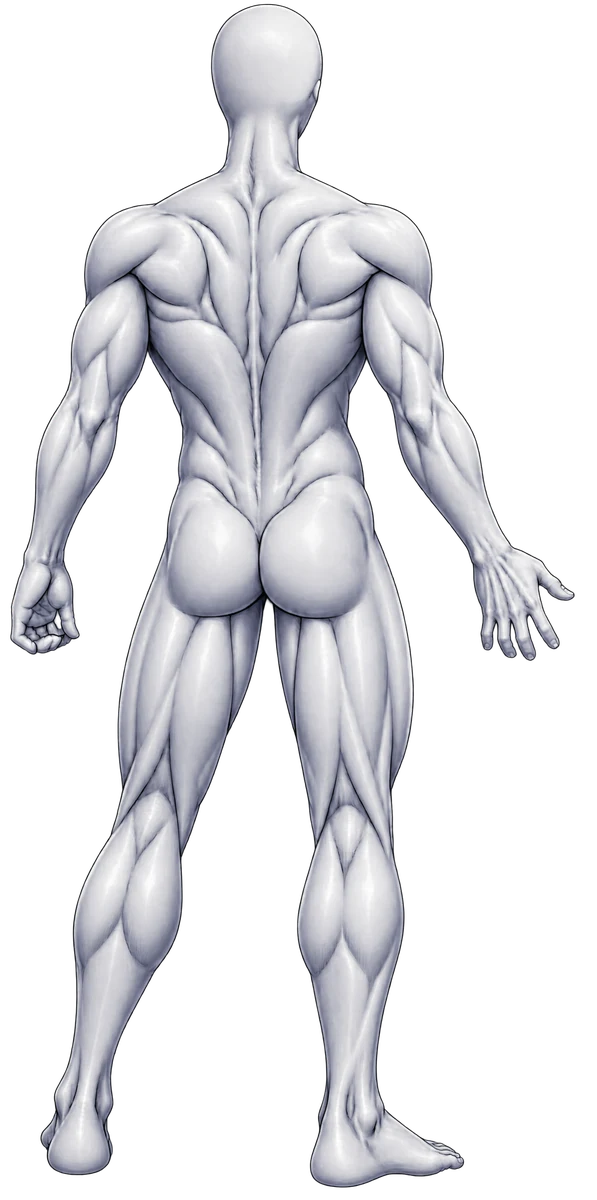
The working lat and biceps now do essentially all of the concentric pulling with nothing to share the load, which is why their target intensity sits above the archer row. Grip and forearms take the full bodyweight moment through one hand instead of splitting it across two rings, so they load harder too. Core, lower back, and glutes work isometrically at a higher intensity than in the archer row because they are the only thing resisting the torque that tries to rotate the torso and hips toward the pulling side, and the trapezius and rear shoulder of the working side stay heavily engaged to keep the shoulder blade retracted through the full range.
Stats
- Strength
- 0.00
- Control
- 0.00
- Balance
- 0.00
- Endurance
- 0.00
- Mobility
- 0.00
- Power
- 0.00
Strength still leads by a clear margin since one arm must move the entire bodyweight through a long pulling range, and it is calibrated slightly above the archer row to reflect that added single-side load. Control and balance both step up as well: with no second arm to help manage the rotational torque, resisting the twist toward the working side becomes the defining skill of the movement rather than a secondary concern.
Completion criteria
As a project-calibrated estimate (the source material describes this as the final step of the ring-row progression without giving a numeric target): controlling several strict reps per arm — roughly in the 5-8 range — from a feet-together one-arm ring row position, with full scapular retraction, a straight body line, and no hip sag or torso rotation toward the pulling arm.
Progression thresholds
- Lower threshold
- 3 reps
- Upper threshold
- 8 reps
These rep numbers are a conservative, book-informed estimate rather than a published standard: the source material treats the one-arm row as the top of this progression without giving a numeric target, so the thresholds are set below the archer row's to reflect the added single-arm and anti-rotation demand. If you can only manage a couple of controlled reps per arm, or the hips and torso start twisting toward the working side, spend more time on archer rows or an arm-in/straddle one-arm row before returning here. Once you can control roughly 8 strict reps per arm without any body-line breakdown, you have outgrown this progression and can add load (for example a weight vest) or move toward other unilateral pulling work.