Element preview
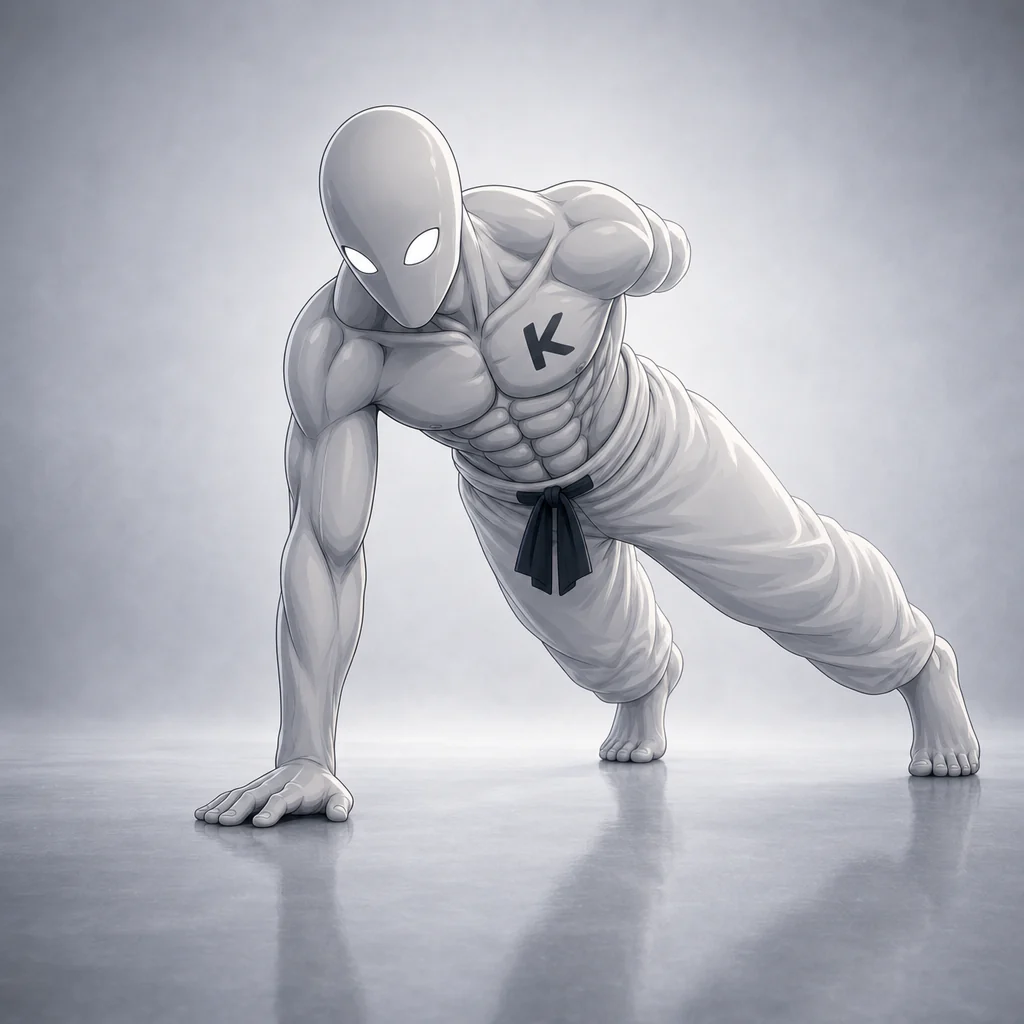
The one-arm push-up removes the second point of ground contact entirely: a single arm now has to supply all of the pressing force, absorb the body's rotational torque, and keep the trunk from twisting or sagging. It is a widely recognized calisthenics strength milestone that sits well beyond the two-hand push-up family.
This article covers the straddled floor version, where the legs are spread wide to provide a stable base while the arm pattern and torque management are learned. Feet-together and ring variants build on the same technique with a progressively smaller base of support.
Technique
- Sit into a wide straddle push-up position on a firm floor: one hand planted roughly under the shoulder, legs spread well apart for a wide, stable base, and the free arm tucked behind the back or resting lightly on it.
- Keep the elbow of the working arm close to the body, at roughly a 45-degree angle (or less) to the torso rather than flared outward, to protect the shoulder and limit joint torque.
- Brace the whole body before descending: squeeze the abdominals, lower back, glutes, and quads so the trunk stays rigid and does not sag or pike.
- Lower under control until the chest lightly brushes the floor, letting the shoulder blade retract naturally, then press back up through the same arm to full elbow lockout.
- Expect the body to want to twist toward the working arm and load the opposite leg more heavily; actively resist this rotation and try to keep pressure even between both feet.
- As control improves, narrow the leg straddle in small steps. A narrower stance reduces the base of support and shifts more balance demand onto the pressing arm, which is the path toward feet-together, straight-body one-arm push-up variants.
Preparation and scaling
Equipment and conditions
- A firm, flat, non-slip floor with room for a wide leg straddle.
- No equipment is required; a narrower stance or the straight-body variant can later be practiced toward rings for the next progression.
- Begin only once archer push-ups can be performed with a controlled range and a straight assisting arm on both sides.
Archer push-ups are the direct lead-in: they already teach one arm to do most of the pressing work while the other arm assists. The one-arm push-up removes that assisting arm, so the wide straddle stance takes over the balance role that the second arm used to provide.
- Confirm archer push-ups are controlled and symmetric on both sides before attempting a single working arm.
- Start with a very wide straddle and, if needed, an elevated surface under the hand to shorten the range and reduce the load.
- Narrow the straddle gradually as the working arm, shoulder, and wrist tolerate more torque without the pelvis twisting.
- Treat a feet-together or straight-body stance, and eventually a ring surface, as later refinements once the floor straddle version is solid.
Risks
Because only one arm supports the body, the working shoulder, elbow, and wrist absorb more rotational torque than in any two-arm push-up. Keeping the elbow tucked close to the torso (not flared) reduces this torque; an elbow held too close can instead overload the triceps and shoulder, so find a comfortable middle position rather than an extreme.
The straddled stance naturally twists the pelvis toward the working side and shifts pressure unevenly onto the opposite foot. Losing control of this twist is the most common technical breakdown and, over time, a plausible source of low-back or shoulder strain if it is not corrected. Only attempt this movement after archer push-ups are solid and controlled on both sides, keep the core and glutes braced throughout, and stop the set if the pelvis rotates excessively, the wrist or elbow feels sharp torque, or the chest cannot reach the floor without collapsing.
Muscles
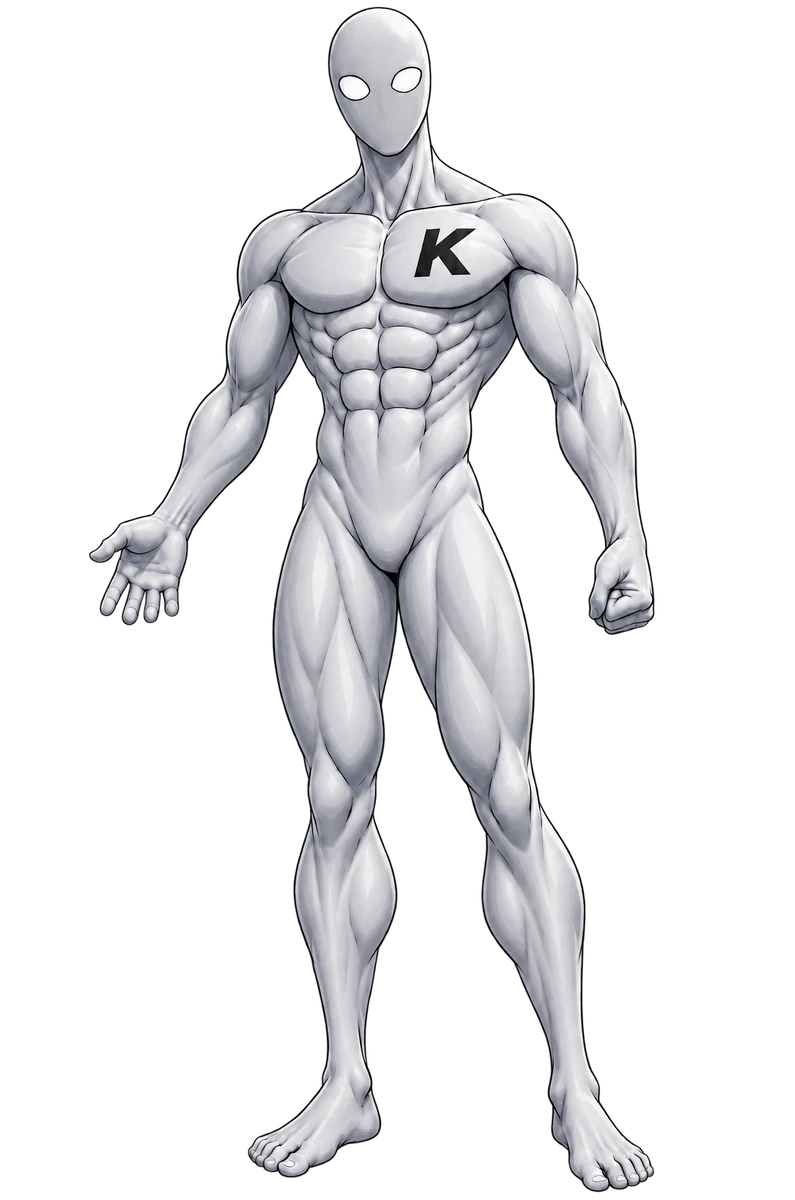
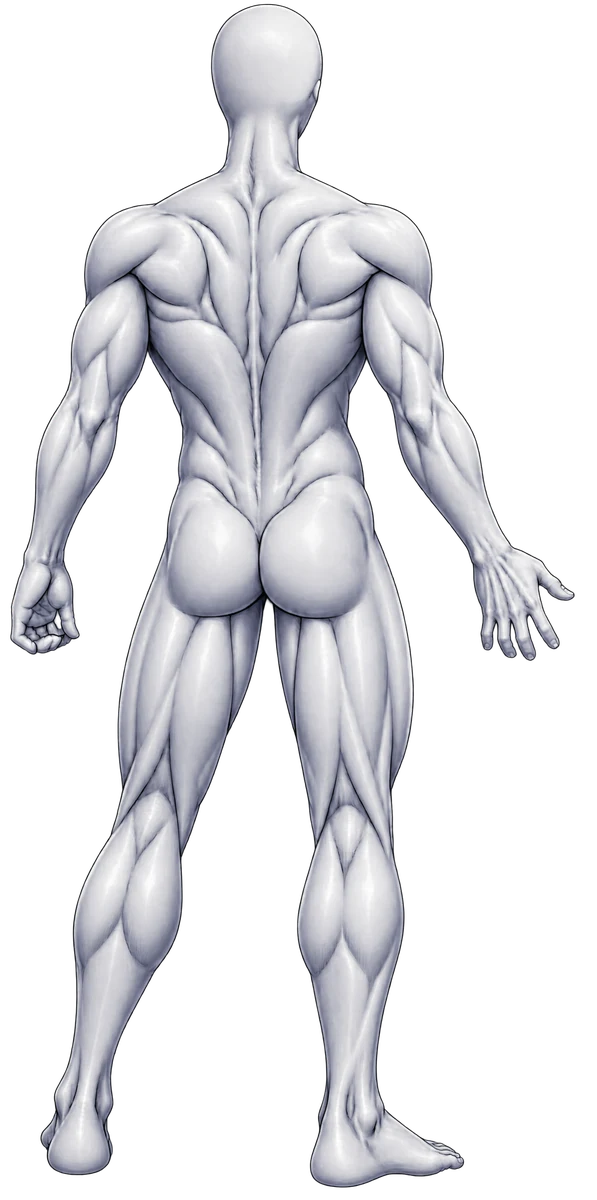
Triceps, shoulders, and chest carry the bulk of the unilateral press, at meaningfully higher intensity than in the archer push-up because there is no second arm to share the load. The core works hard isometrically to resist the rotation that a single-arm base naturally creates, and the lower back and glutes help keep the hips from sagging or twisting. Trapezius and scapular muscles manage the same protraction-to-retraction cycle as other push-up variants, while the forearms and hand absorb extra wrist torque from bearing full body weight through one point of contact. The quadriceps contribute a smaller stabilizing role by keeping the legs braced across the wide straddle. These intensities are product estimates built on the archer push-up baseline, not direct one-arm push-up measurements.
Stats
- Strength
- 0.00
- Control
- 0.00
- Balance
- 0.00
- Endurance
- 0.00
- Mobility
- 0.00
- Power
- 0.00
Strength remains the dominant demand and is rated above the archer push-up because a single arm now absorbs the full pressing load. Control and balance both increase substantially relative to the archer push-up: the athlete must actively resist pelvic rotation and manage weight distribution across a straddled, asymmetric base. Endurance and mobility play smaller supporting roles, and power is not the focus of this controlled strength movement.
Completion criteria
Perform 3 controlled repetitions per arm from a straddled base, reaching the chest to the floor each time, keeping the trunk from sagging or twisting excessively, and finishing every repetition at full elbow lockout. This is an estimated calibration target rather than a fixed physiological standard.
Progression thresholds
- Lower threshold
- 2 reps
- Upper threshold
- 5 reps
Use a small number of clean, full-range repetitions per arm as the signal that the straddled one-arm push-up is ready to progress toward a narrower stance, a straight-body position, or eventually a ring surface. If repetitions break down — the pelvis twists heavily, the chest cannot reach the floor, or the elbow loses its tucked position — widen the straddle again or return to archer push-ups until control is restored. These thresholds are conservative calibration guides, not fixed physiological cutoffs.