Element preview
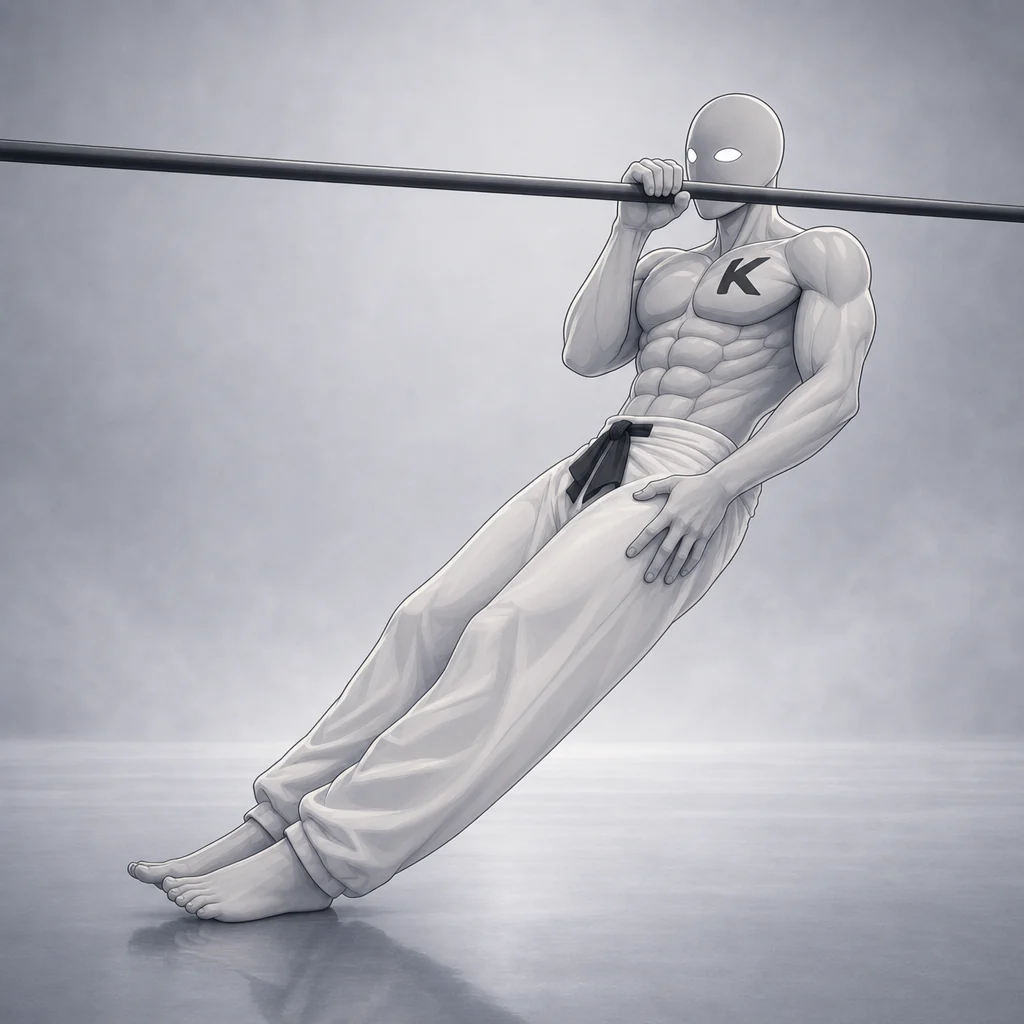
Preview · 0:06
A short look at the whole element in motion.
This is an overview clip, not a technique reference — the form in it may be imperfect. Follow the steps in Technique.
The one-arm pull-up is the capstone of the vertical-pull family: hanging and pulling the full body upward using a single arm, with no assistance from the other side. It concentrates the entire bent-arm pulling demand of a normal pull-up onto one shoulder, elbow, and hand, which is why it is trained as a long-term progression built on top of weighted pull-ups, archer pull-ups, and straight-arm strength work rather than attempted directly.
Technique
- Confirm the prerequisites before attempting negatives: a weighted pull-up with roughly 50% bodyweight added, at least 15 strict two-arm repetitions to the chest, and a one-arm dead hang held for about 20 seconds.
- Hang from the bar with one hand only, using a pronated grip. Keep the free arm relaxed at your side or use it only for light finger-assistance while you are still building the skill.
- Before pulling, tense the shoulder and pull it into its socket, depressing the shoulder blade so the joint is stable under the full-bodyweight load.
- Initiate the pull by driving the elbow down toward the hip, or by pulling the hand toward the shoulder in a biceps-curl-like path — use whichever pattern feels more natural, but deliberately train the weaker of the two as well.
- Allow the torso to rotate naturally toward the working side rather than fighting it; keep the core braced throughout to control the twist instead of swinging.
- Finish with the chin, and eventually the chest, over the bar, then lower back to a full one-arm hang under control.
Preparation
Equipment and conditions
Use a securely mounted pull-up bar with enough diameter and grip texture to hold full bodyweight one-handed, and enough overhead and lateral clearance for a full one-arm dead hang. A pulley or resistance band setup is useful for assisted concentric training while building toward the skill.
Do not approach one-arm eccentrics until the listed prerequisites are solid: a weighted pull-up with about 50% bodyweight added, 15 or more strict repetitions to the chest, and the ability to hold a one-arm dead hang for around 20 seconds. Archer pull-ups are the direct bridge — they load one side heavily while the other arm still assists, and reducing that assistance over time (via fewer supporting fingers, or a rope you grip progressively lower) is a practical way to approach the full unassisted repetition. Straight-arm work such as the back lever and rings tuck planche builds shoulder and connective-tissue strength that supports the joint under this load, even though it does not build the same bent-arm pulling capacity.
Risks
A one-arm pull-up places significant, unilateral torque on the shoulder, and the same wide/asymmetric loading that can bother the shoulder in wide-grip and archer pull-ups is amplified here as the rotator cuff and scapular stabilizers fatigue. Train this progression early in a session rather than when fatigued, and add supplemental rotator-cuff work such as band external rotations or side-lying external rotations.
Attempting one-arm eccentrics or holds before the connective tissue is prepared raises the risk of elbow and shoulder tendinitis. Meet the prerequisite strength and hang-time benchmarks above first, and keep unassisted one-arm negatives to two or three sessions per week since they are demanding on the nervous system as well as the tissue.
Muscles
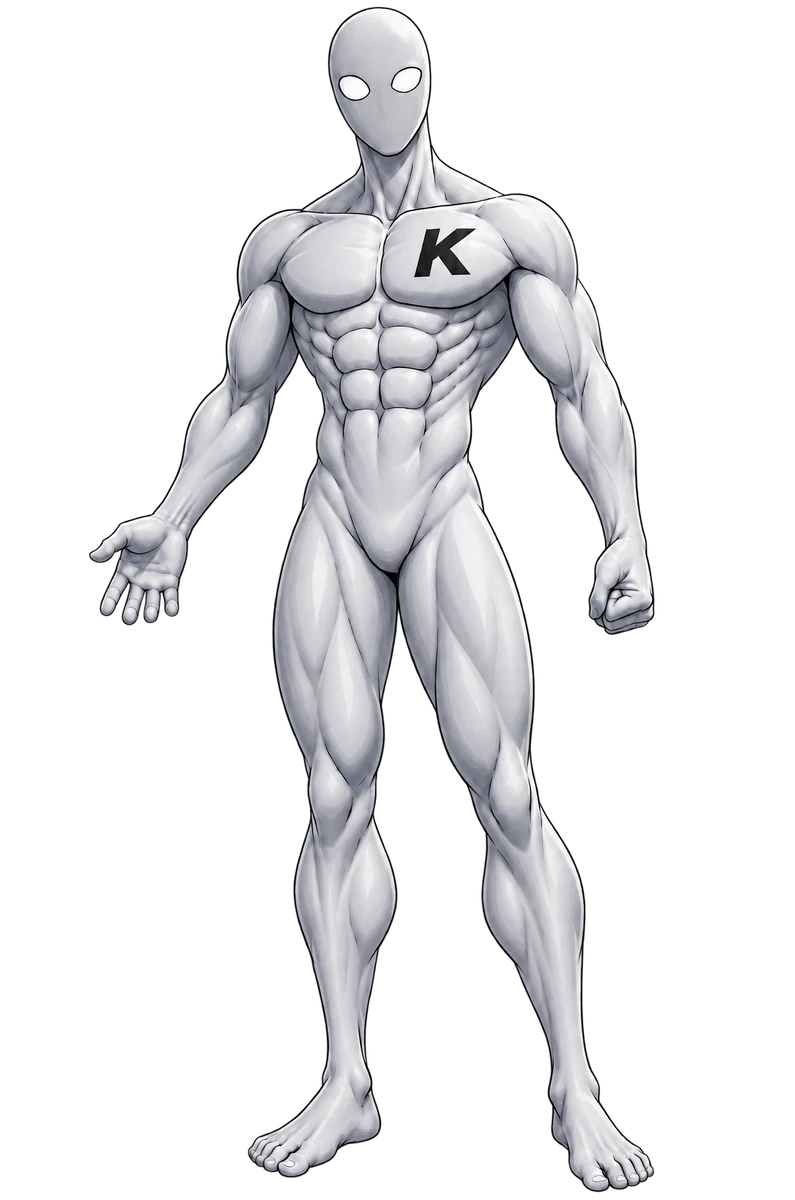
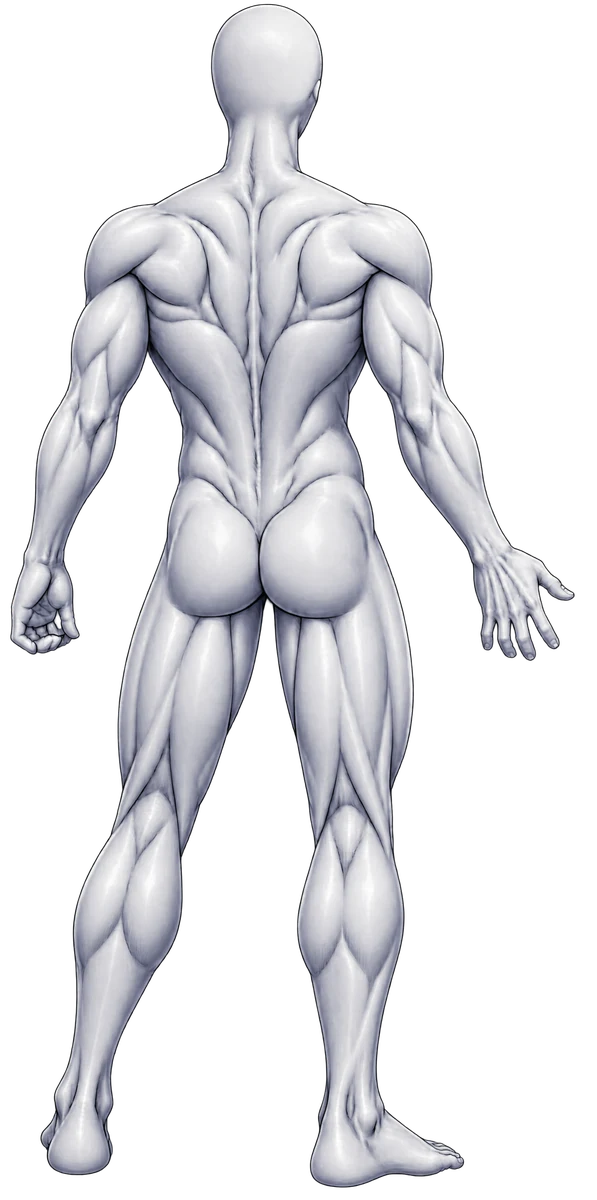
The latissimus and biceps do the majority of the pulling work, since a single arm now bears the entire load a two-arm pull-up normally splits between both sides. Forearm and grip demand rises sharply because the whole bodyweight hangs from one hand throughout the movement. The shoulder and surrounding scapular stabilizers, including the trapezius, work hard to control the large unilateral torque and keep the joint stable rather than letting it wrench into an unstable position. The core resists the torso's natural tendency to twist toward the working arm, and the chest and triceps provide secondary stabilization around the shoulder and elbow.
Stats
- Strength
- 0.00
- Control
- 0.00
- Balance
- 0.00
- Endurance
- 0.00
- Mobility
- 0.00
- Power
- 0.00
Strength dominates even more than in the archer pull-up, since the exercise now moves the entire bodyweight on one arm rather than distributing it between two. Control is the main secondary quality — managing the torso's rotation and the shoulder's stability under an asymmetric load is at least as demanding as the raw pulling force. Balance and mobility play a modest supporting role in coordinating the free arm and torso position, while endurance and power are secondary to sheer single-repetition strength.
Building the skill
Progress mainly through unassisted eccentrics, since they take the arm through the full range of motion without help and are considered the most effective single method for this skill. Reserve weighted two-arm pull-ups and assisted concentrics as supporting work rather than the primary driver — they build general pulling strength but do not by themselves train the specific single-arm pulling pattern.
Completion criteria
Perform one strict, controlled one-arm pull-up on each arm from a full one-arm dead hang: chin (ideally chest) clearly over the bar, no bar swing or kipping, and a controlled return to the starting hang. Build toward this through unassisted eccentrics (roughly 6-10 second negatives, 2-3 sets of 2-3 reps) and assisted concentrics (pulley-assisted or progressively fewer assisting fingers) before testing the full unassisted repetition on each arm.
Progression thresholds
- Lower threshold
- 1 reps
- Upper threshold
- 3 reps
A repeatable three clean one-arm pull-ups per side is a reasonable marker before adding external weight or moving toward related straight/bent-arm skills of comparable difficulty. If a single controlled repetition is not yet possible, continue with eccentrics and assisted concentrics rather than testing the full rep repeatedly, since failed unassisted attempts under near-maximal fatigue add joint stress without much training benefit.