Element preview
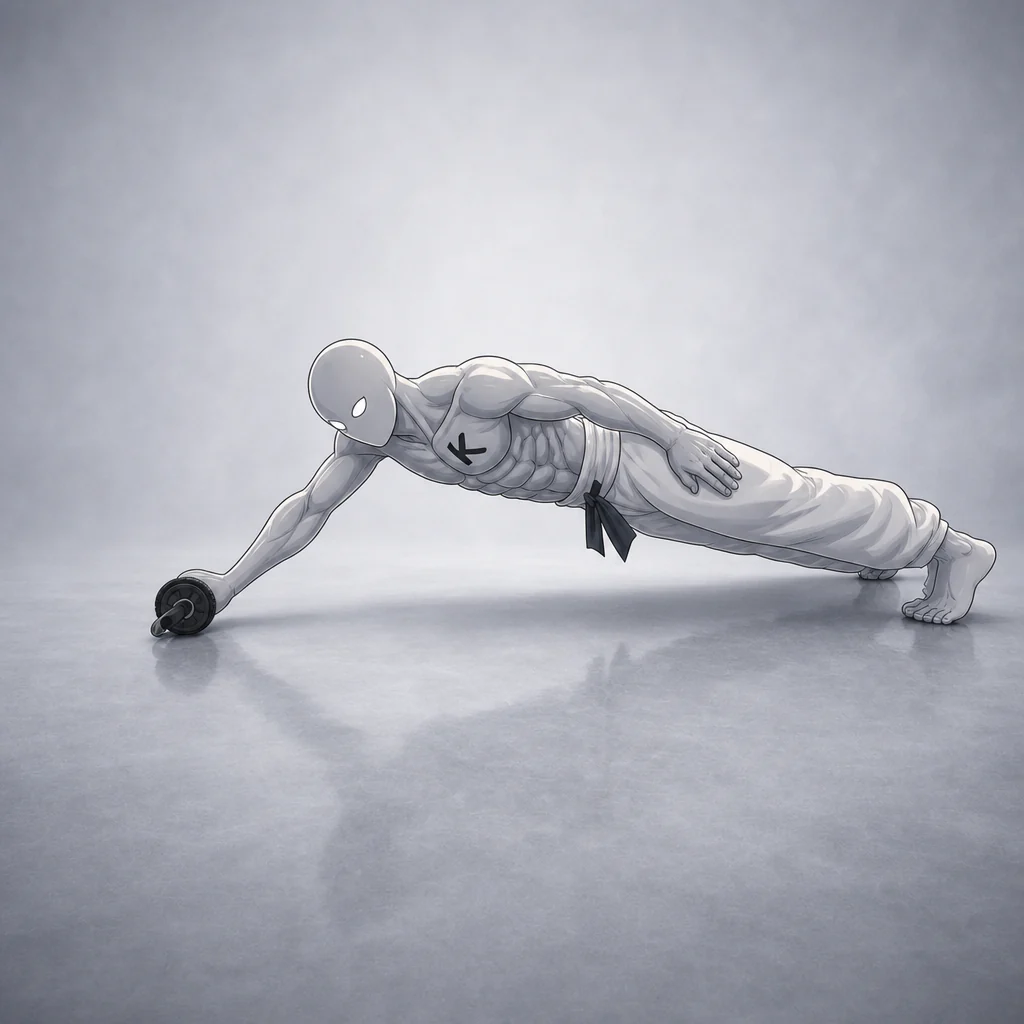
This single-arm rollout takes the anti-extension demand of the standard ab wheel and adds a heavy anti-rotation and anti-lateral-flexion component: with only one hand on the wheel, the trunk must resist twisting and tipping toward the working side while still controlling the same forward-and-back lever as the two-arm version. It is one of the more demanding bodyweight core skills in the planche-tree progression line and asks for a well-built two-arm rollout and single-arm plank base before depth is added.
Technique
- Kneel on a padded surface and grip the wheel handle with one hand, fingers wrapped fully around the bar and the wrist stacked over it. Keep the free arm relaxed at the side or lightly braced on the thigh; do not let it touch the floor or the wheel.
- Brace the core hard before moving — draw the ribs down toward the pelvis and squeeze the glutes so the lumbar spine cannot arch when load comes onto the working arm.
- Roll the wheel forward under strict control, keeping the working shoulder, hip, and knee tracking in one line. Resist the wheel's pull toward the loaded side: the hips and shoulders should stay square to the floor rather than rotating or side-bending toward the working arm.
- Extend only as far as the neutral-spine brace can be held. Advanced practitioners may reach a near-full extension close to parallel with the floor, but the working range should always be capped by control, not by how far the shoulder can reach.
- Reverse the motion by pulling the wheel back with the same arm, driving through the lat and triceps of the working side while keeping the brace and the square hip-shoulder line throughout the return.
- Complete all reps on one side with the same strict form before switching arms; do not rock the trunk or use a hip-flexor "kip" to help start the return.
Preparation
Equipment and conditions
- An ab wheel (or ab roller) with a stable, non-slip handle grip.
- A padded surface or a mat/kneepad under the knees.
- Full command of the two-arm straight-leg ab wheel rollout and a solid single-arm plank hold before attempting single-arm loading.
Risks
- The dominant failure mode is lumbar hyperextension: if the brace gives out past the controllable range, the lower back arches to absorb the load instead of the abdominal wall. Stop each rep at the depth where a flat, braced spine can still be held, and rebuild depth gradually rather than chasing full extension early.
- Because only one arm supports the wheel, the exercise creates a strong lateral and rotational pull toward the working side (an anti-rotation, anti-lateral-flexion demand in addition to the anti-extension demand of a two-arm rollout). Letting the hips or shoulders twist or dip toward the loaded arm is a technical fault, not a variation — regress in range or return to the two-arm version until the trunk can stay square.
- The working shoulder sees a long, translation-heavy lever arm at end range with no bar or partner to share the load. Wrist, elbow, and shoulder discomfort — or any sharp or pinching pain — is a signal to stop and reduce range or load rather than push through, and persistent joint pain should be evaluated by a qualified clinician.
- This is an advanced, high-torque core skill: build full command of the two-arm straight-leg ab wheel rollout and general single-arm plank stability first, and treat depth as the last variable to add once the brace and the square hip-shoulder line are reliable.
Muscles
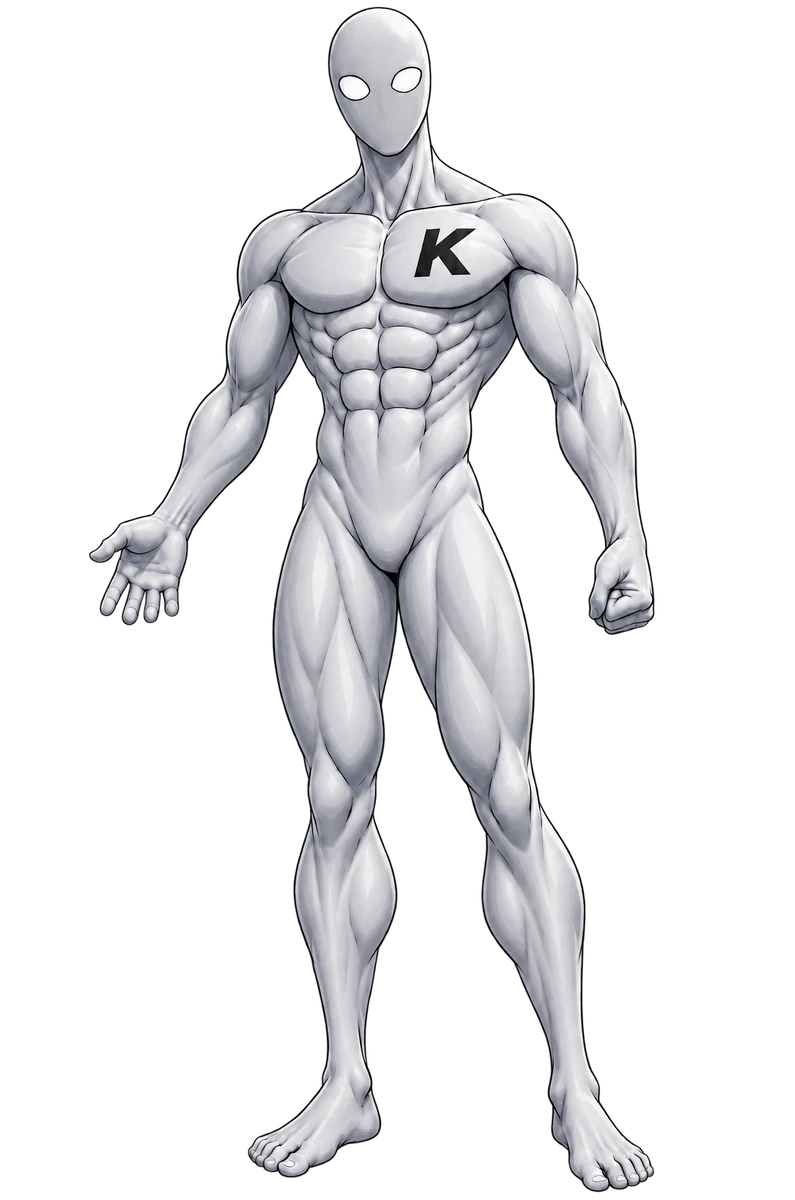
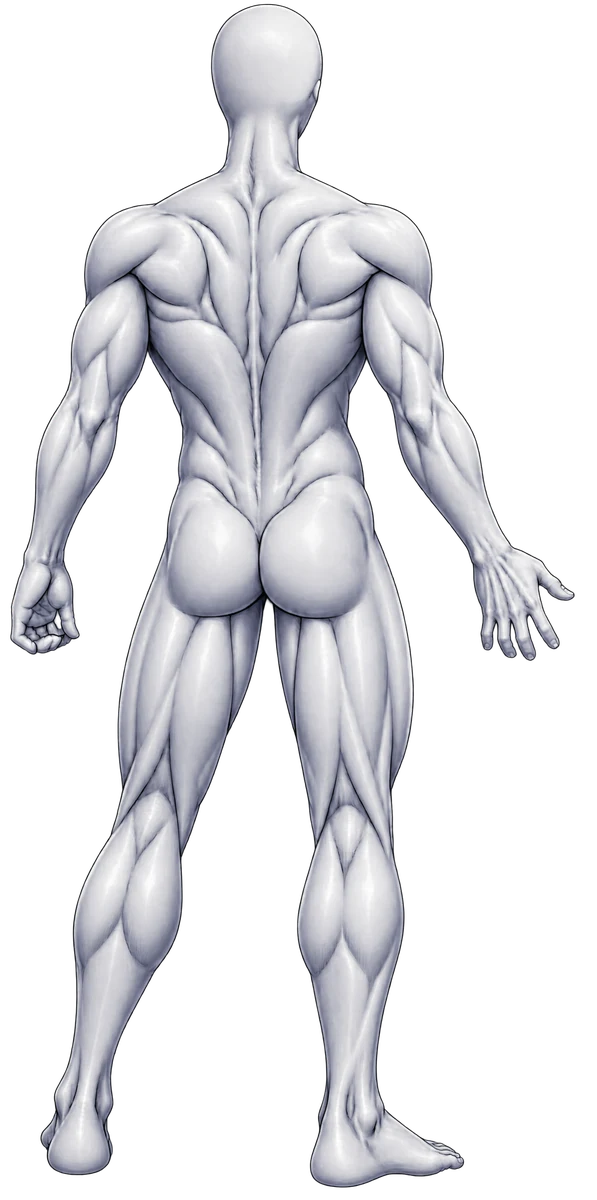
The core (rectus abdominis, obliques, and deep stabilizers together) carries the largest share of the work, resisting both spinal extension and the rotation/lateral-flexion pull created by loading only one side. The working shoulder and lat drive and control the long lever through flexion and extension, while the triceps hold the elbow locked out and the forearm and hand grip the bar under an asymmetric, one-sided load. Glutes, lower-back extensors, and trapezius add hip and scapular stabilization to keep the body square, with the quadriceps and chest playing a smaller supporting role.
Stats
- Strength
- 0.00
- Control
- 0.00
- Balance
- 0.00
- Endurance
- 0.00
- Mobility
- 0.00
- Power
- 0.00
Strength remains the dominant demand — a long, single-arm-loaded lever the core must resist through a full range. Control is a close second, since the whole point of the movement is resisting rotation and lateral flexion rather than simply producing force, and balance is elevated compared with the two-arm version because the load is asymmetric. Endurance, power, and mobility play smaller supporting roles.
Completion criteria
Product completion estimate: 8 controlled single-arm rollouts per side from a kneeling start, each reaching a near-parallel extension without lumbar arching, hip or shoulder rotation toward the working side, or momentum on the return.
Progression thresholds
- Lower threshold
- 3 reps
- Upper threshold
- 8 reps
These rep thresholds are a product-calibration estimate, set relative to the two-arm straight-leg ab wheel rollout that precedes this movement in the tree. Once 8 clean, square, non-arching reps per side are consistent, the same brace and one-sided control transfer toward deeper single-arm core and pressing work; if reps fall below 3 clean per side or the hips start rotating toward the working arm, return to the two-arm rollout to rebuild the anti-extension base before retrying the single-arm version.