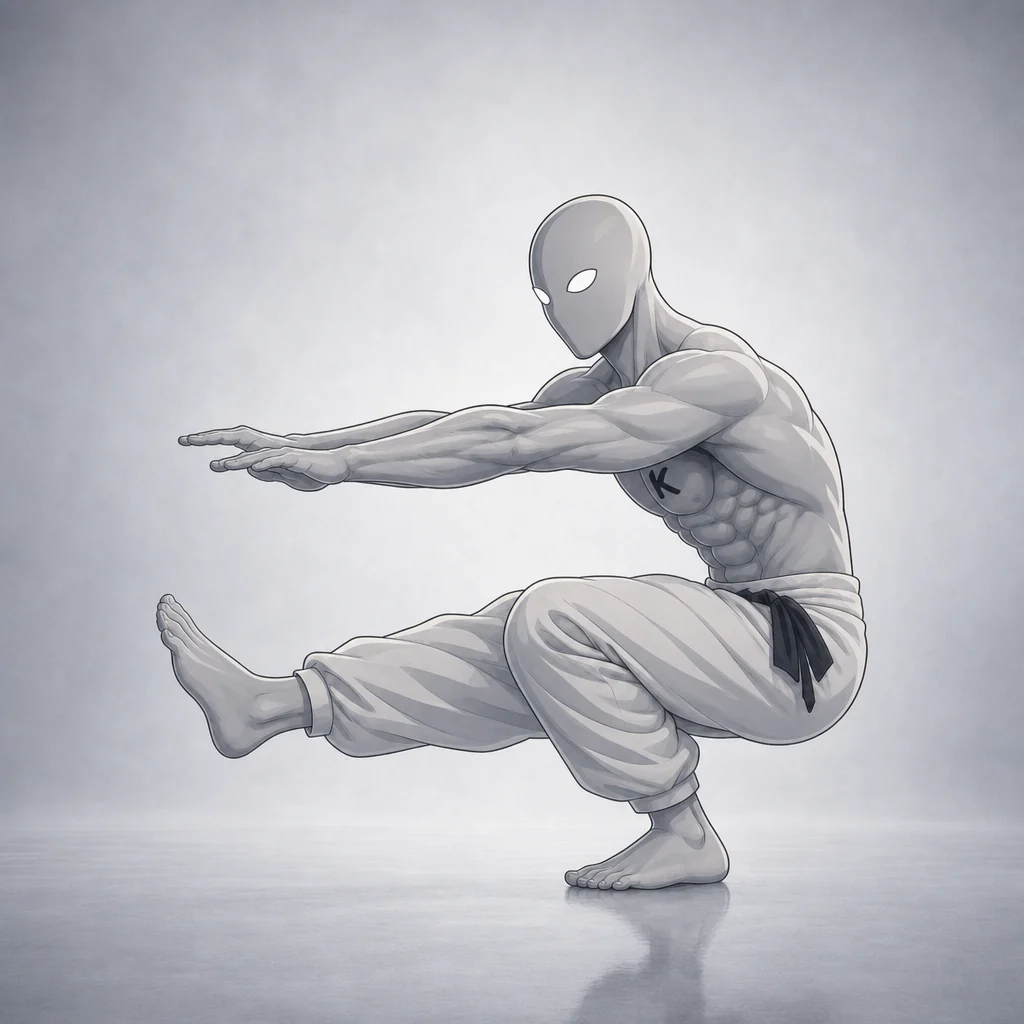
The natural one leg press takes the single-leg squat pattern and pairs it with a fixed support — a wall, pole, or rail — that the lifter holds for balance rather than lifting assistance. The trunk and hips travel back and down along that support in a path that resembles the sled motion of a machine leg press, while the working leg does the same knee- and hip-extension work as a pistol squat.
Removing most of the free-balance demand lets the lifter focus on depth, control, and volume through the working leg rather than on staying upright unsupported. That makes this exercise a natural bridge between a strict floor pistol squat and later work that asks the leg to control an even longer range, such as an elevated platform variant.
Technique
- Stand facing a wall, pole, or other fixed support at roughly arm's length. Shift your weight onto the working leg, brace your trunk, and lift the free leg so only the working foot stays grounded.
- Hold the support lightly with one or both hands for balance only — the arms guide the path, they do not pull or push you through the movement.
- Bend the hip and knee of the working leg and lower under control, letting the trunk travel back and down while the arms slide or walk down the support, similar to the pressing path of a leg-press machine. Keep the working heel down and the knee tracking in line with the toes.
- Continue to the deepest position you can control with the heel grounded and the free foot clear of the floor, then reverse the motion by pressing through the full working foot.
- Drive back up along the same path, using the support only to steady balance, until the working hip and knee reach full extension. Reset and repeat on the other side.
Preparation
Equipment and conditions
- A fixed wall, pole, sturdy rail, or door frame at roughly arm's length to hold for balance.
- A flat, non-slip floor with enough space to shift the trunk back and down along the support.
- No other equipment is required.
This exercise assumes a working pistol squat: the same knee-and-hip pattern, heel-down foot pressure, and depth are expected, just with a support taking over part of the balance job. Before adding load or chasing extra depth:
- Confirm a controlled pistol squat with the heel down and knee tracking over the toes through a comfortable range.
- Start with a taller, closer support and only light hand contact, so most of the work still comes from the leg rather than the arms.
- Increase distance from the support, lower the hand contact point, or add depth gradually as control improves, rather than increasing all three at once.
Risks
Because a wall or pole takes over part of the balance demand, it becomes easy to lean on the arms and turn the exercise into an assisted pull rather than a leg press. Keep arm involvement light and deliberate; if you cannot control the descent without pulling on the support, reduce depth or choose a lower support height.
As with any deep single-leg squat pattern, avoid letting the working heel lift or the knee collapse inward, and avoid bouncing out of the bottom position. Stop if you feel sharp or worsening pain in the ankle, knee, or hip, and have persistent pain assessed by a qualified clinician before continuing.
Muscles
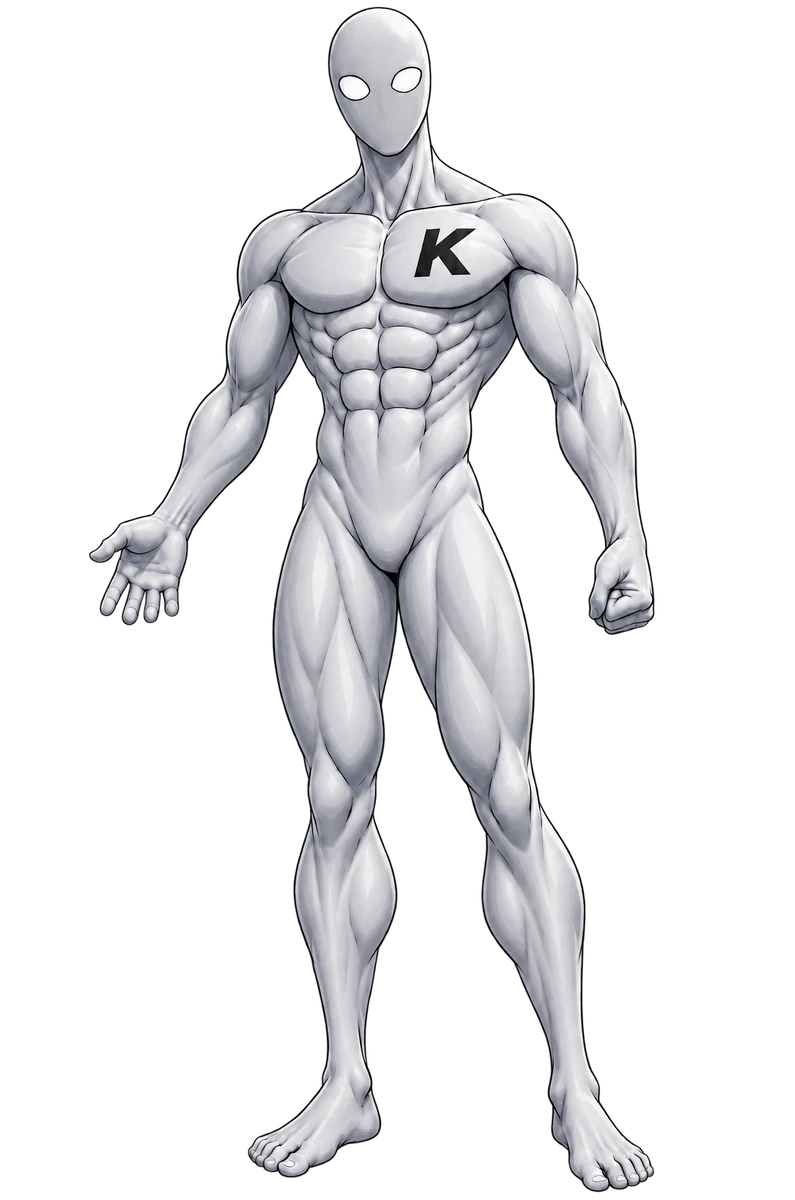
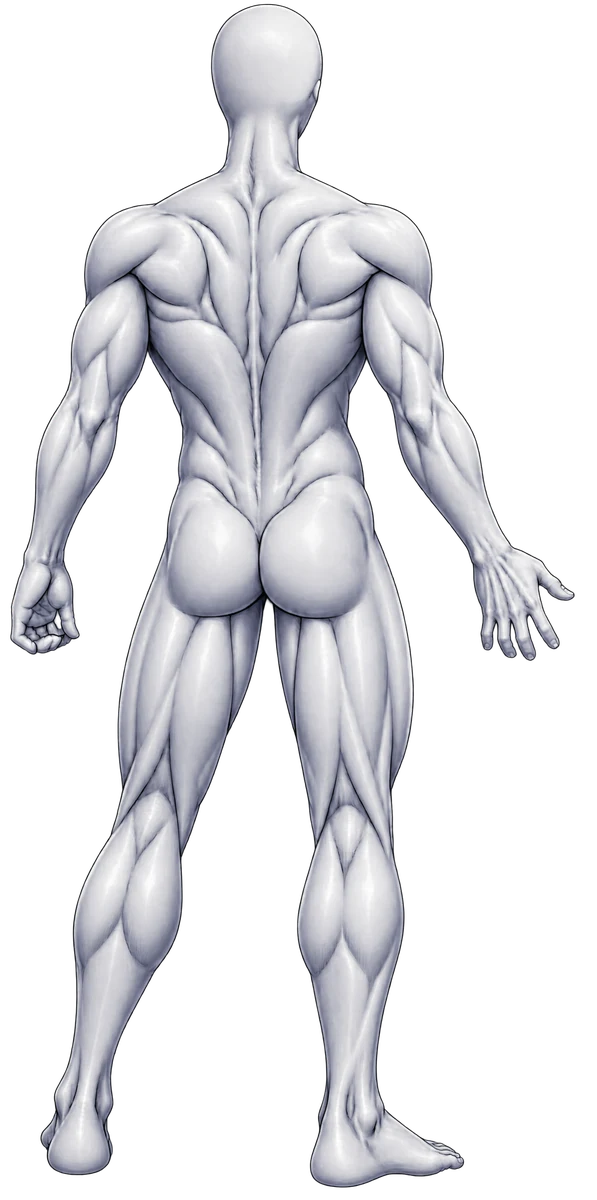
The quadriceps drive knee extension throughout the press, and the glutes extend and stabilize the working hip as the trunk travels back along the support. The hamstrings and calves share load across the bent-knee, dorsiflexed bottom position, and the core and lower back keep the pelvis and spine organized as the trunk leans back through the pressing path. Because a support takes over part of the balance demand, these target muscles can be worked through a similar or slightly deeper range than a strict floor pistol squat with somewhat less balance interference.
Stats
- Strength
- 0.00
- Mobility
- 0.00
- Balance
- 0.00
- Control
- 0.00
- Endurance
- 0.00
- Power
- 0.00
Strength remains the primary quality, applied through the same single-leg knee- and hip-extension work as the pistol squat. Mobility is a strong secondary demand, since the support allows practicing a comfortable-to-deep range at the ankle and hip. Balance and control are still meaningful — the arms only assist, they do not replace leg-side stability — but both are somewhat reduced relative to a fully free-standing pistol squat, while endurance rises slightly with the higher rep ranges this supported version tends to allow.
Completion criteria
Perform 8 controlled repetitions per side through a comfortable depth, using the support only for light balance assistance, with the working heel down, the knee tracking with the toes, and the free foot clear of the floor throughout every repetition.
Progression thresholds
- Lower threshold
- 5 reps
- Upper threshold
- 12 reps
Once 12 controlled repetitions per side are consistent with light hand contact, reduce support further or move toward free-standing and elevated-range single-leg squat work such as the elevated fraction pistol squat. If a side cannot complete 5 controlled repetitions, use a closer or taller support, shorten the range, and rebuild the same pattern before adding depth or distance back.