Element preview
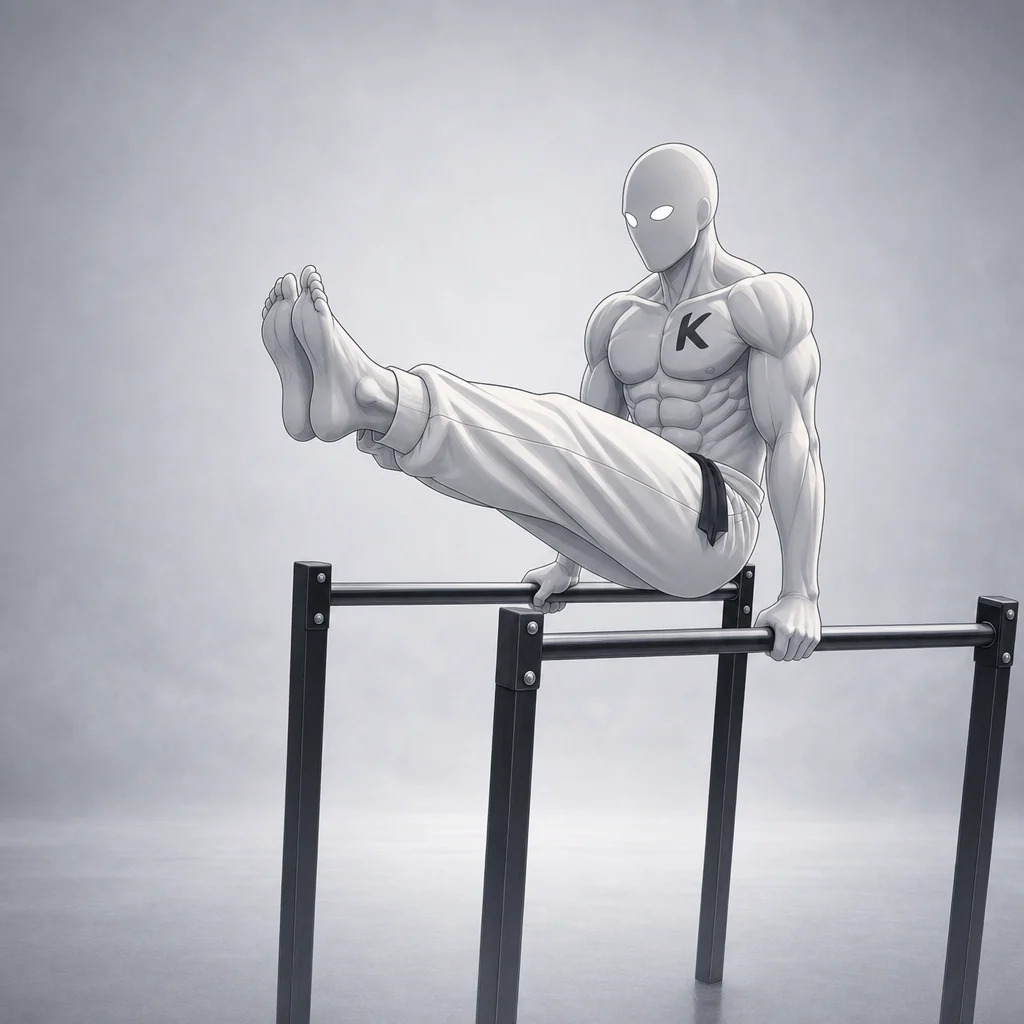
The L-sit is a supported isometric hold: pressing down through straight arms on the floor, parallettes, or parallel bars while both legs extend straight out in front of the body at roughly hip height, forming the L-shaped silhouette the hold is named for. It is one of the more accessible static holds in the vertical-pushing family — most of its difficulty comes from coordinating straight-arm shoulder depression with a strong, sustained core and hip-flexor brace rather than from raw pressing strength alone, which is why it typically follows basic pressing work such as the dip in a training progression.
Technique
- Sit or support yourself on a pair of parallettes, blocks, parallel bars, or the floor with your hands beside or slightly in front of your hips.
- Press down through straight arms until your hips lift clear of the surface, driving your shoulders down away from your ears rather than letting them ride up.
- Straighten both legs out in front of you and squeeze them together, lifting them until the thighs are roughly parallel to the floor.
- Point your toes, lock your knees, and keep a slight posterior pelvic tilt so the lower back does not arch under the load.
- Hold the position with steady breathing rather than holding your breath, keeping the chest lifted and the shoulder blades actively depressed for the full duration.
- Lower under control back to the start rather than dropping.
Preparation
The L-sit is usually built in stages rather than attempted cold: start with both feet still lightly grounded while you groove the straight-arm support and shoulder-depression position, then lift one foot at a time, then move to a tuck hold (knees bent, both feet off the ground), and only then straighten one leg and finally both legs into the full position. Working single-leg extensions for time on each side before combining them lets you isolate the hip-flexor and core demand without also fighting for shoulder position at the same time.
Risks
Two faults show up most often: shoulders creeping up toward the ears, which shifts load off the lats/lower traps and onto the neck and upper traps, and the legs sagging below parallel, which quietly turns the hold into an easier hovering pike rather than a true L-sit. Both are best caught with a mirror, video, or a coach's eye rather than by feel alone.
Because the hips stay flexed and the legs stay lifted for the entire hold, the hip flexors work under sustained tension in a shortened position; if this position is trained frequently without variety, some coaches flag it as a plausible contributor to hip-flexor tightness or overuse discomfort in gymnasts and calisthenics athletes, though this is a general training caution rather than a measured injury rate for the L-sit specifically. Build hold time gradually, keep sessions to a few times per week with rest between them, and regress to a tuck or single-leg-extended hold if the hips or lower back start to ache rather than just fatigue.
Supporting full bodyweight on straight arms and open hands also loads the wrists; if wrist discomfort limits the hold before the target muscles do, training on parallettes or a slightly closed fist/knuckle position can reduce wrist extension while the wrists build tolerance.
Muscles
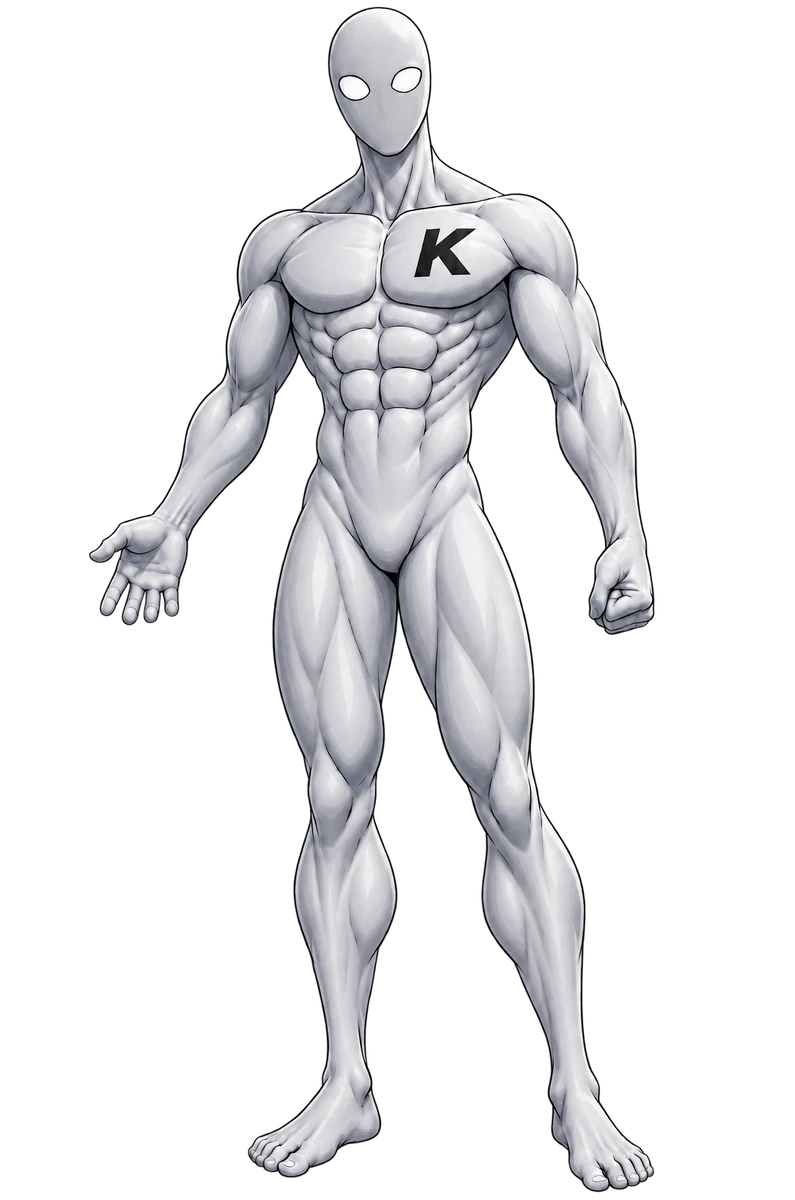
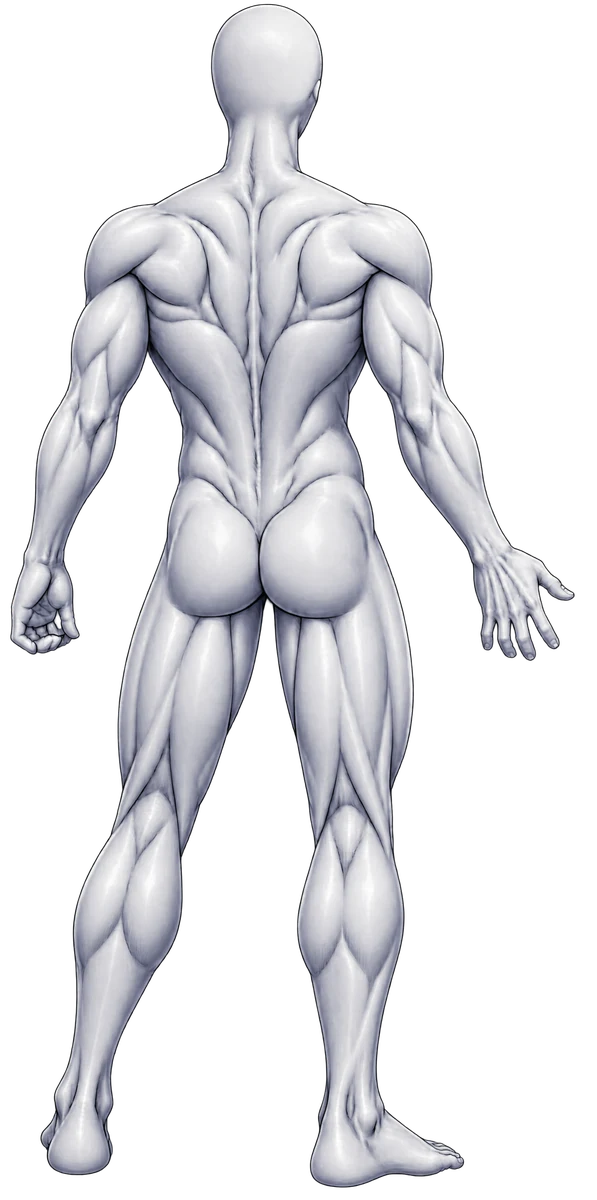
The abdominals and hip flexors do most of the work, bracing the trunk and holding the legs lifted and extended against gravity for the whole hold — this is the main reason the L-sit is trained as a core and hip-flexor strength exercise more than a pure pressing one. Straight-arm support is maintained by the triceps locking the elbows and the shoulders and lower trapezius depressing and stabilizing the scapulae; the chest assists the shoulders in the press. The quadriceps keep the knees locked and the hamstrings hold light isometric tension to keep the legs straight, while the lower back helps resist excess arch, and the forearms and hands manage the grip and pressure through the palms.
Stats
- Strength
- 0.00
- Control
- 0.00
- Endurance
- 0.00
- Mobility
- 0.00
- Balance
- 0.00
- Power
- 0.00
This is primarily a strength hold, driven by sustained core, hip-flexor, and shoulder tension rather than any explosive component, so power stays minimal. Control is the clear secondary demand, since the visible difficulty comes from keeping the legs level and the shoulders depressed rather than from moving heavy load. Endurance matters for sustaining the position once it is found, while mobility (hip and shoulder range to reach the position cleanly) and balance play smaller supporting roles.
Completion criteria
Hold a full L-sit — thighs parallel to the floor, knees locked, toes pointed, shoulders actively depressed — for the target time below without the legs sagging or the shoulders riding up.
Progression thresholds
- Lower threshold
- 8 s
- Upper threshold
- 20 s
Once you can hold a clean full L-sit for the target time above with the legs level and the shoulders depressed, you have the base to move toward higher-angle holds such as the V-sit, where the legs lift above hip height and the hip-flexor and mobility demand increases. If you cannot yet hold the full position cleanly for the lower threshold, drop back to a tuck or single-leg-extended L-sit and rebuild time there before retrying both legs together.