Element preview
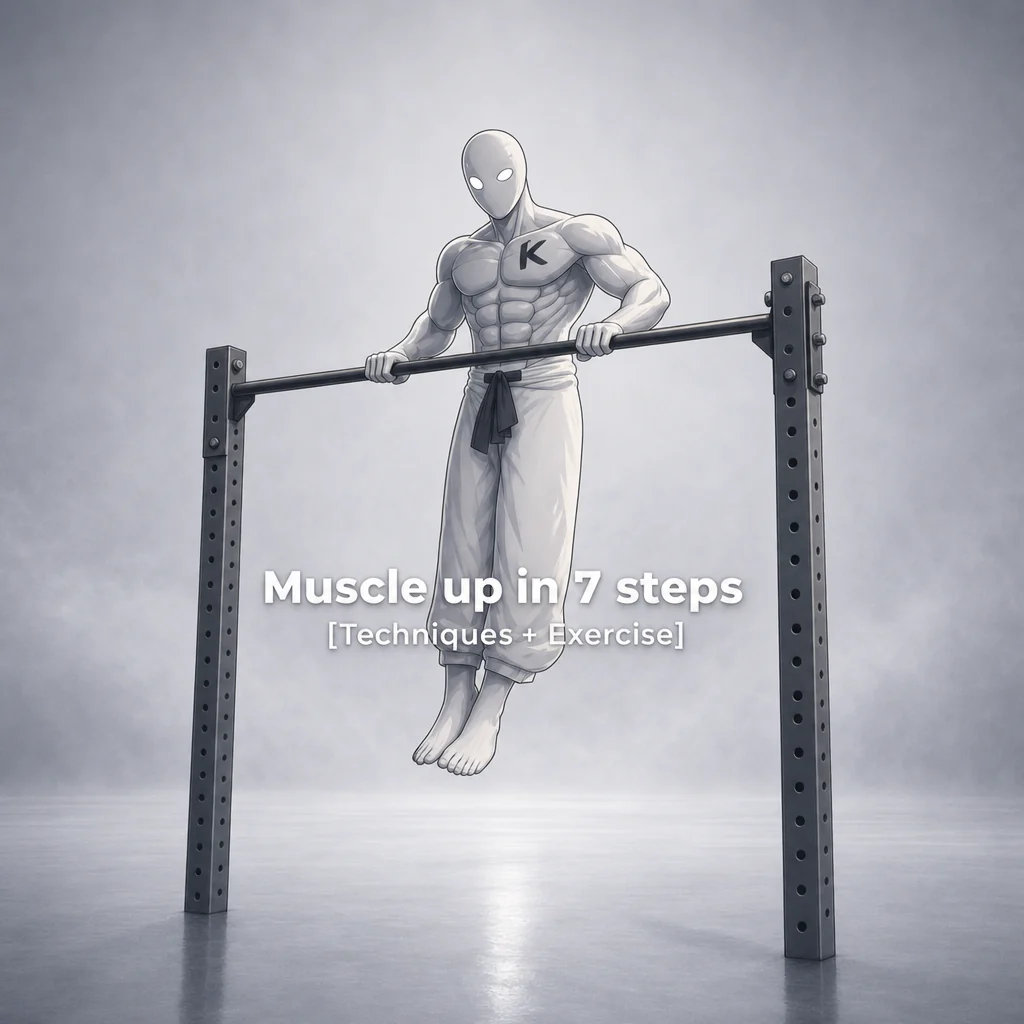
Preview · 0:06
A short look at the whole element in motion.
This is an overview clip, not a technique reference — the form in it may be imperfect. Follow the steps in Technique.
The kipping muscle-up borrows the pull-up bar's dead-hang pulling pattern and adds a whole-body swing to carry the body from a hang, over the bar, and into a supported dip lockout in one continuous motion. Unlike the strict muscle-up, it trades some of the raw pulling strength requirement for momentum and timing, which is why it sits earlier on the vertical-pull path even though the transition itself is technically demanding.
Technique
- Hang from the bar with a shoulder-width pronated grip and start the swing with an arch-hollow kip: push the shoulders and hips forward into a slight arch, then let the stretch reverse you backward into a hollow position.
- Repeat the arch-hollow rock two or three times to build horizontal momentum, keeping the swing controlled rather than wild.
- At the peak of the forward hollow-to-arch transition, pull explosively while driving the hips and chest up and slightly forward toward the bar, converting the horizontal kip into vertical drive.
- As the chest rises past the bar, roll the wrists over the bar quickly and lean the torso forward through the transition — this is the "false" moment of the skill, where the bar briefly disappears from view as the body moves from a pulling position to a supported one.
- Finish by pressing the arms to full lockout above the bar in a supported dip position, then reverse the sequence under control to return to a hang.
Preparation
Before attempting the kipping muscle-up, you should already have:
- Strict dead-hang pull-ups — comfortable, pain-free reps with full extension at the bottom.
- The kipping pull-up — the arch-hollow swing used here is the same rhythm that drives a kipping pull-up, just carried further so the chest clears the bar and the wrists roll over it.
Learning the skill is mostly about coordinating the kip timing with the pull, not about adding raw strength on top of a pull-up. Many lifters find it useful to first drill the arch-hollow rhythm with feet lightly touching the ground, then add the pull and transition once the swing feels automatic.
Risks
The transition is the highest-risk phase: a straight bar cannot rotate the way rings can turn out, so the forearms and wrists have to rotate around and over it instead, which can feel more awkward on the wrists, elbows, and shoulders than the equivalent ring transition. Attempt this skill only after strict dead-hang pull-ups and the kipping pull-up are comfortable and pain-free. The shoulders take on heavy load throughout this movement, and shoulder complaints are common in high-volume bar and ring training, so stop if pinching or sharp pain appears anywhere in the transition rather than pushing through it. Avoid grinding out high-repetition sets while fatigued — losing timing under fatigue is what usually causes a missed transition or a fall, so train on a soft landing surface or with a spotter while learning.
Muscles
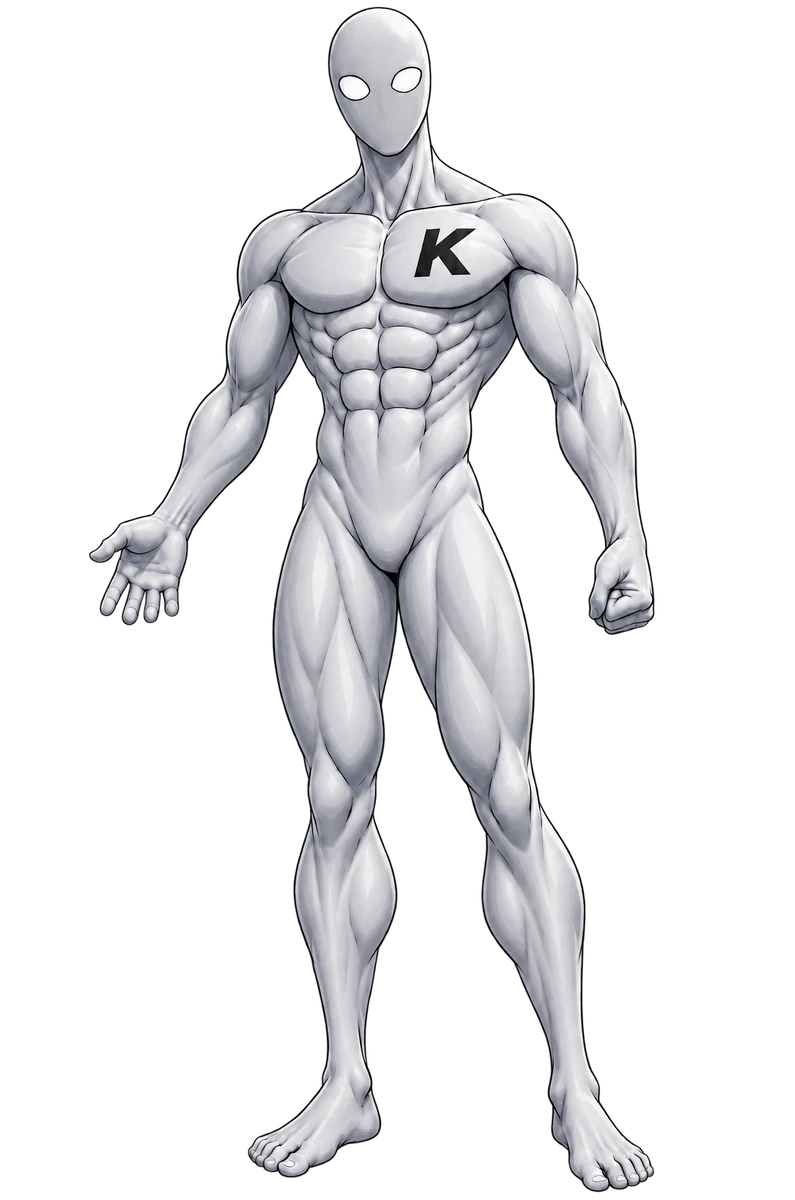
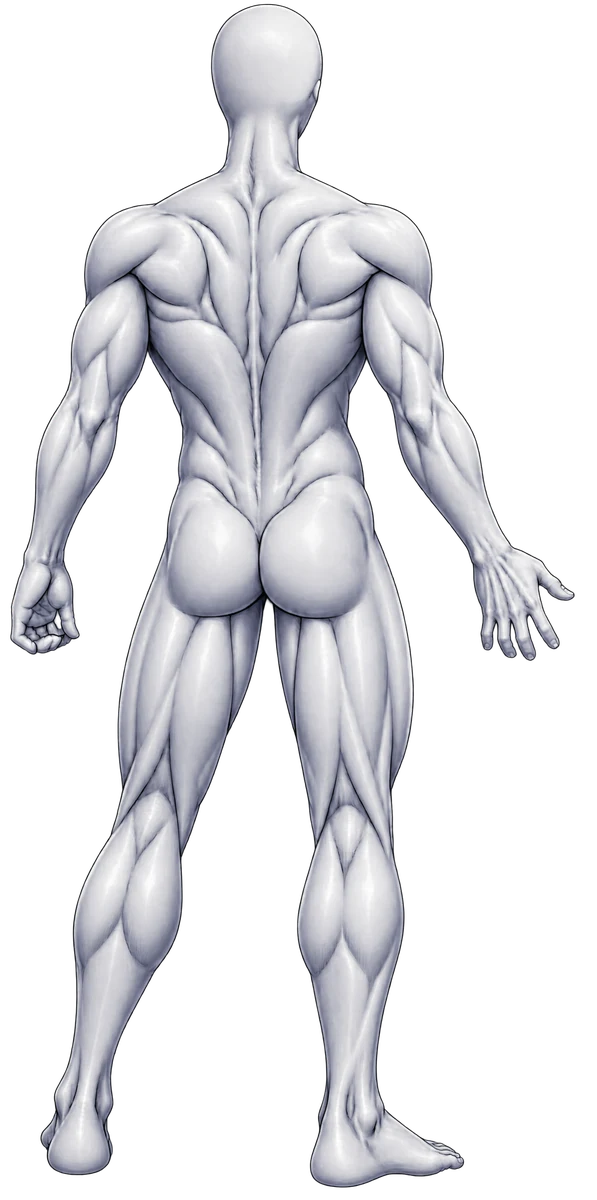
The lats and biceps drive the initial pull, much as in a strict pull-up, but the kip's hip drive and the trunk control needed to time the arch-hollow swing add real work for the core and glutes. As the body rolls over the bar, the shoulders, chest, and triceps take over to finish the transition and press to lockout, while the forearms and trapezius stay under load throughout the hang and pull.
Stats
- Strength
- 0.00
- Power
- 0.00
- Control
- 0.00
- Endurance
- 0.00
- Balance
- 0.00
- Mobility
- 0.00
Strength remains the dominant demand, but the explosive hip-and-shoulder drive of the kip pulls real weight toward power, and precise timing of the swing-to-pull-to-transition sequence makes control a meaningful secondary factor — more so than in a strict, momentum-free pull.
Completion criteria
3-5 consecutive kipping muscle-ups with a clean arch-hollow kip, a controlled transition (no excessive kip-swing after the bar), and a full arm lockout at the top of each rep.
Progression thresholds
- Lower threshold
- 2 reps
- Upper threshold
- 5 reps
Once 5 consecutive reps with a controlled kip and a clean lockout feel repeatable, it is a reasonable checkpoint to start layering in strict-strength transition work (leading toward the strict muscle-up) or narrower-grip variants such as the L-sit kipping muscle-up. If fewer than 2 reps are repeatable, or the transition is inconsistent, spend more time on the kipping pull-up and on isolated transition drills before retesting.