Element preview
The frog stand (also known as crow pose) is one of the first hand-balancing holds most calisthenics athletes learn on the way to the planche. Unlike a straight-arm handstand, the bent elbows create a "shelf" for the knees, which lowers the strength demand and lets a beginner focus on the skill that actually matters here: shifting the body's weight forward over the hands until gravity, not muscle, holds the legs up.
Technique
- Squat down and place your hands flat on the floor, shoulder-width apart, fingers spread wide for a stable base.
- Bend the elbows and rest your knees on the back of the upper arms, roughly at elbow height, so the arms form a shelf under the knees.
- Shift your weight forward, letting your shoulders travel past your wrists, until your toes become light on the floor.
- Once the weight is fully on your hands, lift the feet and draw the heels toward the glutes.
- Keep the head in a neutral position (do not stare straight down) and round the upper back slightly (scapular protraction) to help balance.
- Exit with control by slowly shifting the weight back and lowering the feet, rather than letting the position collapse forward.
Preparation
Before attempting the frog stand, you should be comfortable holding a plank for 30 seconds or more and be able to sit in a relaxed, flat-footed deep squat — both are used to enter the position. The planche lean is a useful companion drill: it teaches the same forward weight shift over the wrists and shoulders that the frog stand relies on, just from a standing lean rather than a tucked squat.
Risks
The most common fault is an insufficient forward lean, which makes the hold unstable and encourages falling forward onto the head or face — practice near a soft mat while learning. Placing the knees too low (on the wrists or forearms) or too high (past the elbows) reduces the stability of the "shelf" and adds unnecessary wrist strain. Warm up the wrists (extension and flexion stretches, weight shifting on flat palms) before loading them in this position, and avoid holding the breath, which adds unnecessary tension through the shoulders.
Muscles
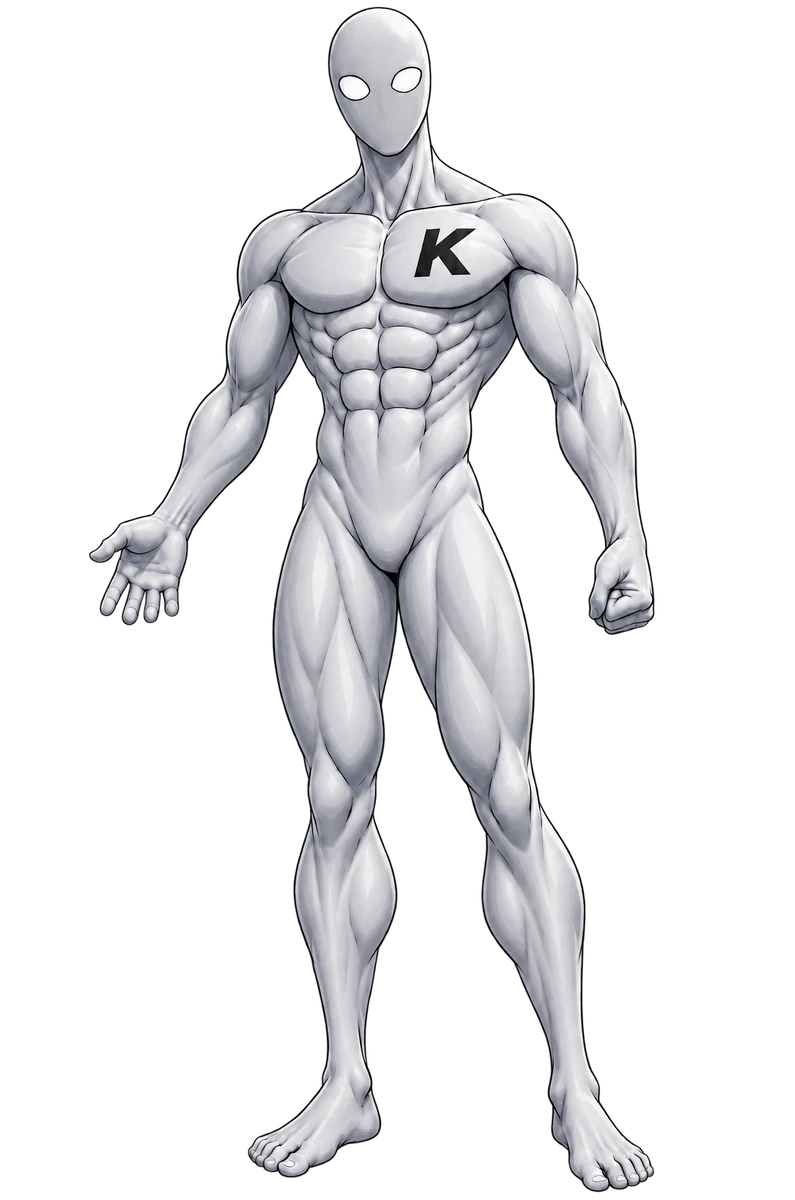
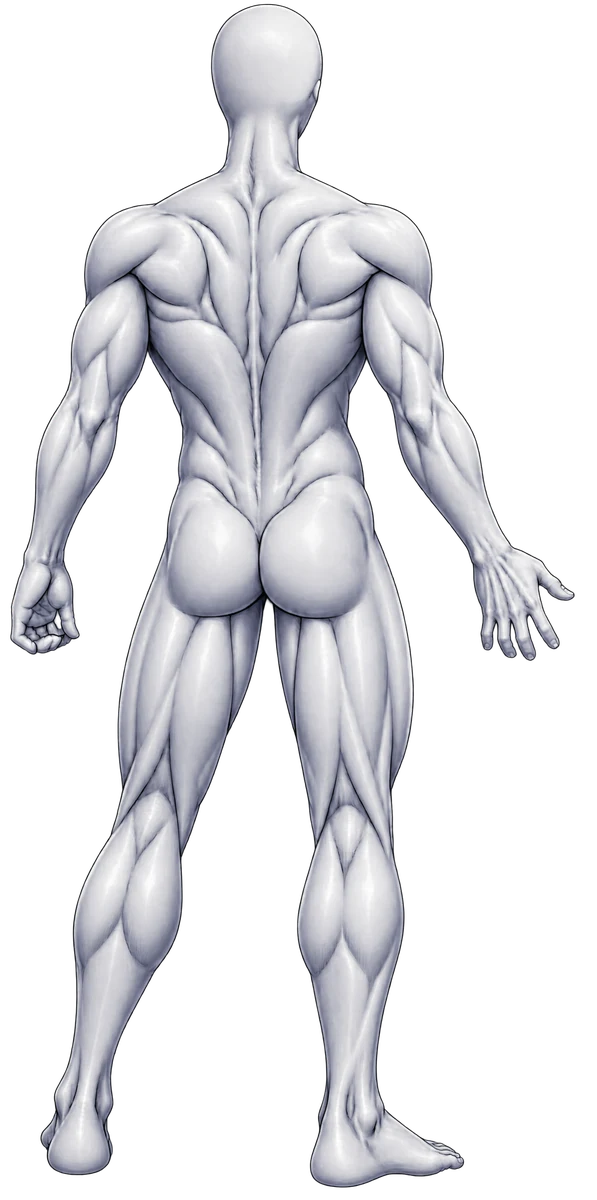
Balance here is won or lost at the wrists and shoulders. The anterior deltoids and triceps brace the bent-arm "shelf" that the knees rest on, while the hands and forearms make constant small adjustments to keep the center of mass over the base. The core (rectus abdominis and obliques) rounds the spine slightly and keeps the tucked legs compact, and the upper back and chest help protract the shoulder blades for a more stable platform.
Stats
- Balance
- 0.00
- Control
- 0.00
- Strength
- 0.00
- Endurance
- 0.00
- Mobility
- 0.00
- Power
- 0.00
The frog stand is primarily a balance skill — success depends on finding and holding the tipping point where the feet become weightless, not on raw pressing strength. Control is a close second, since the hold requires continuous fine adjustment through the fingers and wrists, with only a modest strength component from the shoulders, triceps, and core needed to sustain the shelf position.
Completion criteria
Hold a clean frog stand — feet off the floor, knees resting on the upper arms, controlled entry and exit — for 20-30 seconds before moving on to straight-arm variations (crow pose) or tuck planche work.
Progression thresholds
- Lower threshold
- 8 s
- Upper threshold
- 20 s
A shaky hold under 8 seconds, or one that requires hopping to find balance, means you should keep drilling the tucked position with toes lightly touching the floor and spend more time on the planche lean. Once you can hold 20 seconds or more with a controlled entry and exit, move on to straightening the arms toward crow pose or begin exploring tuck planche.