Element preview
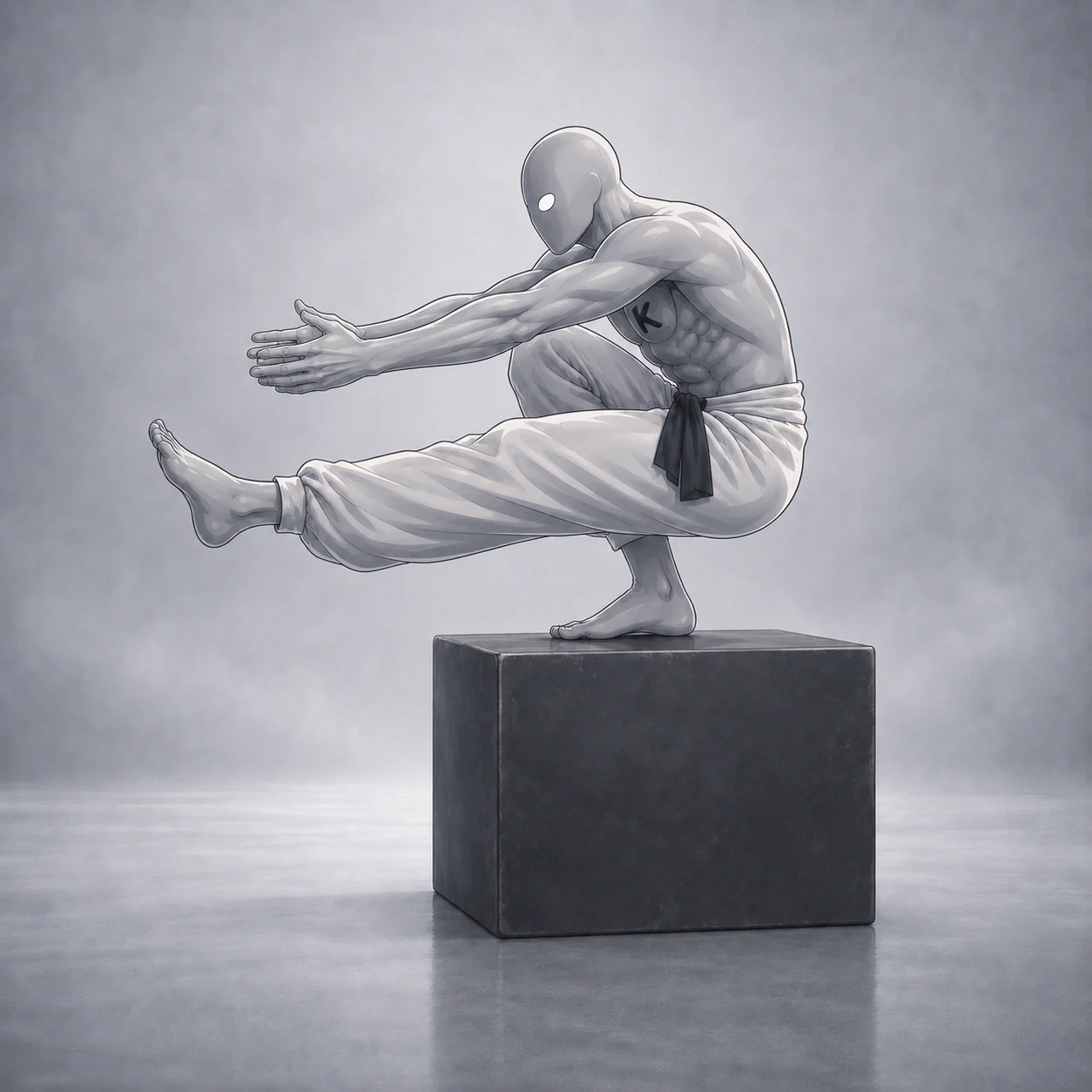
Preview · 0:06
A short look at the whole element in motion.
This is an overview clip, not a technique reference — the form in it may be imperfect. Follow the steps in Technique.
The elevated fraction pistol squat takes the standard single-leg squat and raises the working foot on a box, plate, or step so the free leg can travel below standing height. Rather than chasing full depth right away, the lifter works a specific lower fraction of that extended range under strict control before connecting it to a complete repetition.
Standing on a platform removes the floor as a limit on how far the hip and knee can travel, so the working leg is asked to control a longer path than a floor-based pistol squat covers. Coaching sources are not unanimous on how an "elevated pistol squat" should be classified: some practical calisthenics guides (e.g. GORNATION) describe an elevated pistol squat as an easier regression, used to let the free leg dangle so beginners can find balance before attempting a full floor pistol squat. This element is a different variant — it pairs the elevated setup with a deliberately worked lower fraction of the extended range rather than a full-depth repetition. That fraction/partial-ROM-in-extended-range approach, not the elevation alone, is what places this progression above the floor pistol squat: working a controlled partial range at end-of-range depth is inferred to demand more strength and control than a full but shallower floor rep, based on this element's skill-tree position (built on the natural one leg press) and general partial-ROM training principles, rather than on a single source describing this exact variant. Treat it as a strength and control exercise for lifters who already own the standard pistol squat pattern and are building toward heavier or deeper single-leg work — not as the easier, balance-focused regression some sources describe under a similar name.
Technique
- Set a stable box, plate, or step under the working foot only — high enough that the free leg can drop below the platform without touching the floor. Stand tall on the working leg, brace the trunk, and extend the free leg forward.
- Descend under control, letting the hip and knee of the working leg bend while the heel stays planted on the platform and the free leg travels down and slightly forward as it clears the platform edge.
- Work the bottom fraction of the range first: lower only as far as you can control with the heel down and the knee tracking over the toes, treating this lower segment as the working zone rather than rushing through it to a full-depth pistol squat.
- Pause briefly at the bottom of the worked fraction, keeping the free leg elevated and the trunk upright, then drive back up through the full working foot to standing.
- Reset balance at the top before starting the next repetition; do not let the free leg touch the platform or the floor between reps.
Preparation
Equipment and conditions
- A stable, non-slip box, plate, or step positioned under the working foot only, sized so the free leg can hang and travel without contacting the floor.
- Enough overhead and forward clearance to extend the free leg through the full worked range.
- No additional equipment is required beyond the elevated platform.
This progression assumes a solid pistol squat and the unilateral strength built through the natural one leg press. Before loading the elevated, extended-range fraction:
- Confirm a clean floor pistol squat with the heel down and the knee tracking over the toes through full depth.
- Build single-leg pressing strength and control through a comfortable range with the natural one leg press.
- Start shallow and progress deeper: begin with a low platform and a shallow worked fraction near standing height, and only increase platform height or the depth of the worked fraction once the current range is fully controlled without heel lift or knee collapse.
Risks
Working an extended range below an elevated platform increases ankle dorsiflexion and hip flexion demand beyond a floor pistol squat, and a single working leg absorbs the full bodyweight through that range. Progress the platform height and worked fraction gradually, and keep the working heel down throughout — if the heel lifts or the knee drifts inward, reduce depth or platform height before continuing.
Do not bounce out of the bottom of the worked fraction or let the trunk collapse forward to compensate for fatigue. Stop if you feel sharp or worsening pain in the ankle, knee, or hip, and have persistent pain assessed by a qualified clinician before continuing this progression.
Muscles


The quadriceps carry the main knee-extension load through the extended range, and the glutes work harder to extend and stabilize the hip as the working leg travels below platform height. The hamstrings and calves take on more length-tension demand at the bottom of the worked fraction, since the ankle and knee move through a deeper path than a floor pistol squat allows. The core and lower back work to keep the trunk upright and the pelvis level over a single foot balanced on a raised, smaller base.
Stats
- Strength
- 0.00
- Balance
- 0.00
- Mobility
- 0.00
- Control
- 0.00
- Endurance
- 0.00
- Power
- 0.00
Strength remains the primary quality, now applied through a longer working range under one leg. Mobility and balance are strong secondary demands: the working ankle and hip must access a deeper position than on the floor while the body balances on a raised platform. Control is elevated relative to the floor pistol squat because of the added platform balance and the need to hold position at the bottom of the worked fraction; power still contributes little to a strict, paused repetition.
Completion criteria
Perform 5 controlled repetitions per side through the worked fraction of the range from an elevated platform, with the working heel down, the knee tracking with the toes, and the free leg staying clear of the platform and floor throughout every repetition.
Progression thresholds
- Lower threshold
- 2 reps
- Upper threshold
- 5 reps
Once 5 controlled repetitions per side are consistent through the worked fraction, increase the platform height, extend the worked range, or move toward loaded single-leg squat work. If a side cannot complete 2 controlled repetitions, lower the platform height or shorten the worked fraction until the same range can be controlled without heel lift or knee drift.