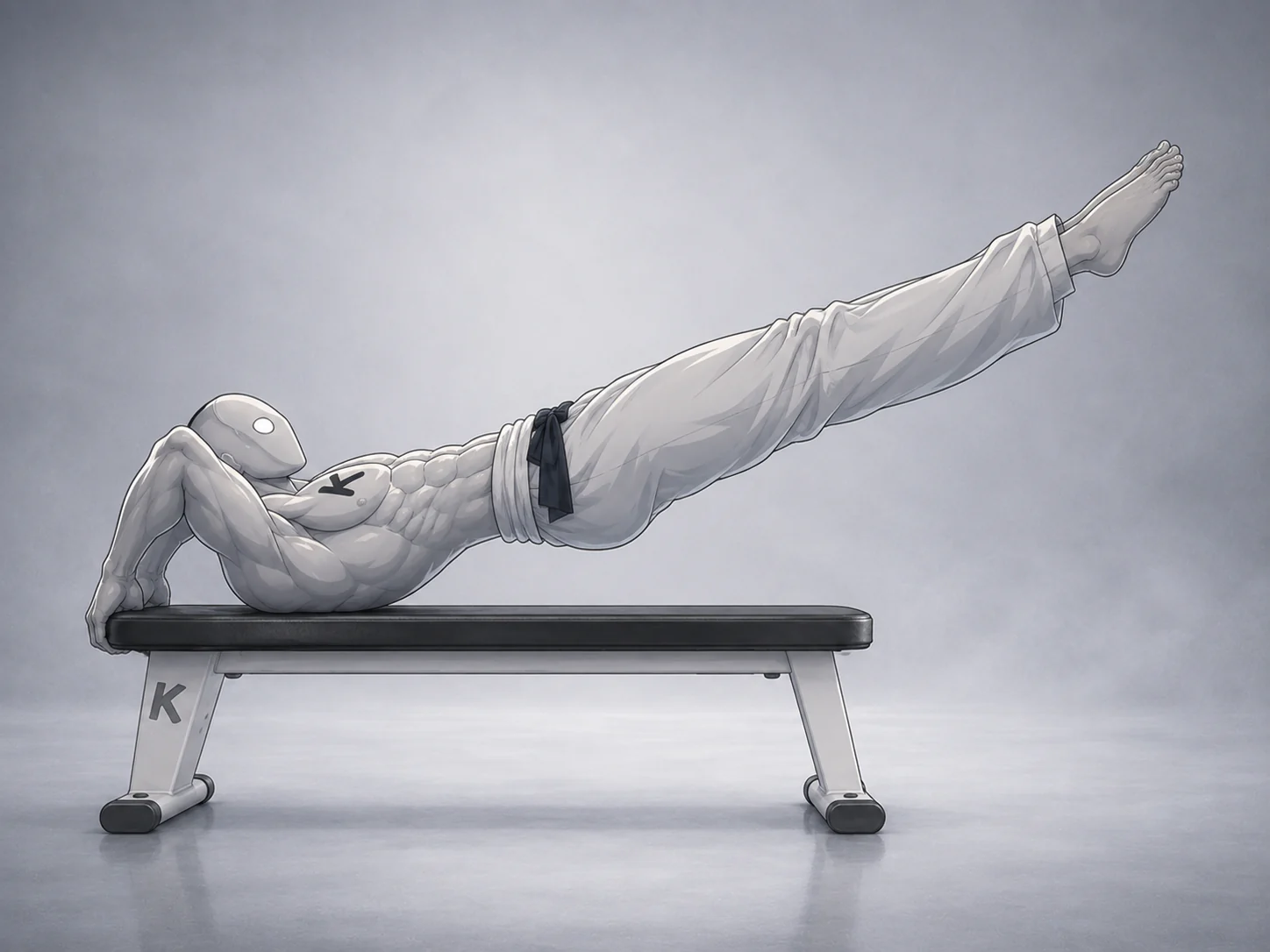
A dragon flag is a full-body, straight-leg lever held up by only the shoulders and upper back, with the whole body swinging as one rigid unit through the lowering and raising phase. It is best known from Bruce Lee's training and sits among the more demanding bodyweight anti-extension core exercises: the long leg lever tries to pull the pelvis and spine into extension, and the abdominal wall has to resist that pull isometrically while the hips and shoulders do the visible work of raising and lowering the body.
Technique
- Lie on your back on a bench or the floor and grip a fixed anchor behind your head — a bench edge, low bar, or a partner's ankles all work, as long as your hands stay close together above your head.
- Pull your shoulder blades down and back and press your arms straight to lock your upper body against the anchor; this straight-arm lat and shoulder tension is what keeps your torso from folding.
- Brace the core hard, posteriorly tilt the pelvis, and squeeze the glutes and quads to lift the entire body — legs, hips, and torso — into one rigid line up to roughly a 30–45° angle from the floor, with only the shoulders and upper back in contact with the surface.
- Lower the body as one straight unit under control, taking several seconds to descend, stopping just before the heels touch the floor, then drive back up to the top position.
- Keep the ribs pulled down and the lower back flat throughout; if the hips or knees start to bend, or the lower back arches, the set is over — do not chase extra reps with broken form.
Preparation
Building up to it is mostly a matter of shortening the lever safely. The tuck dragon flag negative — keeping the knees bent and hips folded during the lowering phase — is the direct stepping stone into this movement, and a solid hollow-body hold plus controlled hanging leg raises are worth having in place before attempting full-range reps. Grip strength and straight-arm shoulder tension matter as much as the abs: if the arms cannot stay locked against the anchor, the whole line collapses regardless of core strength.
Risks
The straight-body lever puts a lot of leverage on the lumbar spine: any loss of the rigid, posteriorly-tilted position lets the lower back extend under load, which is where most reported strain happens. Do not attempt full dragon flags with a history of lower-back injury, disc irritation, or lumbar instability without a coach's supervision and a much more conservative regression. Avoid ballistic or bouncing reps, and never sacrifice the straight-leg, flat-back line just to complete another repetition.
Muscles
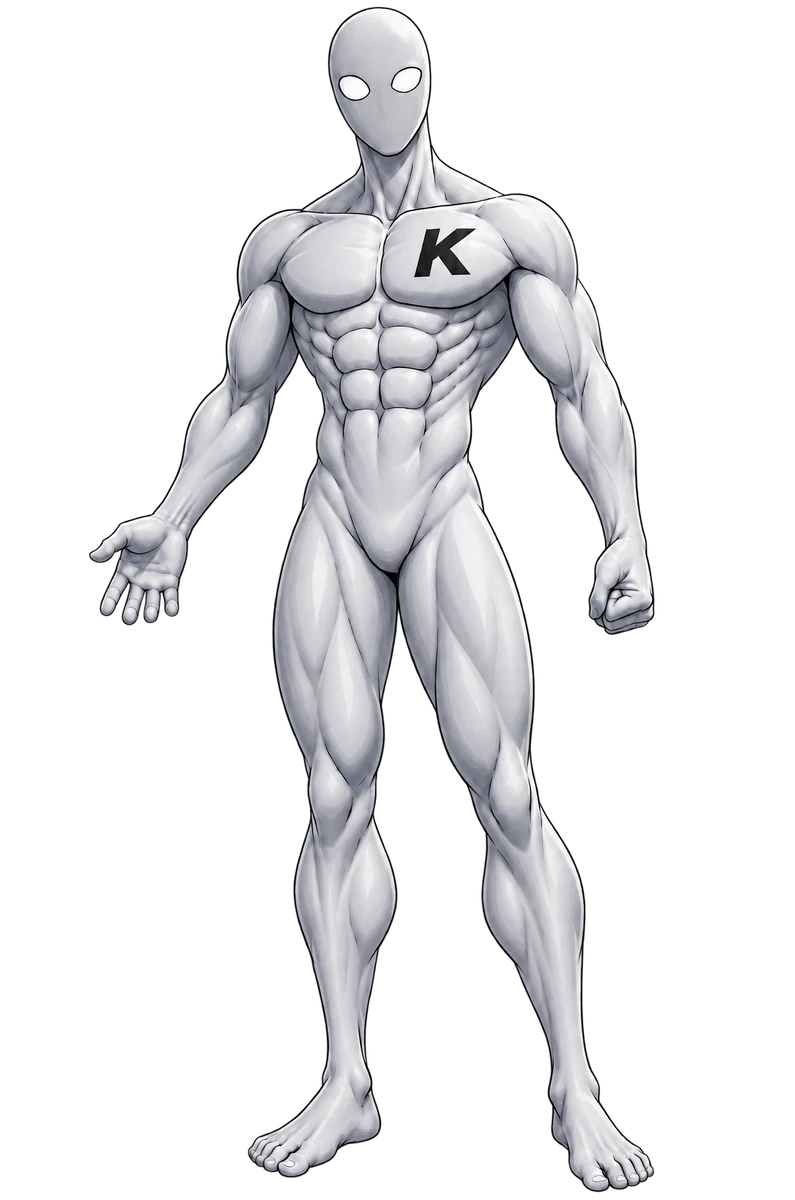
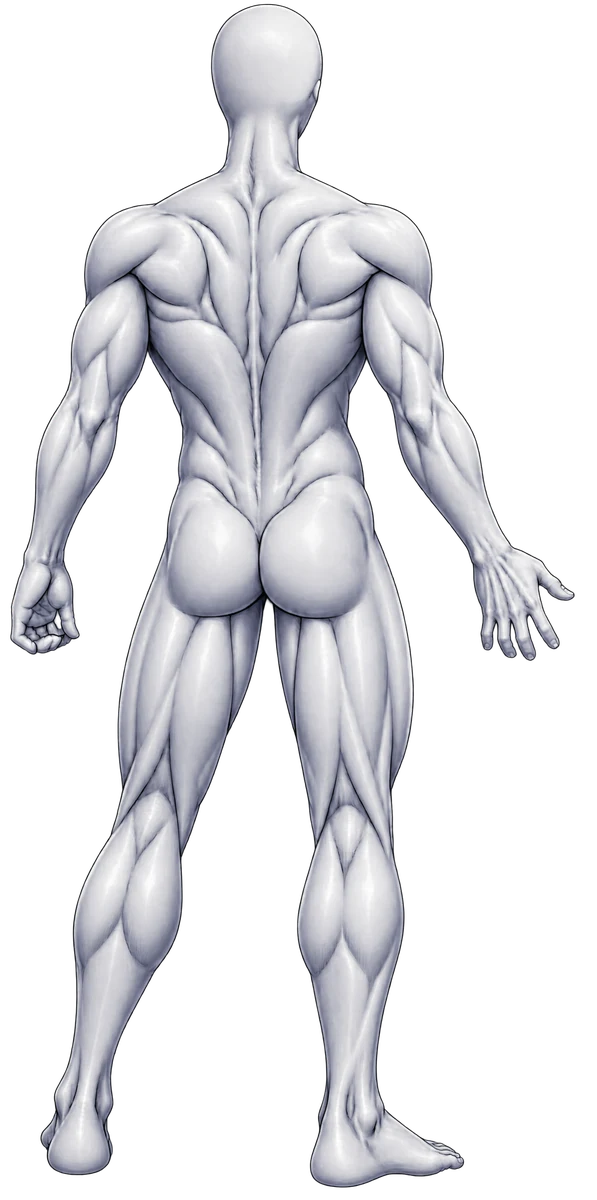
The rectus abdominis and deep core musculature are the primary target — they work almost isometrically to stop the long leg lever from pulling the spine and pelvis into extension. The latissimus dorsi and shoulders anchor the straight arms against the grip point so the torso has something rigid to lever against, while the glutes and quadriceps hold the hips extended and the knees locked so the legs act as one stiff lever rather than folding under load. The lower back works hard as a stabilizer to resist the same extension the core is fighting, rather than as a prime mover.
Stats
- Strength
- 0.00
- Control
- 0.00
- Power
- 0.00
- Endurance
- 0.00
- Balance
- 0.00
- Mobility
- 0.00
Strength dominates the demand: the core has to produce enough isometric force to control a long, heavy lever through its full range. Right behind it is control — the whole point of the movement is resisting spinal extension and keeping a dead-straight line rather than moving fast, so technique breaks down before strength runs out for most trainees. A smaller power component shows up in driving the raise phase, with endurance, mobility, and balance playing only supporting roles.
Completion criteria
Perform 3–5 clean, full-range dragon flags: legs fully extended, straight body line from shoulders to heels, hips not touching down between reps, and a controlled multi-second lowering phase with no lumbar arching.
Progression thresholds
- Lower threshold
- 3 reps
- Upper threshold
- 8 reps
Once full dragon flags are consistently clean for 8 or more reps, it is time to move toward heavier variations such as the dragon press. If a set drops below 3 clean reps, or the straight-leg line cannot be held at all, drop back to tuck or advanced-tuck dragon flag negatives until the line is rebuilt.