Element preview
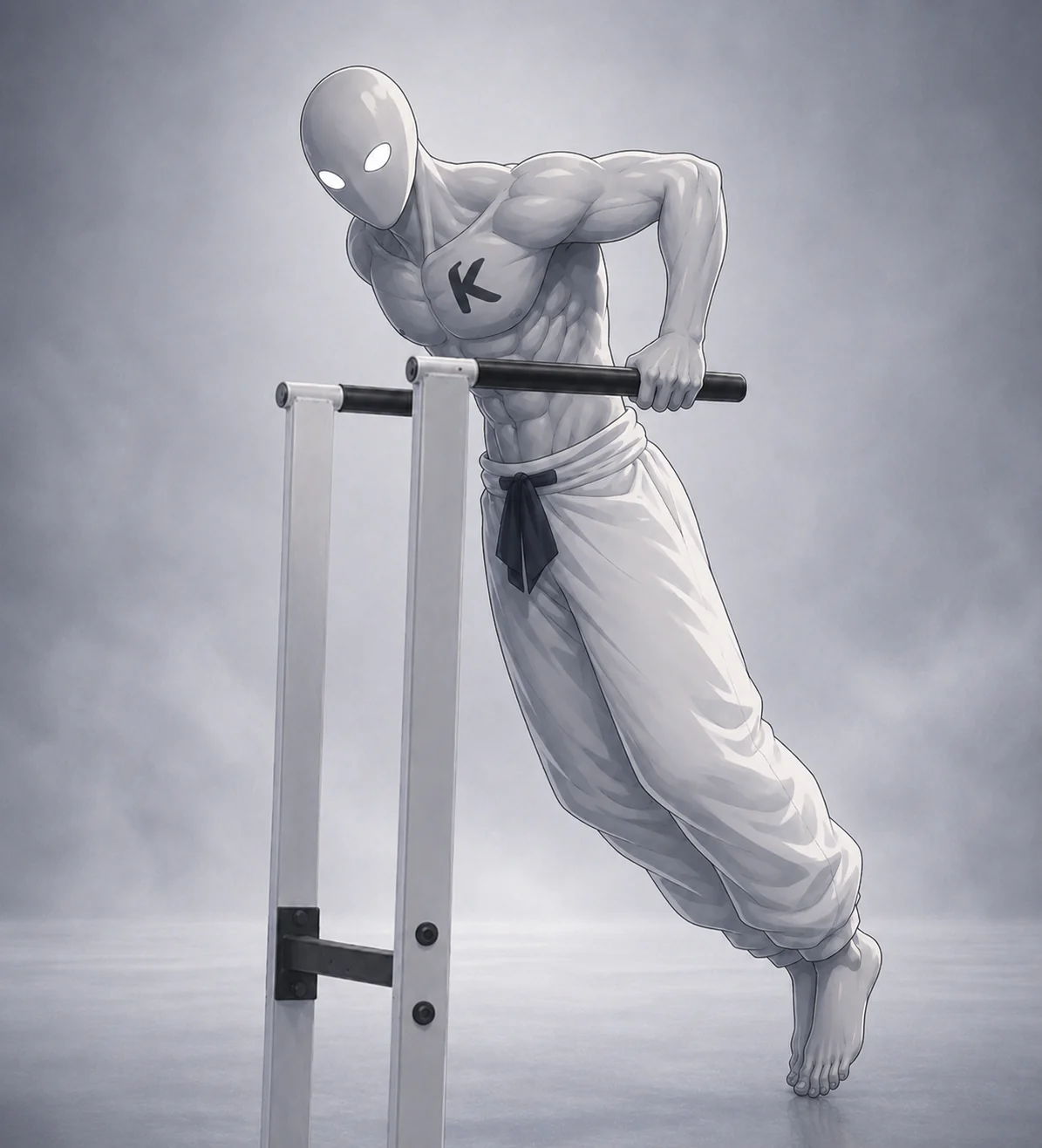
Preview · 0:06
A short look at the whole element in motion.
This is an overview clip, not a technique reference — the form in it may be imperfect. Follow the steps in Technique.
The dip is one of the most fundamental pushing exercises done on parallel bars: lowering the body under control and pressing back up to full lockout. It builds raw pushing strength for the triceps, chest, and shoulders together, and it sits at the base of the parallel-bar pushing line that eventually leads into L-sit dips and ring dips.
Technique
- Grip the parallel bars with arms straight and elbows locked, shoulders pulled down and slightly back rather than shrugged up toward the ears.
- Keep the torso fairly upright with a slight forward lean, and let the elbows track back close to the body rather than flaring straight out to the sides.
- Lower under control (roughly 2–3 seconds) until the upper arms are about parallel to the floor — elbows near a 90° angle.
- Press back up through the triceps and chest to full elbow lockout, keeping the shoulders depressed rather than hunching them up at the top.
- Keep depth and tempo consistent from rep to rep instead of chasing extra range of motion with a loose, uncontrolled bottom position.
Preparation
The dip does not require a specific calisthenics prerequisite in this tree, but arriving with baseline pushing strength makes the learning process far smoother. Building comfortable volume on the standard push-up first gives the shoulders, elbows, and connective tissue some general pushing preparation before loading them through the deeper range of motion a dip requires. Beginners without full-range strength yet can regress with a band/machine-assisted dip or slow eccentric-only ("negative") dips, working the same pattern with reduced or controlled load until unassisted reps are within reach.
Risks
The bottom of the dip places the shoulder into a deep, loaded extension position, and going deeper increases stress on the front of the shoulder joint faster than it increases muscle stimulus. Anterior shoulder pain and sternal/rib discomfort are the most commonly reported issues, and they tend to show up when volume or effort outpaces a lifter's current tolerance rather than from a single "wrong" technique cue. Keep depth consistent and comfortable (around 90° of elbow bend is a reasonable target), keep the shoulders depressed instead of shrugged, avoid training every set to failure, and back off depth, range, or volume if you feel pinching or joint discomfort rather than pushing through it.
Muscles
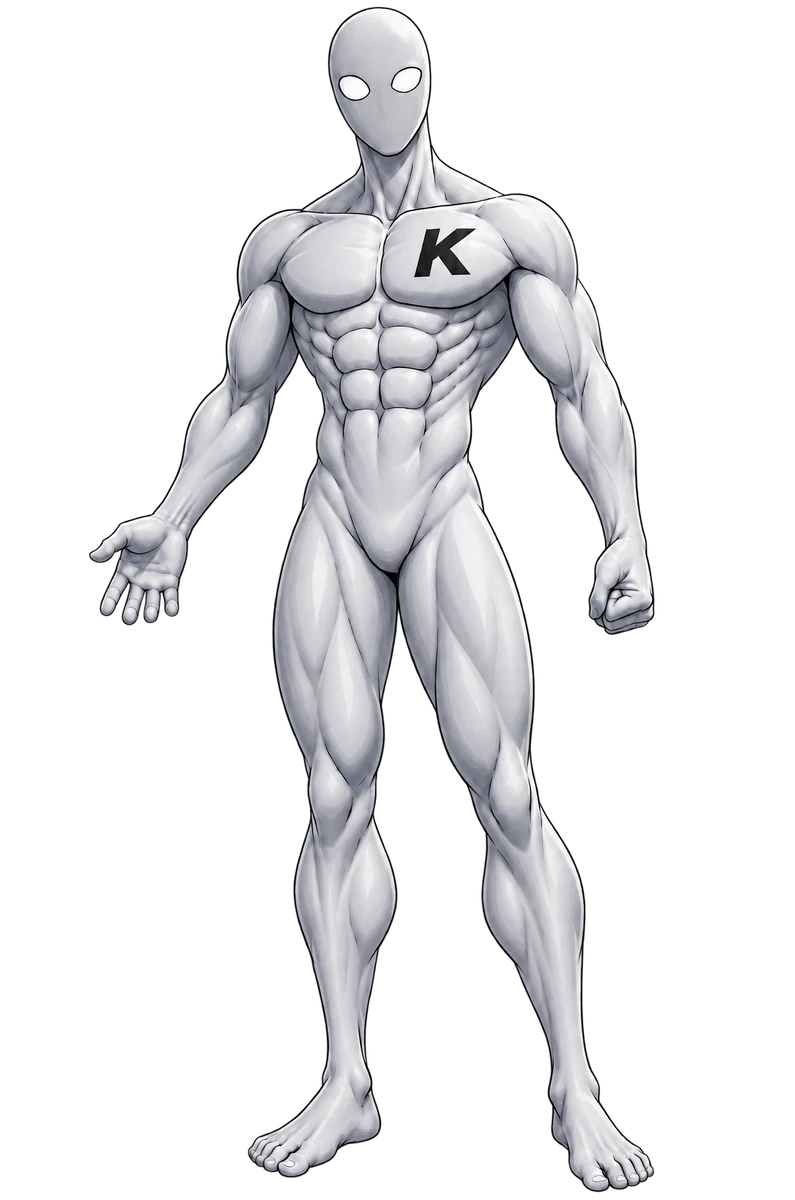
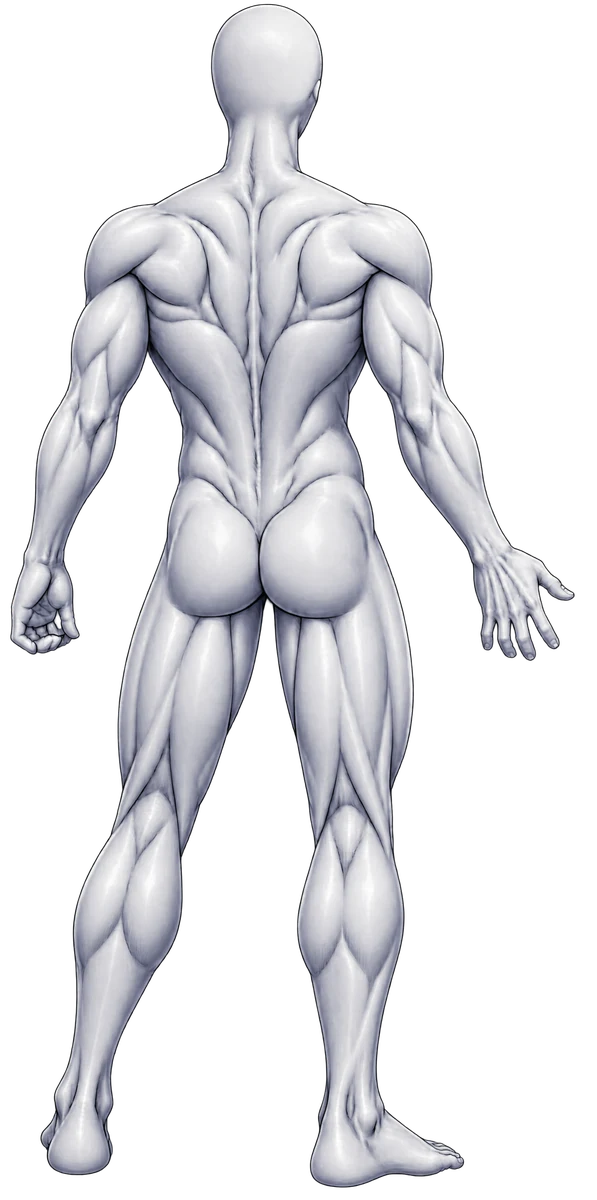
Elbow extension is driven mainly by the triceps, which is why straight-arm lockout dips are one of the more triceps-dominant bodyweight pushes available. The chest (pectoralis major) is heavily involved as the shoulder moves from an extended bottom position back to neutral, and the anterior shoulder works throughout the same range. The trapezius and shoulder girdle stabilize the shoulder blades — actively depressing them rather than letting them ride up protects the joint — while the core resists the tendency to swing or pike at the hips, and the forearms/hands simply maintain the grip on the bars.
Stats
- Strength
- 0.00
- Endurance
- 0.00
- Mobility
- 0.00
- Power
- 0.00
- Control
- 0.00
- Balance
- 0.00
This is primarily a strength movement, trained for reps rather than a single maximal effort, so endurance carries a real secondary share alongside strength. The deep shoulder extension at the bottom also asks for a working degree of shoulder mobility, which is reflected as a smaller but present tertiary contribution. Power, balance, and control play only minor supporting roles compared to raw pushing strength and staying under it for reps.
Completion criteria
10–12 consecutive reps to a consistent depth (about 90° of elbow bend) with a controlled descent, full lockout at the top, and no shoulder or joint pain.
Progression thresholds
- Lower threshold
- 5 reps
- Upper threshold
- 12 reps
Once dips feel controlled and pain-free for around 12 reps at a consistent depth, there is enough of a strength base to start layering on harder parallel-bar pushing variations. If reps consistently fall below roughly 5 with good form, it is worth stepping back to a band/machine-assisted or eccentric-only dip regression and rebuilding strength through that reduced load before returning to full dips.