Element preview
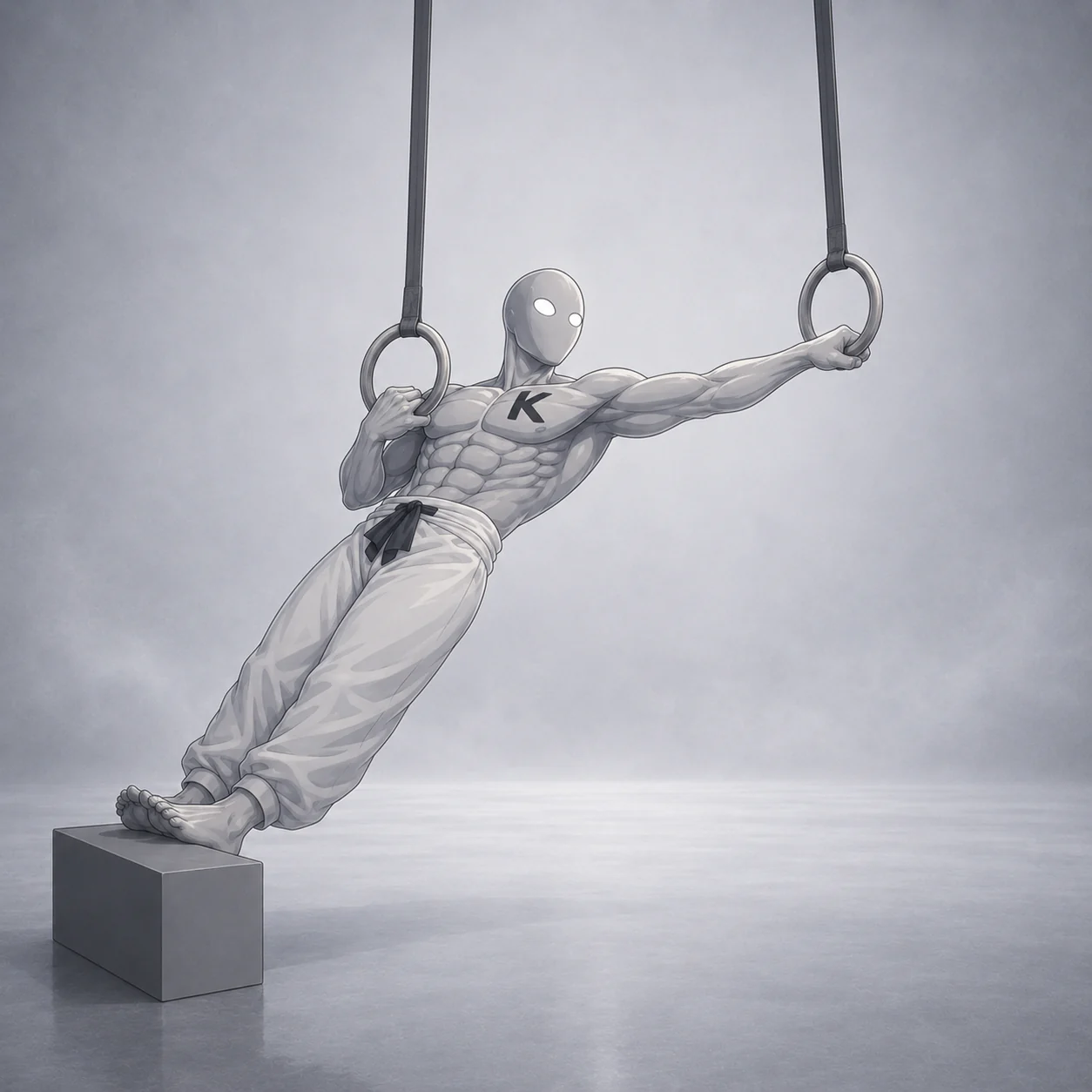
The archer row is a unilateral bridge between a bodyweight ring row and a true one-arm row. One arm does almost all of the pulling while the other arm stays extended and active, which shifts a large share of the load onto a single side and demands far more scapular and postural control than a symmetric row.
Technique
- Hang from a pair of rings (or a low bar) and walk your feet forward until your body forms a straight, plank-like line with your feet at roughly shoulder height.
- Start each rep with your shoulders relaxed and protracted, then initiate the pull by retracting and depressing both shoulder blades together — the scapular setup is the same for both arms even though they move differently.
- Bend one arm and row that ring toward your ribs or chest while keeping the elbow close to your body.
- Simultaneously let your other arm stay straight and drift out to roughly a 90° angle from your torso, like the top of a reverse fly, so its shoulder blade still retracts fully.
- Lower back down under control, then repeat the same rep on the other side so both arms accumulate equal work.
Preparation
Equipment and conditions
Gymnastic rings (or a low bar / suspension straps) set low enough that you can walk your feet out to a straight-body row position. A padded floor is helpful since your heels stay on the ground throughout the set.
Before loading one side this heavily, you should already be comfortable with a strict, straight-body ring row (or wide ring row), since the archer row assumes the same scapular setup and body-line control on each rep. If you struggle to pull high on the working side, it is usually a scapular strength gap rather than an arm-strength gap: pause at the top of a regular ring row with your shoulder blades fully retracted, or work a wide ring row eccentric into the bottom position, before returning to full archer reps.
Risks
Wide and archer-style rowing positions load the posterior shoulder and shoulder blade more than a standard row, which can aggravate an already irritable shoulder. Build the ordinary ring row and wide ring row first so the posterior deltoid, rotator cuff, and scapular retractors can tolerate the wider lever before you isolate one side. Keep the straight arm active rather than passively locked out, and stop the set as soon as one hip drops or the torso starts to rotate toward the working arm.
Muscles
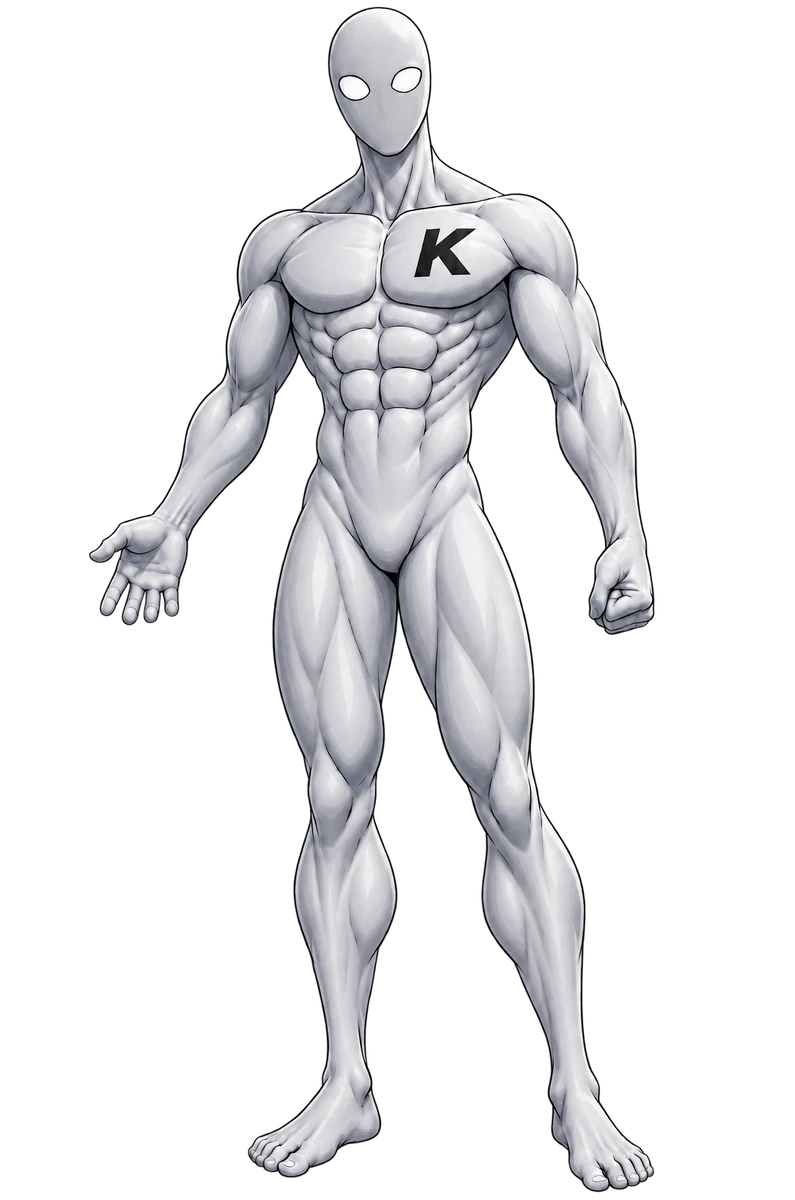
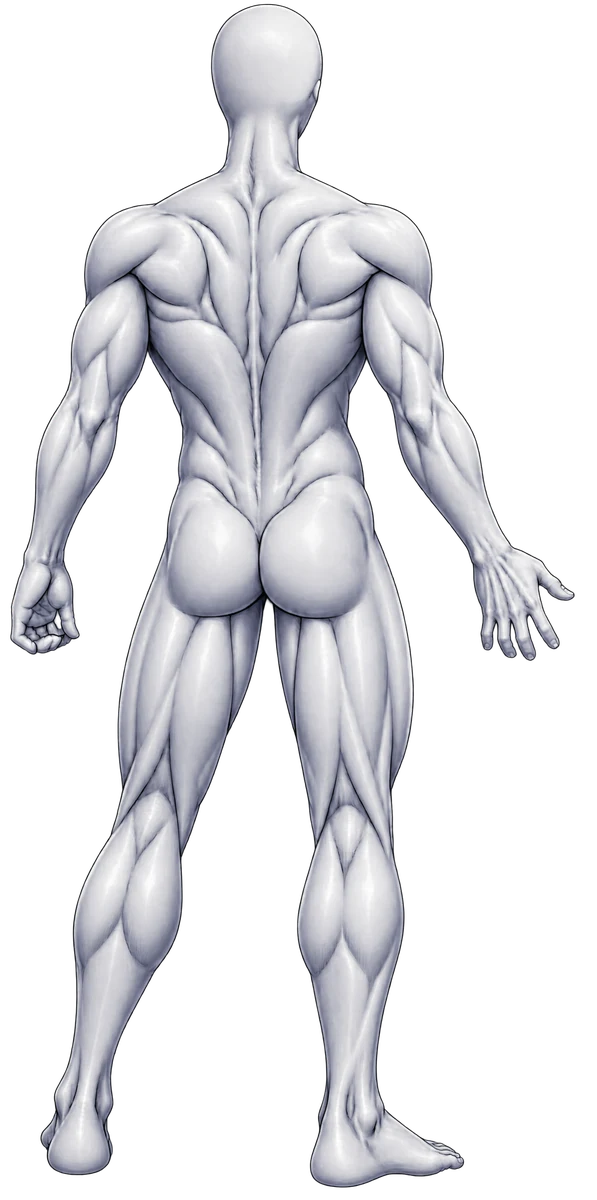
The working arm's latissimus and biceps drive most of the pull, while the straight arm works its posterior shoulder and mid/lower trapezius isometrically to hold the retracted, arm-out position — this is why archer rows build the scapular strength that later carries over to a true one-arm row. Grip and forearms load unevenly between the two rings, and the core and lower back work isometrically to keep the body straight and resist the torso rotation that the one-sided pull tries to create.
Stats
- Strength
- 0.00
- Control
- 0.00
- Balance
- 0.00
- Endurance
- 0.00
- Mobility
- 0.00
- Power
- 0.00
Strength still dominates since one arm carries most of the pulling load, but the movement leans more on control and balance than a basic row because the body must stay square while the load and leverage differ between the two arms.
Completion criteria
You can perform roughly 8-10 strict reps per arm with full scapular retraction, a straight body line, and no hip sag or torso rotation on the straight-arm side.
Progression thresholds
- Lower threshold
- 6 reps
- Upper threshold
- 12 reps
Once you can control roughly 12 reps per arm without the hips dropping or the torso twisting toward the working side, you are ready to bias more weight onto the bent arm and move toward a one-arm row. If you cannot yet complete about 6 controlled reps per arm, spend more time on wide ring rows and scapular-retraction holds before returning to the full archer pattern.