Element preview
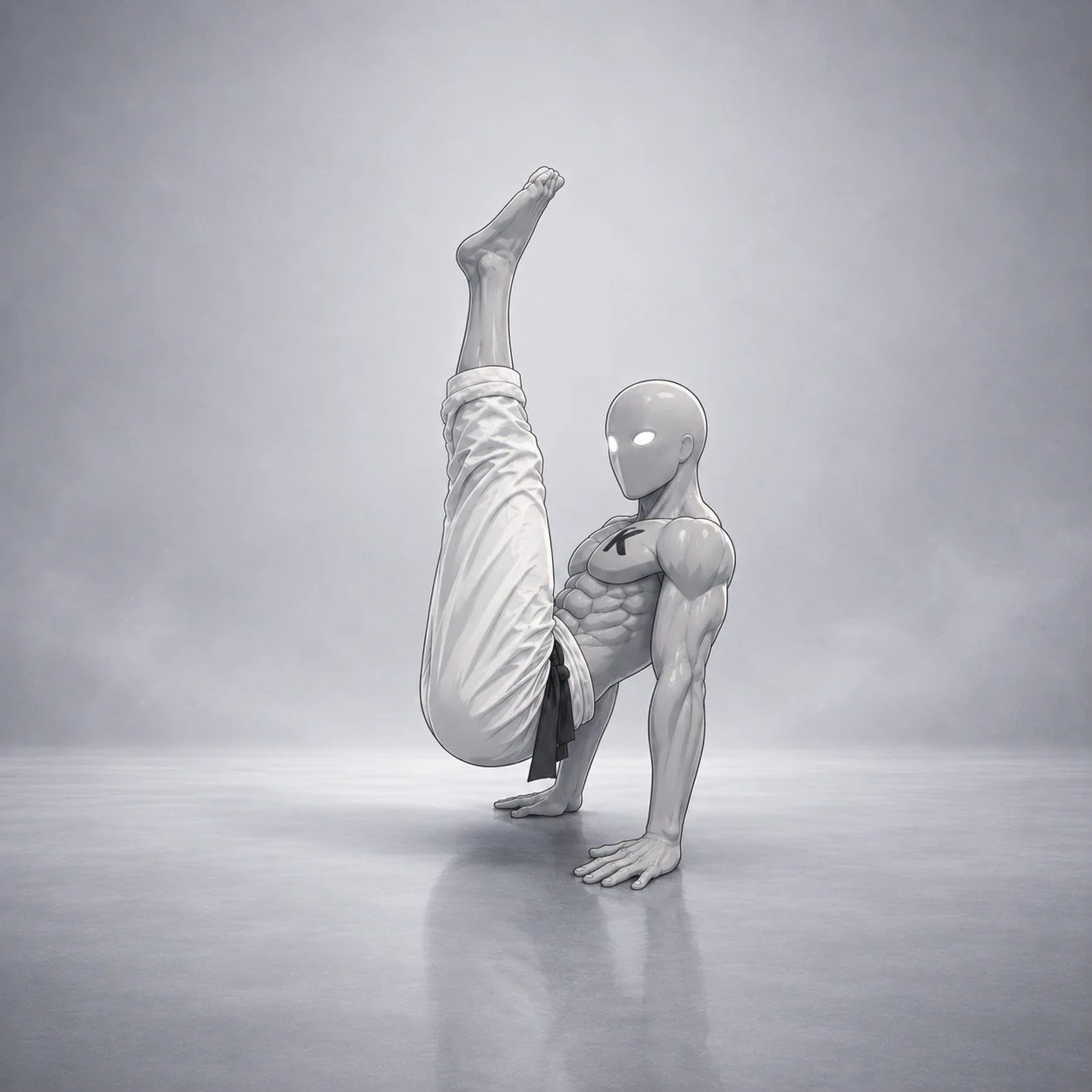
Preview · 0:06
A short look at the whole element in motion.
This is an overview clip, not a technique reference — the form in it may be imperfect. Follow the steps in Technique.
The 90° V-sit is the full compression hold in the L-sit-to-manna pathway: straight legs raised until they are roughly vertical to the torso while the arms stay locked and the hips stay lifted clear of the support. It is the direct step up from the 45° V-sit, asking for noticeably more active hip and hamstring flexibility, more straight-arm support strength, and tighter abdominal compression to keep the shape from collapsing as the legs approach vertical.
Technique
- Warm up the wrists, shoulders, and hip flexors, and rehearse the 45° V-sit hold before attempting the full 90° position.
- Start seated on the floor (or on parallettes/parallel bars), hands planted beside the hips, elbows locked, and legs together.
- Press down through the hands and brace the abdominals to lift the hips clear of the support, moving through the L-sit and 45° V-sit line without pausing to rest in either.
- Continue driving the straight legs upward until they are roughly vertical — perpendicular to the torso — while leaning the torso back just enough to keep the hips balanced over the hands.
- Keep the knees locked, toes pointed, shoulders actively depressed, and the lower back flat rather than rounded as the legs approach vertical.
- Hold the position with steady breathing, elbows straight, and hips clear of the floor, then return through the 45° V-sit and L-sit under control before setting the hips down.
Preparation
A controlled 45° V-sit hold is the direct prerequisite: it establishes the same shoulder-depressed, straight-arm support and abdominal compression that the 90° position simply pushes further. Active hip and hamstring flexibility is usually the limiting factor rather than raw pressing strength — straddle or tucked V-sit variations, active straight-leg raises, and pike compressions built alongside the 45° hold help close the range gap without sacrificing a flat back or locked elbows.
Risks
The 90° V-sit asks the shoulders and wrists to support the full bodyweight through a long straight-arm lever while the hip flexors and hamstrings work near end-range, so shoulder impingement-type discomfort and wrist strain are the most common issues if the shoulder blades are allowed to ride up instead of staying pulled down, or if the position is forced before the wrists are conditioned for straight-arm support. Chasing the vertical leg line before the hamstrings and hips have enough active flexibility tends to pull the lower back into rounding to compensate, shifting load onto the lumbar spine instead of the abdominals. Build the range gradually from the 45° V-sit, keep the shoulders depressed and the lower back flat throughout, and regress to a lower leg angle or a bent-knee version if the shape breaks down or joint discomfort appears.
Muscles
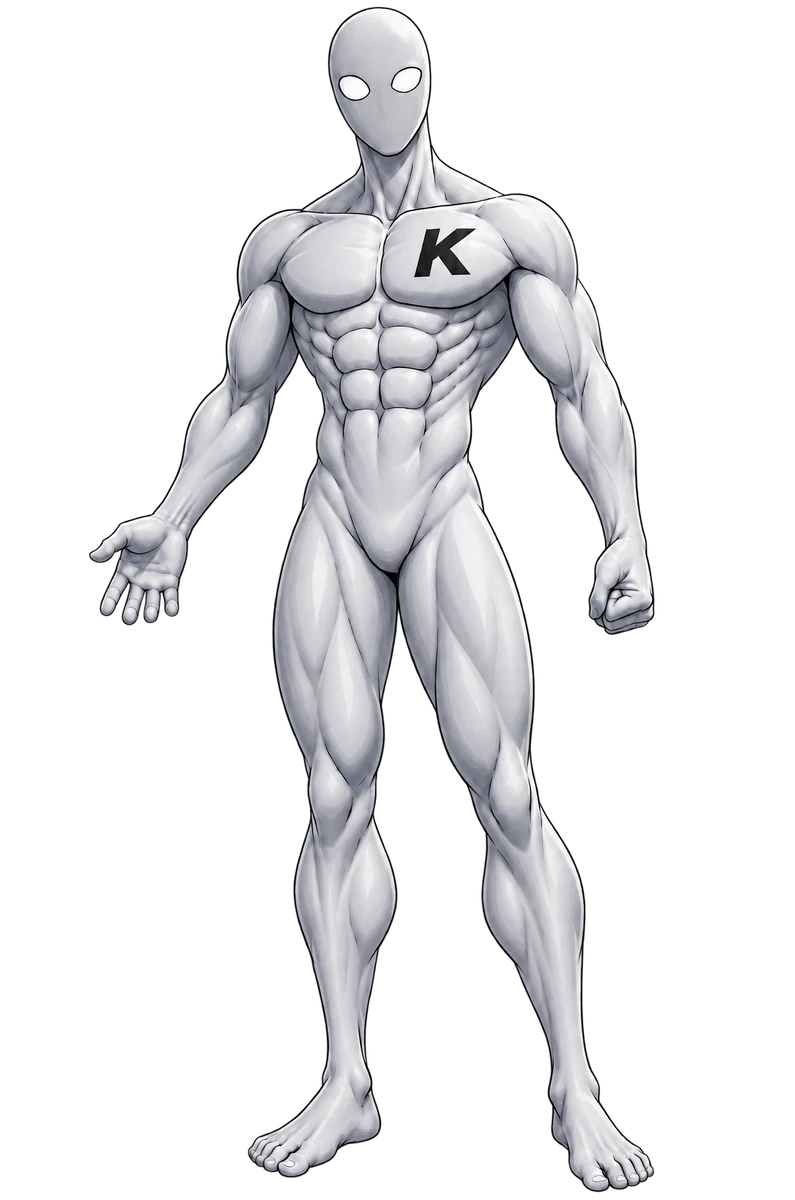
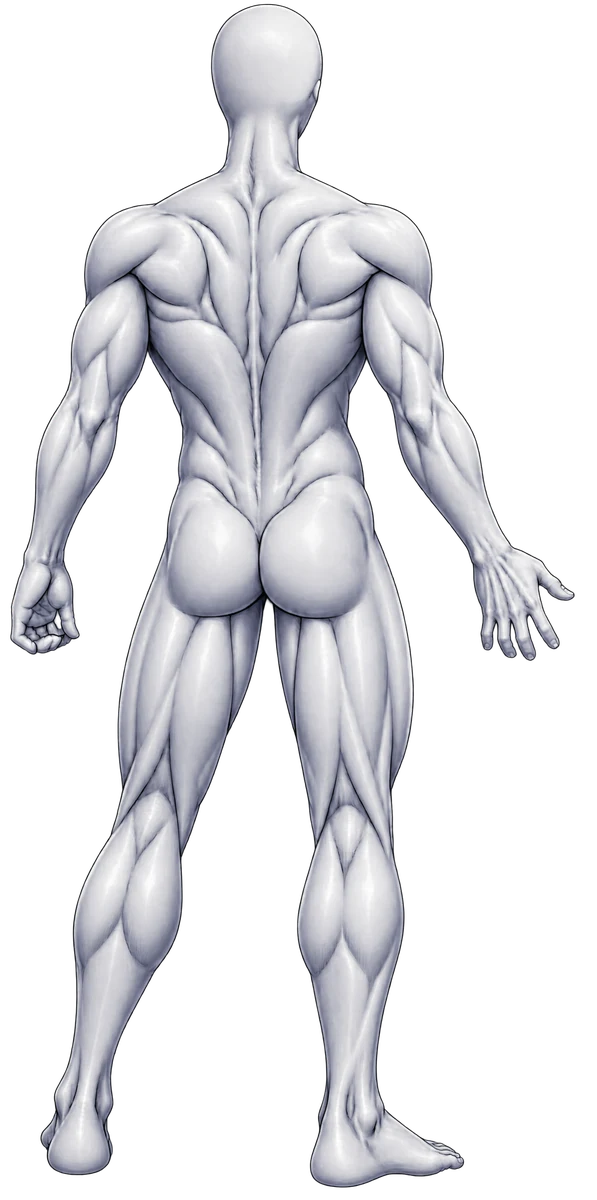
The abdominals do most of the work compressing the trunk and holding the legs vertical against gravity, while the triceps, shoulders, and chest lock out the arms and maintain the straight-arm support as more bodyweight shifts onto the hands. The hip flexors and rectus femoris (grouped here under quadriceps) keep driving the legs upward, the hamstrings work under a deep isometric stretch to keep the legs straight this close to vertical, and the trapezius, forearms, lower back, and hands stabilize the shoulder girdle, wrists, and spine throughout the hold. As the legs climb from 45° toward vertical, the abdominals take on a growing share of trunk compression and hip-position control, so the lower back's relative stabilizing contribution edges down even as its absolute demand stays real — it is doing a smaller slice of a job the abdominals increasingly dominate.
Stats
- Strength
- 0.00
- Control
- 0.00
- Mobility
- 0.00
- Endurance
- 0.00
- Balance
- 0.00
- Power
- 0.00
This is still a strength-dominant compression and support hold, with control carrying a clear secondary share because balancing the hips over the hands and keeping the shape intact gets harder as the legs pass 45° toward vertical. Mobility is a real tertiary demand, since active hip and hamstring flexibility caps how close to vertical the legs can get without the lower back rounding. Power and balance sit a little lower here than in the dynamic 45° V-sit: that variant is trained as repeated lifts from the L-sit line, so it demands a rep-to-rep power pulse and moment-to-moment rebalancing on every rise, while the 90° V-sit is entered once and held — once the shape is set, the task shifts from repeatedly generating and rebalancing the position to simply sustaining it, so those two qualities play a smaller supporting role in this strict static hold.
Completion criteria
Lift from the floor (or support) through the L-sit and 45° V-sit into a controlled 90° V-sit — legs vertical and straight, knees locked, hips clear of the support, elbows locked, and a flat lower back — and hold that position for at least 10 seconds with steady breathing before lowering back through the 45° V-sit under control.
Progression thresholds
- Lower threshold
- 3 s
- Upper threshold
- 10 s
Once a clean 90° V-sit can be held for about 10 seconds with locked elbows, straight knees, and a flat lower back, there is enough support strength and hip flexibility to start cautiously exploring the next, deeper V-sit position in this pathway. If the hold consistently breaks down before about 3 seconds — shoulders riding up, knees bending, or the back rounding — return to building volume on the 45° V-sit and active hip/hamstring flexibility work before retrying the full 90° hold.