Element preview
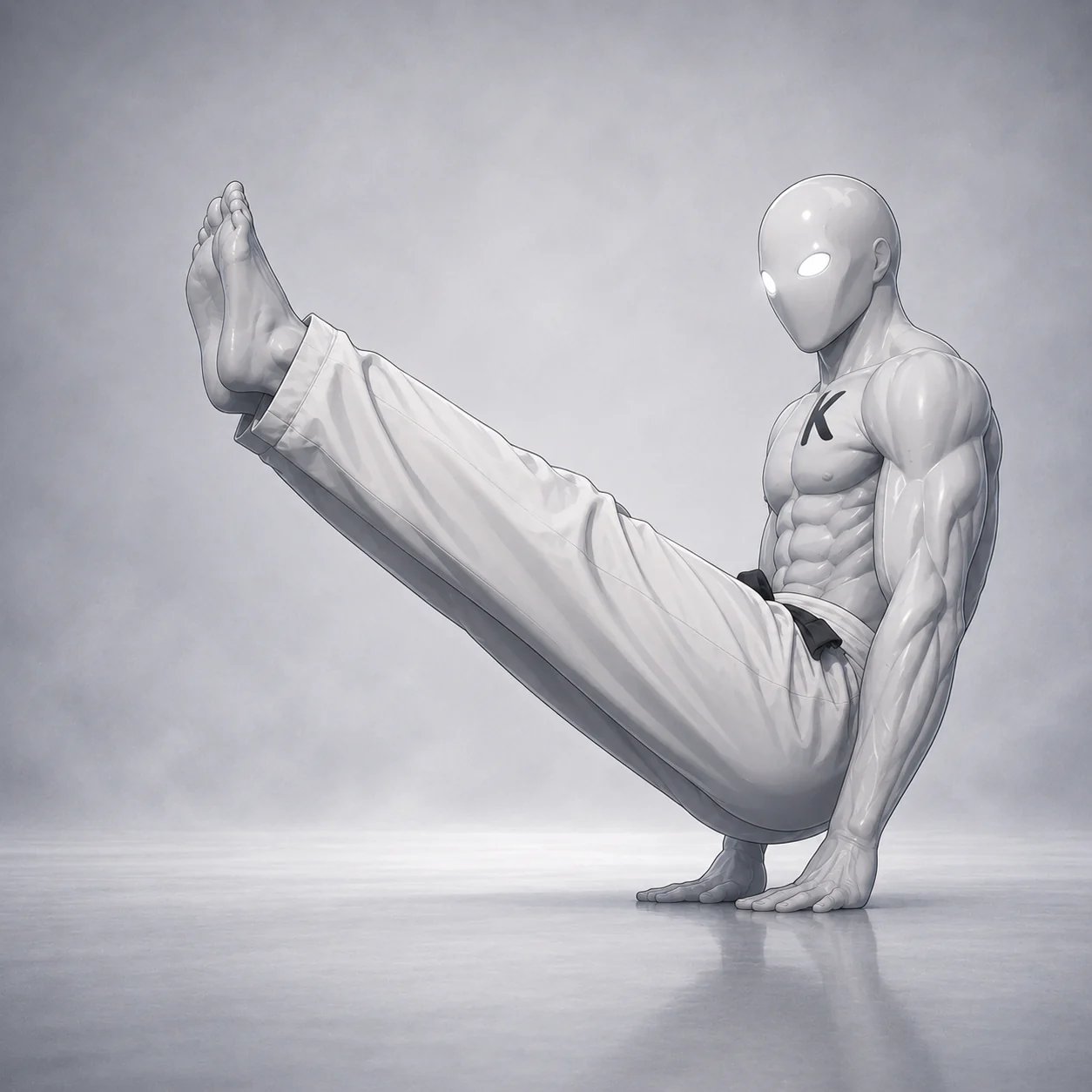
The 45° V-sit raises the L-sit's straight legs off the horizontal line, lifting them to roughly a 45° angle above the floor while the hands stay planted and the arms stay locked. It is a direct step up from the L-sit on the way toward the vertical V-sit and manna, and it asks for the same abdominal compression and shoulder depression as the L-sit plus noticeably more active hip and hamstring flexibility to bring the legs that much higher without losing a flat back.
Technique
- Start seated in an L-sit: legs straight and parallel to the floor, hands pressed flat on the floor beside the hips, arms locked, shoulders actively pulled down away from the ears.
- Brace the abdominals and posteriorly tilt the pelvis, then drive the straight legs upward from the L-sit toward roughly a 45° angle above horizontal.
- As the legs rise, lean the torso back slightly so the hips stay balanced over the hands rather than letting the shoulders drift forward past the wrists.
- Keep the knees locked, toes pointed, and chest lifted — resist the pull to round the lower back as the angle increases.
- Hold the 45° position with the shoulders pressed down and elbows locked, then lower the legs back through the L-sit under control instead of dropping them.
Preparation
A solid L-sit is the direct prerequisite: aim for a comfortable straight-leg L-sit hold before adding height to the leg angle, since the 45° V-sit demands the same core and shoulder positions under a harder lever. Active hamstring and hip flexibility is usually the limiting factor rather than raw strength — working on active straight-leg raises and pike compressions alongside the hold helps close that gap. A useful bridge drill is the V-sit lift: from an L-sit, drive the legs up to 45° for a brief pause and lower back down, repeating for reps before chasing a longer static hold.
Risks
Raising the legs above the L-sit line shifts more of the body's weight backward onto the wrists and shoulders, so anterior shoulder strain and wrist discomfort are the most common issues if the shoulders are allowed to ride up instead of staying actively depressed. Rushing the leg angle before the hips and hamstrings have adequate active flexibility tends to pull the lower back into rounding to compensate, loading the lumbar spine instead of the abdominals. Build the hold gradually, keep the shoulder blades pulled down throughout, and back off the target angle if the lower back rounds or joint discomfort appears.
Muscles
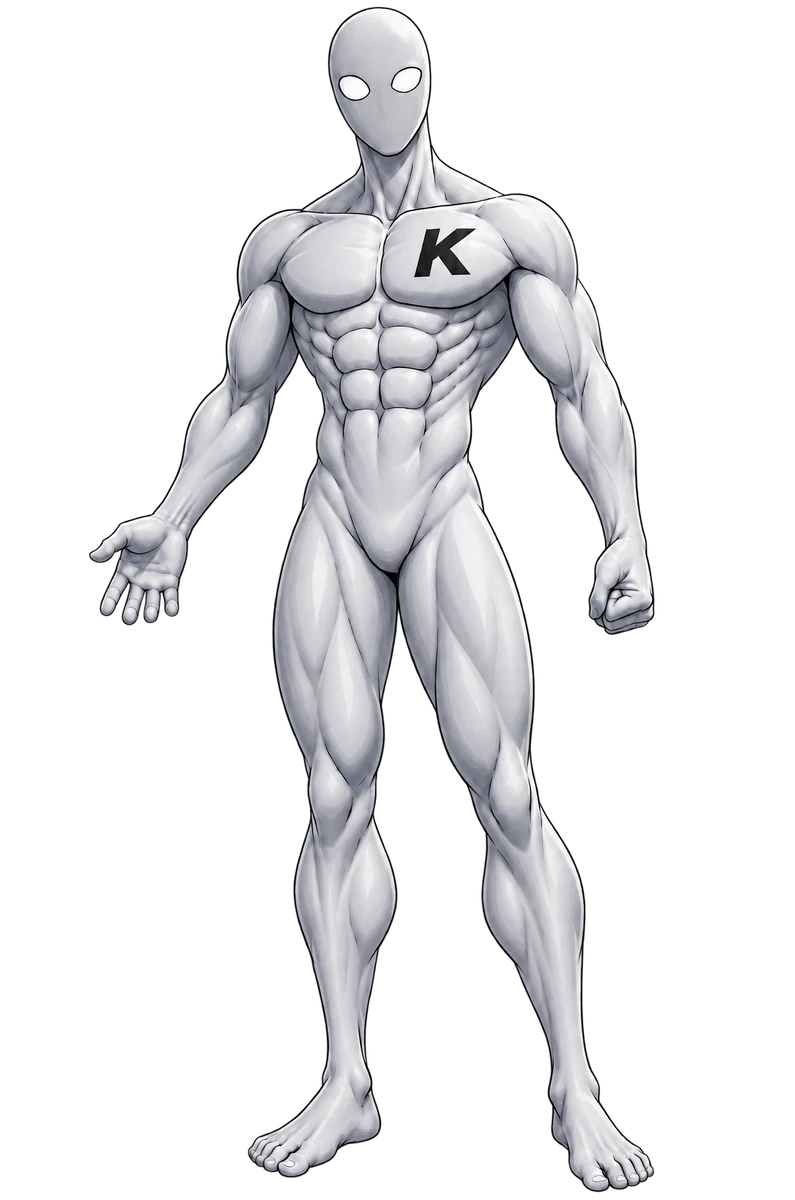
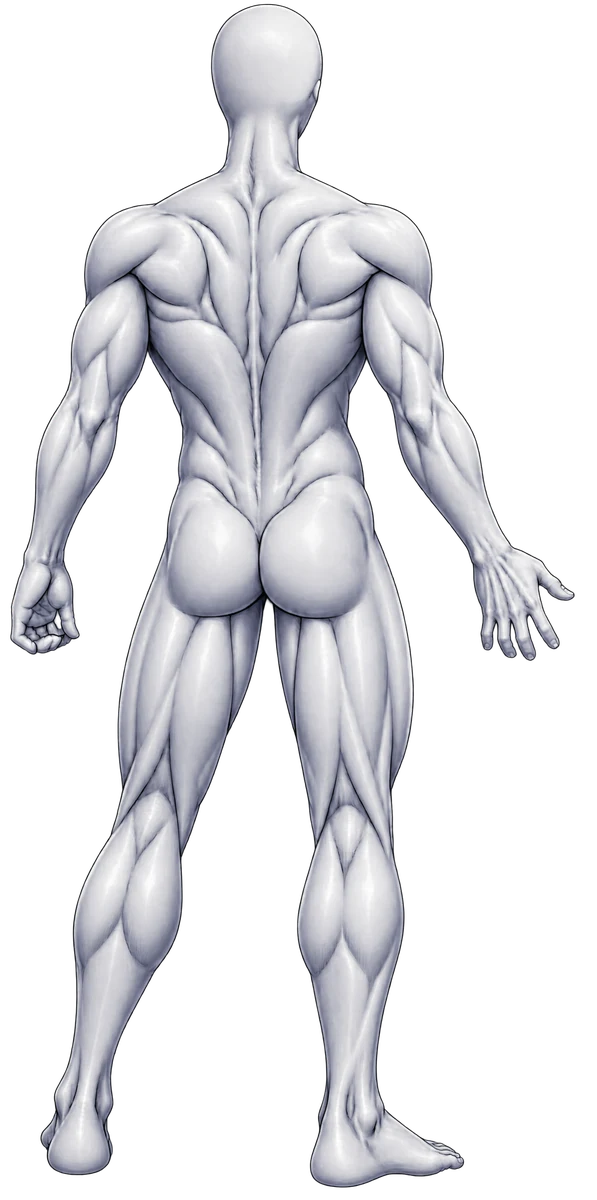
The abdominals do most of the work compressing the trunk and holding the pelvis tilted under the legs, while the triceps and shoulders lock the arms and actively depress the shoulder blades to support more of the body's weight as the torso leans back. The hip flexors and rectus femoris (grouped here under quadriceps) keep driving the legs upward against gravity, the hamstrings work under a deep isometric stretch to keep the legs straight at a steeper angle, and the lower back and trapezius stabilize the spine and shoulder girdle throughout the hold.
Stats
- Strength
- 0.00
- Control
- 0.00
- Mobility
- 0.00
- Balance
- 0.00
- Endurance
- 0.00
- Power
- 0.00
This is still a strength-dominant compression hold, but control takes a clear secondary share because balancing the hips over the hands gets harder as the legs rise past horizontal. Mobility also carries a real tertiary weight since active hip and hamstring flexibility limits how high the legs can go without the lower back rounding, while power, endurance, and balance play smaller supporting roles.
Completion criteria
Lift from the floor into a clean 45° V-sit with straight legs, locked knees, a flat (non-rounded) lower back, and depressed shoulders; hold that position for at least 5 seconds before lowering under control. Repeat for 5 solid reps to consider the 45° hold mastered.
Progression thresholds
- Lower threshold
- 3 reps
- Upper threshold
- 8 reps
Once 8 clean reps of the V-sit lift — driving the legs from the L-sit up to a controlled 45° angle and back — feel solid with a flat back and depressed shoulders, there is enough strength and control to start working toward a higher-angle V-sit. If reps consistently fall below about 3 with good form, drop back to building volume on the straight-leg L-sit and active leg-raise flexibility work before returning to the 45° angle.